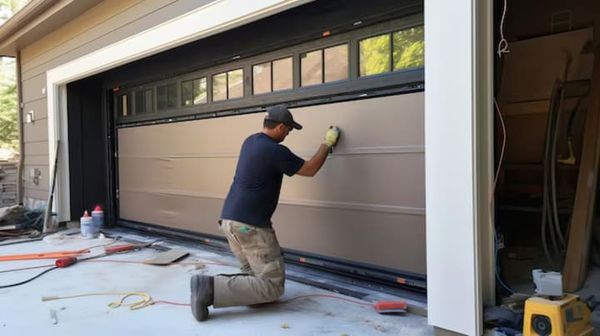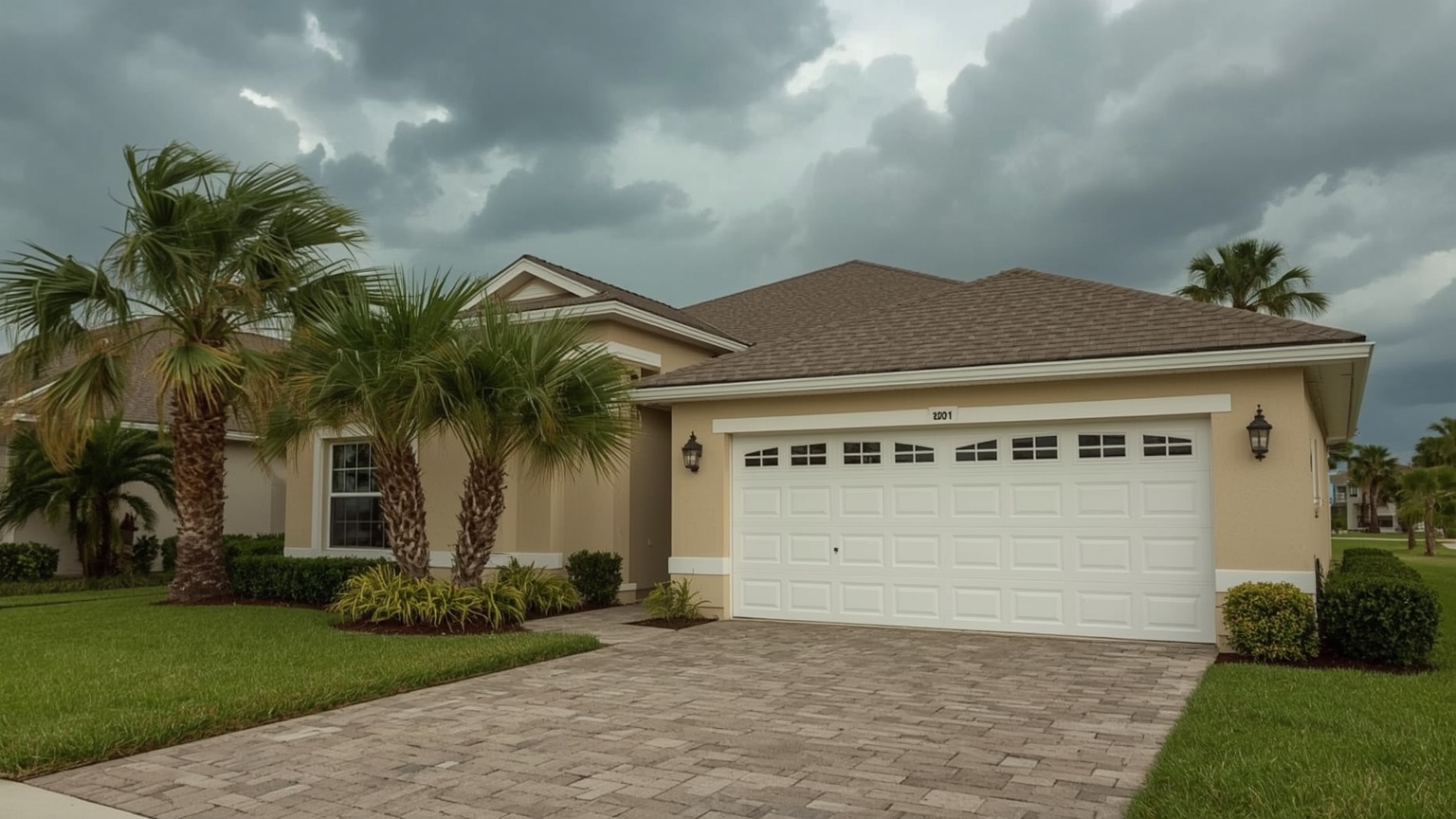
Every garage door salesperson in Florida will tell you insulation saves energy and lowers your electric bill. The honest answer from someone who installs these doors daily: the energy savings are real but often overstated in South Florida. The more significant benefits - structural rigidity, noise reduction, and hurricane performance - rarely get the same pitch. Here's the complete picture.
What Insulated Garage Doors Actually Do
An insulated garage door has either two or three layers of material. A two-layer door is steel on the outside, polystyrene or polyurethane foam bonded to the inside. A three-layer door adds a second steel or aluminum skin on the interior. The insulation layer provides R-value (thermal resistance) - typically R-6 to R-10 for two-layer, R-12 to R-18 for three-layer with polyurethane foam.
For comparison, a single-layer steel door has an R-value near zero - essentially no insulation at all.
The Energy Savings Argument in Florida: Accurate but Modest
Here's the honest version of the energy savings story:
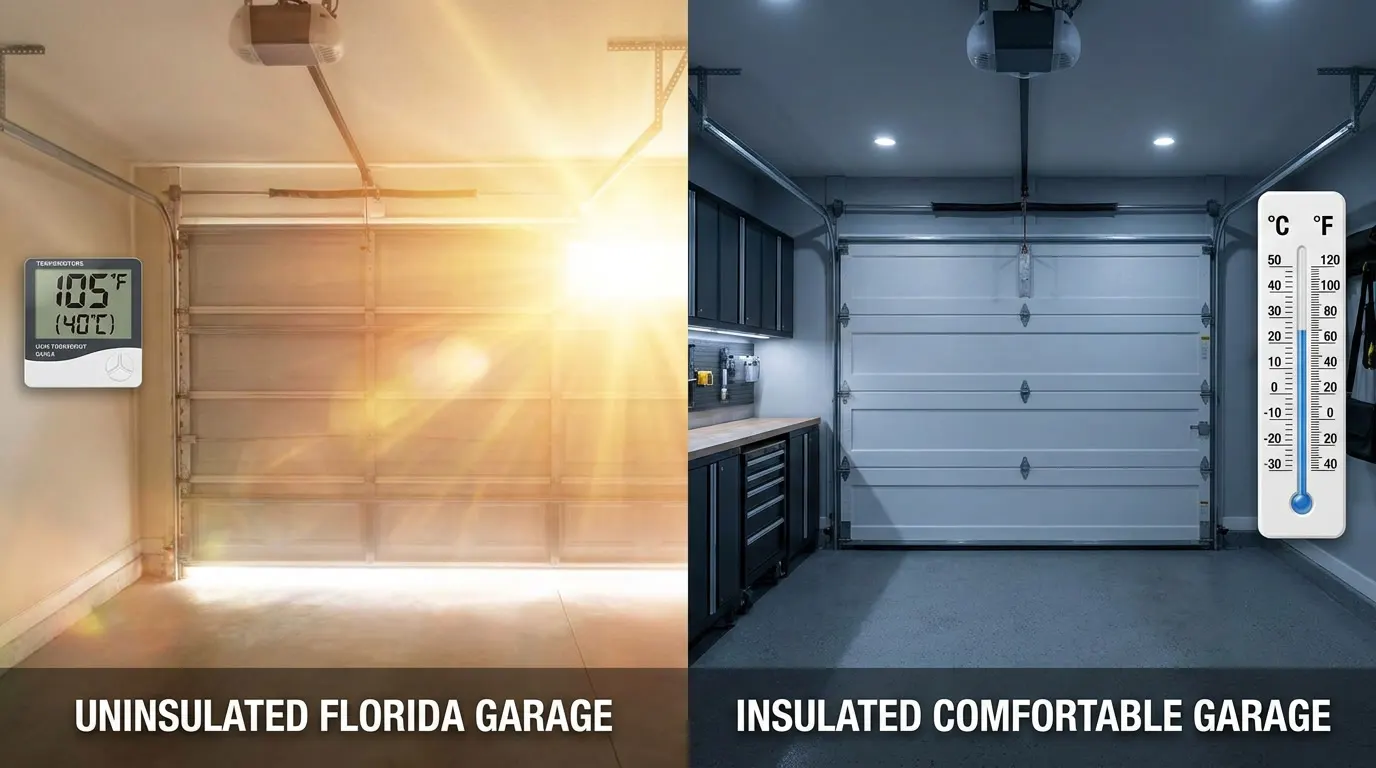
In South Florida, an uninsulated garage reaches 120 - 130°F on a summer afternoon. A well-insulated three-layer door can reduce that by 20 - 30°F, bringing the interior down to 95 - 100°F. That's a meaningful improvement - but a 100°F garage is still extremely hot, and the temperature differential through a shared wall into an air-conditioned living space is significant in either case.
The scenario where insulation makes the biggest energy difference: a conditioned (air-conditioned) garage. If you're cooling your garage for a home gym or workshop, an insulated door meaningfully reduces the cooling load. An uninsulated door dumps all the exterior heat directly into the conditioned space; an insulated door slows that heat transfer significantly.
For an unconditioned garage - the typical South Florida garage that's just used for parking and storage - the energy savings affect the adjacent wall's thermal load. Studies suggest the garage door's insulation value contributes 10 - 15% of the wall's total heat transfer into the home. At typical South Florida utility rates ($0.12 - $0.14/kWh), the annual savings for most homes is $40 - $120. At a $300 - $600 insulation premium over a single-layer door, payback runs 3 - 8 years. That's not a compelling financial ROI on its own.
The Benefits That Actually Justify the Upgrade in Florida
The three reasons we recommend insulated doors in South Florida have less to do with energy and more to do with structure, sound, and storm performance.
Structural rigidity. A three-layer polyurethane door is significantly stiffer than a single-layer door of the same panel design. The foam core bonds the two steel skins together into a composite panel that resists flexing under both mechanical load and wind pressure. For South Florida homeowners in HVHZ zones, a stiffer door is a more wind-resistant door. Most hurricane-rated garage doors use insulated construction precisely because the stiffness is required to pass impact and wind-load testing.
Noise reduction. Both from the outside in (less road noise, neighbors, traffic) and from the door operation itself. The added mass of an insulated door dampens vibration and the foam absorbs rattling sounds. If you have bedrooms near the garage, the acoustic difference between a single-layer and a three-layer door is immediately noticeable.
Durability in Florida heat. Single-layer steel panels heat up to very high temperatures in direct Florida sun, which accelerates paint oxidation and can cause slight panel warping at the edges over time. A three-layer door heats up more slowly and distributes the thermal stress more evenly - which is reflected in longer paint warranties on three-layer products from most manufacturers.
Two-Layer vs Three-Layer: Which Is Worth It?
- Two-layer (steel + polystyrene): R-6 to R-10. More affordable, typically $150 - $300 more than a single-layer door. Good for: unconditioned garages where acoustics and paint longevity are the primary drivers.
- Three-layer (steel + polyurethane + steel): R-12 to R-18. Better thermal performance, stronger structure, better noise reduction. Typically $250 - $500 more than a single-layer door. Good for: conditioned garages, HVHZ wind zones where stiffness is a factor, homes with bedrooms directly adjacent to the garage.
Polyurethane foam (used in three-layer doors) is denser and has higher R-value than polystyrene (used in many two-layer doors). It also bonds better to the steel skin, creating a truer composite panel. For most South Florida buyers, if you're going to pay for insulation, the three-layer polyurethane door is the version worth paying for.
When to Skip the Insulation Upgrade
A single-layer door is the right choice when: your primary driver is budget, your garage is detached from the living space (no shared walls), you're replacing a damaged door that needs to match existing adjacent panels, or you're in a rental property context where long-term ROI matters less than cost.
In these cases, put the insulation upgrade budget toward a higher-cycle spring system or a battery-backup opener - both will have a more immediate impact on the door's reliability and lifespan.
Does Insulation Affect Hurricane Ratings?
Yes - importantly. Most hurricane-rated doors for HVHZ are insulated, because the structural composite construction is what allows them to pass the wind-load and impact-debris testing required for NOA certification. If you're in Miami-Dade and need an NOA-approved door, you will almost certainly be getting an insulated door as part of the package. The insulation is a structural feature, not just a comfort feature, in that context. See our hurricane-rated garage doors page for more on HVHZ requirements and available styles, and our insulated door installation page for current models and pricing.
-
For most South Florida homeowners, yes - but for structural reasons more than energy savings. An insulated three-layer door is stiffer (better wind resistance), quieter, and more durable in Florida's heat than a single-layer door. The energy savings are real but modest (typically $40 - $120/year for unconditioned garages). For conditioned garages or air-conditioned workshops, energy savings are much more significant.
-
Add $150 - $300 to the base door price for two-layer insulation, or $250 - $500 for three-layer polyurethane. On top of a standard double-car door installation at $1,400 - $2,500, a fully insulated three-layer door runs $1,650 - $3,000 for a standard non-hurricane-rated installation. Hurricane-rated doors are typically insulated by construction, starting around $2,200 - $3,500 installed.
-
R-12 to R-18 (three-layer polyurethane) is the most effective option for South Florida. At R-6 to R-10 (two-layer polystyrene), the improvement over a single-layer door is meaningful but not dramatic. For unconditioned garages, the incremental energy benefit of R-18 over R-12 is small; for conditioned garages, the higher R-value makes a more noticeable difference.
-
Not always explicitly required, but in practice most hurricane-rated doors for Miami-Dade HVHZ use insulated construction because the foam-bonded composite panel provides the stiffness needed to pass wind-load testing. If you need an NOA-approved door for a Broward or Miami-Dade permit, you will most likely be selecting an insulated door.
Skip the YouTube rabbit hole - we'll have a tech at your door same day across Broward, Dade and Palm Beach.