
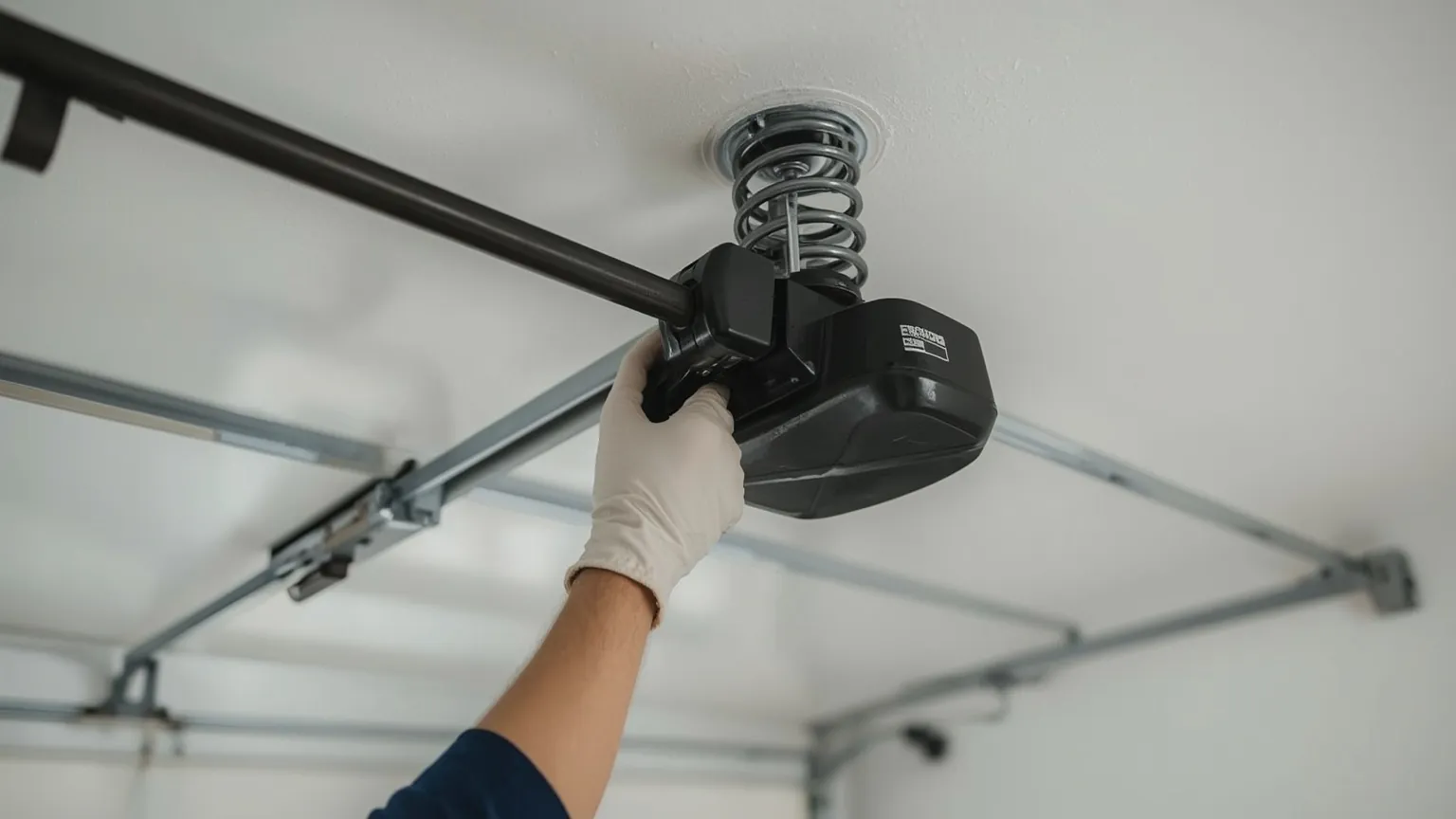
What's included with every garage door spring repair in fort lauderdale, fl
- Both torsion + extension spring work
- Single + dual spring systems
- New springs (not refurbished)
- Bearings + cones replaced as needed
- Door balance + safety-reverse test
- 1-year warranty on parts + labor
How to tell if your spring is broken
The four telltale signs: (1) a sudden loud bang from the garage (the spring snapping under tension), (2) the door won\'t lift at all or lifts only a few inches before the opener forces stop, (3) a visible gap in the coil when you look at the spring above the door, or (4) the door slams shut instead of lowering gently. If you see any of these, don\'t try to manually operate the door - call us. A door with a broken spring can weigh 200+ pounds with no counterbalance.
Torsion vs extension springs - which do you have?
Torsion springs mount on a horizontal bar above the door opening and twist to provide lift. Most modern South Florida homes use torsion - they last longer, balance better, and are quieter. Extension springs run along the horizontal tracks on either side of the door and stretch when the door closes. Common in 1980s-90s homes. Both fail the same way (cycle fatigue), but extension springs need safety cables to prevent injury when they break.
Why South Florida springs fail faster than the national average
Standard residential springs are rated for 10,000 cycles. One cycle = one open + one close. The national average homeowner hits 10,000 cycles around year 14. In South Florida - where most households use the garage as the main entry door and cycle it 6-8 times per day - homeowners typically hit 10,000 cycles in 4-6 years. Add in the humidity (corrodes the steel) and the temperature swing (fatigues the metal), and Broward / Miami-Dade / Palm Beach springs commonly need replacement at the 5-7 year mark, not 14.
What a typical spring repair looks like
Our spring repair process: tech arrives, photographs the existing spring assembly, measures wire gauge (typically .192" to .250"), inside diameter (typically 1-3/4" to 2-1/4"), and length. We replace the spring in pairs when both are over 5 years old (the matched one almost always fails within 6 months otherwise - and the second truck visit costs you more than just doing both now). Hardware bearings and end cones are inspected and replaced if showing wear. Final step: door balance test - a properly balanced door will stay in place when lifted halfway, no opener attached.
Pricing - straight numbers, no surprises
Standard single-spring replacement in South Florida runs $250-$350. Dual-spring replacement (both at once) runs $350-$450. Heavy-duty or oversize springs (carriage doors, double doors over 18 ft) run $450-$650. All quotes include the spring, labor, hardware that needs to come along, balance test, and 1-year warranty. We hold the quote against the final invoice - what we say at the door is what you pay.
Why never DIY a garage door spring
Torsion springs hold 300-400 pounds of stored energy. A spring failure during installation can throw a winding bar across the garage at lethal velocity. Every year, roughly 30,000 emergency room visits in the US trace back to garage door spring DIY attempts. The savings vs a professional repair is $80-$150 of labor - not worth the trip to the ER. We use proper winding bars, safety cables, and lockout procedure on every spring job.
Over-the-phone estimate · Florida licensed & insured.
Get a phone quote
- New torsion or extension spring
- Door balance + lift test
- Safety-reverse calibration
- Hardware inspection
- 1-year warranty