Choosing a garage door opener can feel like a small decision until the unit starts rattling through the house at dawn, struggles with a heavy door, or refuses to open when you’re already late for work. The right opener affects daily convenience, security, noise levels, energy use, and long-term repair costs. That’s why the question of Belt Drive vs. Chain Drive Garage Door Openers deserves more than a quick glance at the price tag.
Both systems use a motor and a drive mechanism to lift and lower the garage door. The difference is in how that motion reaches the trolley. A chain-drive opener uses a metal chain, while a belt-drive model uses a reinforced rubber or polyurethane belt. Each design has genuine strengths, and neither is automatically best for every property.
Homeowners in coastal Florida also have additional concerns. Salt air, humidity, storm preparation, frequent daily use, and heavy hurricane-rated garage doors can all influence opener selection. A quiet belt drive may be ideal for an attached garage beneath a bedroom, while a well-maintained chain drive may be the practical choice for a detached workshop or a particularly heavy door.
Belt Drive vs. Chain Drive Garage Door Openers: The Short Answer
Which is better, a belt-drive or chain-drive garage door opener? For most homes where low noise and smooth operation matter, a belt-drive opener is the more comfortable choice. For homeowners prioritizing maximum durability, lower upfront cost, or the ability to handle demanding conditions, a chain-drive opener can be an excellent value.
A belt drive generally runs more quietly and with less vibration. A chain drive is often more economical and may tolerate heavy workloads exceptionally well. The best match depends on the door’s weight, the garage’s location, the number of daily cycles, the desired smart-home features, and the owner’s maintenance expectations.
- Choose belt drive for quieter operation, bedrooms above the garage, and a polished residential experience.
- Choose chain drive for budget-conscious installations, heavy doors, detached garages, and demanding use.
- Choose either system confidently when the opener is correctly sized and professionally installed.
For help comparing models, homeowners can explore local garage door services or review opener repair options before making a purchase.
How Garage Door Opener Drive Systems Work
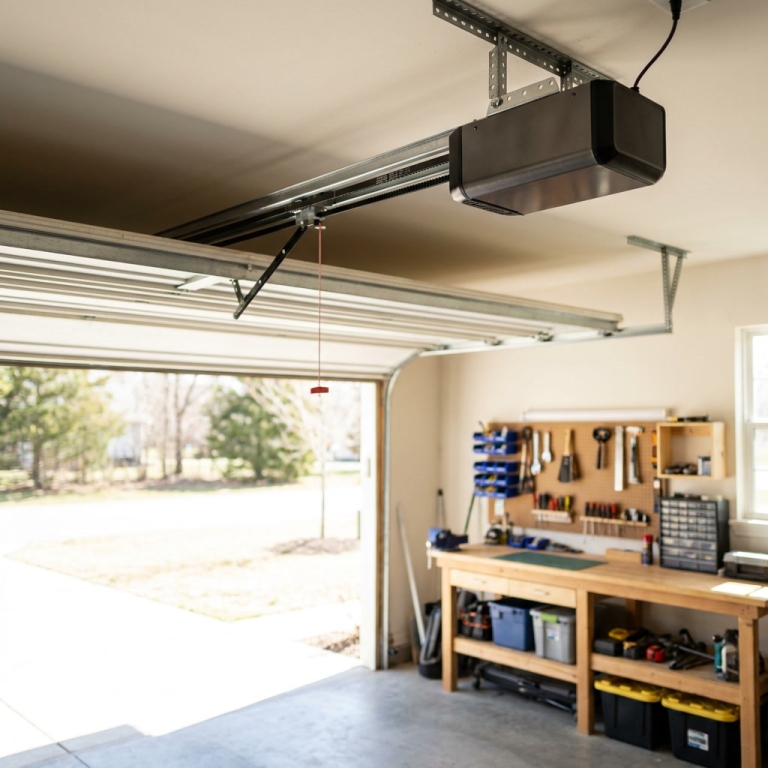
A garage door opener doesn’t lift the entire door by brute force alone. Instead, its motor turns a drive gear that moves a trolley along a rail. The trolley connects to the door through an arm and pulls the door upward, then guides it downward when the motor reverses direction.
In a chain-drive system, a continuous metal chain travels around a sprocket. The chain’s movement pulls the trolley along the rail. This design is mechanically straightforward, widely available, and familiar to technicians. In a belt-drive system, a flexible belt with embedded steel or fiberglass reinforcement performs the same job. The belt’s teeth or ribbed surface engage with the drive mechanism, creating controlled movement.
Both openers typically include safety reversal sensors, manual release mechanisms, travel-limit controls, and an emergency battery option on selected models. Modern units may also include Wi-Fi connectivity, motion-activated lighting, diagnostic alerts, and compatibility with voice assistants.
The drive type is only one part of the equation. Motor horsepower, rail length, door balance, installation quality, and control-board reliability can be just as important. A premium chain-drive opener may outperform a poorly selected belt-drive unit, and a properly balanced door can make an ordinary opener seem remarkably smooth.
Before choosing a system, consider garage door installation guidance and professional opener inspections.
Noise and Vibration: Where Belt Drives Usually Shine
Noise is the most noticeable difference between the two systems. Metal chains create contact noise as they pass over the sprocket and rail assembly. They can also produce vibration that travels through ceiling joists, mounting brackets, and the garage structure. The sound isn’t necessarily a sign of failure, but it can become irritating over time.
Belt-drive openers are designed to reduce that mechanical clatter. Their reinforced belts move with less metal-on-metal contact, so the sound is usually softer and more subdued. A belt system won’t be silent—the motor, rollers, hinges, and door panels still make noise—but the overall experience is typically smoother.
This distinction matters most when the garage sits below a bedroom, home office, nursery, or living area. In those situations, a quieter opener can improve the entire household’s comfort. It’s one of those upgrades you may not appreciate until you’ve lived with both systems.
However, don’t blame the opener for every sound. Dry rollers, loose hinges, worn torsion springs, bent tracks, and an unbalanced door can make any opener noisy. A quiet belt drive attached to a neglected door won’t perform like a luxury system.
Homeowners can combine garage door maintenance with a professional opener noise evaluation to identify the real source of the sound.
Durability and Everyday Workload
Chain-drive openers have earned their reputation for toughness. Their metal chains can handle frequent operation and substantial door weight when the opener is correctly rated. This makes them popular in detached garages, workshops, rental properties, and homes where the door opens dozens of times each day.
Belt-drive systems are durable, too, especially when they use high-quality reinforced belts and reliable components. The belt itself won’t rust in the same way a metal chain can, which may be beneficial in humid or salt-exposed environments. Still, belts can eventually stretch, crack, or lose their proper tension, particularly when the opener is overloaded or the door is poorly balanced.
Durability isn’t simply a contest between steel and rubber. Proper installation, climate, use frequency, and preventive maintenance all affect service life. A chain that is too loose may slap against the rail. A belt that is incorrectly tensioned may slip or wear prematurely. In either case, the opener is being asked to compensate for a mechanical problem elsewhere.
For busy households, the smart approach is to select a model rated for the door’s actual weight and expected cycles. Avoid choosing solely by horsepower or sticker price. A trained technician can test the door balance and recommend a system that isn’t working harder than necessary.
See door inspection services and preventive maintenance support for a more accurate assessment.
Cost Comparison: Upfront Price and Long-Term Value
Chain-drive openers are commonly less expensive at the time of purchase. Their components are widely produced, and replacement parts are often easy to source. For a homeowner managing a tight renovation budget, that lower entry price can be persuasive.
Belt-drive openers generally cost more upfront. The belt material, quieter drive assembly, and advanced electronics often place them in a higher price category. Yet the extra investment may be worthwhile when the garage is attached to the home or when reduced vibration is a top priority.
Long-term value depends on more than the original invoice. Consider expected repairs, energy use, replacement parts, convenience, noise, and the potential cost of an emergency failure. A low-cost opener that requires frequent adjustment may not remain the bargain it appeared to be. Conversely, a premium opener may offer little practical benefit if it is installed on a detached garage where noise is irrelevant.
Ask for a complete quote that separates the opener, labor, rail system, accessories, disposal, warranties, and any required door repairs. That way, you can compare apples to apples instead of comparing one advertised package with another that quietly excludes essential work.
For transparent recommendations, explore garage door estimates and opener replacement services.
Heavy Garage Doors and Horsepower Ratings
Many people assume that a higher horsepower rating automatically means a better opener. Not quite. Horsepower matters, but it must be matched to the door’s construction, balance, size, and operating conditions. A well-balanced residential door may operate perfectly with a modest motor, while an oversized, insulated, or hurricane-rated door may require a stronger system.
Chain drives are often selected for heavier doors because their metal drive mechanism provides a reassuring sense of strength under demanding conditions. Belt-drive models can also lift substantial doors, but the unit must be specifically designed and rated for that application.
The critical test is balance. When disconnected from the opener, a properly balanced garage door should move smoothly and remain reasonably stable at different positions. If it drops rapidly or feels extremely heavy, the springs or other hardware may need service. Installing a stronger opener won’t correct that underlying defect.
In fact, an oversized opener can create new problems by placing excessive force on panels, hinges, tracks, and attachment points. The goal is not maximum power; it’s appropriate power applied to a mechanically sound door.
Before selecting a motor, arrange a garage door balance inspection and discuss heavy-door opener installation.
Maintenance Requirements for Belt and Chain Systems
Both drive types benefit from regular inspection, although the specific tasks differ. A chain-drive opener may require periodic lubrication or adjustment according to the manufacturer’s instructions. Too much lubricant can attract dust, while too little may increase noise and friction. The chain should be checked for excessive slack, rust, or unusual movement.
Belt-drive systems generally need less routine drive lubrication because the belt isn’t treated like a traditional metal chain. However, the belt, sprocket, rail, fasteners, and trolley still deserve inspection. Look for fraying, cracking, glazing, slipping, or unusual vibrations.
Every opener should also receive a safety check. Test the photo-eye sensors, emergency release, wall control, remote controls, and auto-reverse function. Keep the sensors aligned and free of spider webs, dust, or stored items. A garage door that doesn’t reverse when it meets an obstruction presents a serious safety concern.
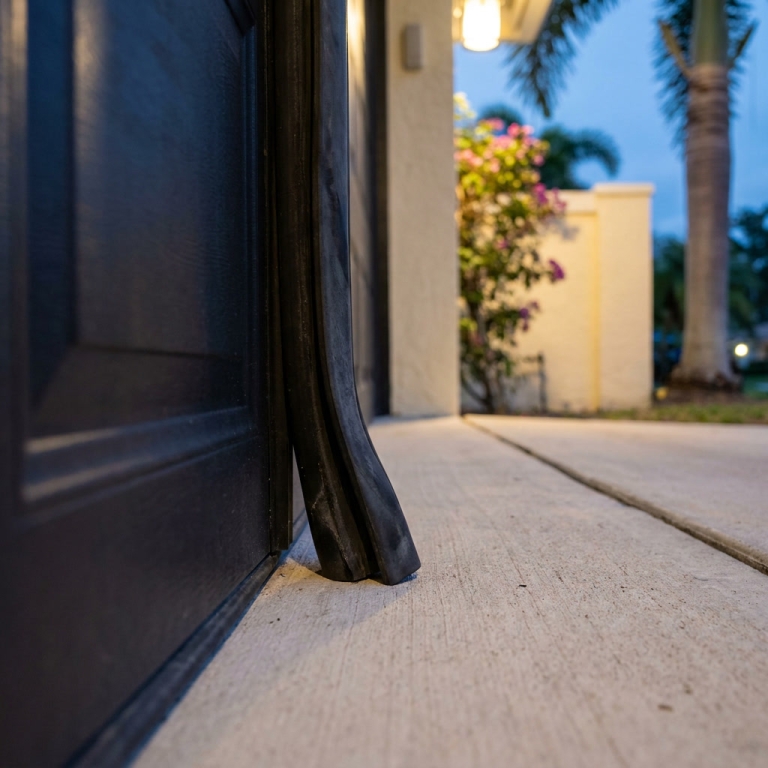
Garage door maintenance should include the door itself. Lubricate hinges and rollers when appropriate, inspect cables visually, examine weather seals, and watch for gaps or corrosion. Never attempt to adjust or replace a high-tension spring without proper training and equipment.
Schedule garage door maintenance and safety inspections before small issues become expensive repairs.
Smart Garage Door Openers and Connected Features
Today’s opener decision often includes more than belt versus chain. Smart garage door openers can connect to a home’s Wi-Fi network and allow users to monitor or control the door through a mobile app. Depending on the model, homeowners may receive open-door alerts, create temporary guest access, view activity logs, and integrate the opener with voice assistants or home automation systems.
Both belt-drive and chain-drive openers are available with smart features. The drive mechanism doesn’t determine whether an opener can connect to the internet. Instead, connectivity depends on the control board, built-in Wi-Fi, compatible accessories, and the manufacturer’s software platform.
Convenience is valuable, but security deserves equal attention. Use a strong, unique password, enable multifactor authentication when offered, keep the app updated, and avoid sharing permanent access codes unnecessarily. A smart opener should add control without creating a weak point in the home network.
Battery backup is another practical feature, especially in storm-prone regions. If electricity fails, a backup battery may allow the door to operate for a limited number of cycles. Homeowners should test the battery periodically and replace it according to the manufacturer’s schedule.
Compare smart garage door openers with Wi-Fi opener installation options before buying.
Security Features and Access Control
A garage door is one of the largest moving entry points in a home, so security should be part of the opener discussion. Modern openers may include rolling-code technology, which changes the access signal after each use. This makes it more difficult for an unauthorized person to capture and reuse a previous remote signal.
Smart systems can add activity notifications and remote control, but they should be paired with sensible habits. Don’t leave a remote in an unlocked vehicle parked outside. Review former household members’ or service providers’ access permissions. If a remote is lost, erase it from the opener’s memory rather than simply hoping it won’t be found.
Many openers also include vacation-lock modes, timed closing, and illuminated wall controls. These features can reduce the chance of accidentally leaving the garage open. Still, automatic closing should be configured carefully. The photo-eye sensors must be functional, and the area beneath the door should remain clear.
A secure opener can’t compensate for a damaged door, broken lock, or compromised access code. Security is a complete system involving the door, opener, remotes, lighting, cameras, and user behavior.
Review garage door security services and remote access solutions for a complete plan.
South Florida Climate and Salt-Air Exposure
South Florida’s climate adds a unique layer to the opener decision. High humidity, intense heat, airborne salt, heavy rain, and sudden storms can affect metal components, electronics, fasteners, and exterior hardware. Homes near the coast may experience corrosion faster than inland properties, especially when maintenance is overlooked.
A belt-drive opener can be appealing in this environment because its belt won’t corrode like an exposed metal chain. That doesn’t make the entire system corrosion-proof. The rail, sprocket, brackets, fasteners, sensors, and motor housing still contain components that need protection and inspection.
Chain-drive units can perform reliably in South Florida when they’re properly installed and maintained. A corrosion-resistant chain or manufacturer-approved protective treatment may help, but homeowners should follow the product instructions rather than applying random household oils or sprays.
Ventilation matters, too. An excessively hot garage can shorten the life of electronics and batteries. Keep the opener clear of stored items, avoid blocking ventilation areas, and inspect for water intrusion after major storms.
Local advice from South Florida garage door services and coastal garage door specialists can help match equipment to the property’s exposure.
Hurricane-Rated Garage Doors and Opener Compatibility
Hurricane-rated garage doors are engineered to withstand specific wind pressures when installed with the correct hardware and reinforcement. They can be heavier and more structurally robust than standard residential doors. That difference matters when choosing an opener.
The opener does not make a garage door hurricane-rated. Wind resistance comes from the door design, tracks, reinforcement, fasteners, and installation method. However, the opener must be compatible with the door’s weight and operating requirements. A technician should verify the entire system rather than treating the opener as an isolated appliance.
Storm preparation also includes disconnecting or securing the door according to the manufacturer’s instructions. Never force an opener to move a door that is locked, braced, damaged, or obstructed. After a hurricane, inspect panels, tracks, rollers, cables, springs, and mounting points before reconnecting automatic operation.
Some homeowners assume that a chain drive is always required for a wind-rated door. That’s too broad a claim. A properly rated belt-drive opener may work well, but the manufacturer’s specifications and professional evaluation should guide the decision.
Discuss hurricane-rated garage doors and storm-damage inspections before hurricane season arrives.
Garage Door Installation Quality Matters More Than Brand Hype
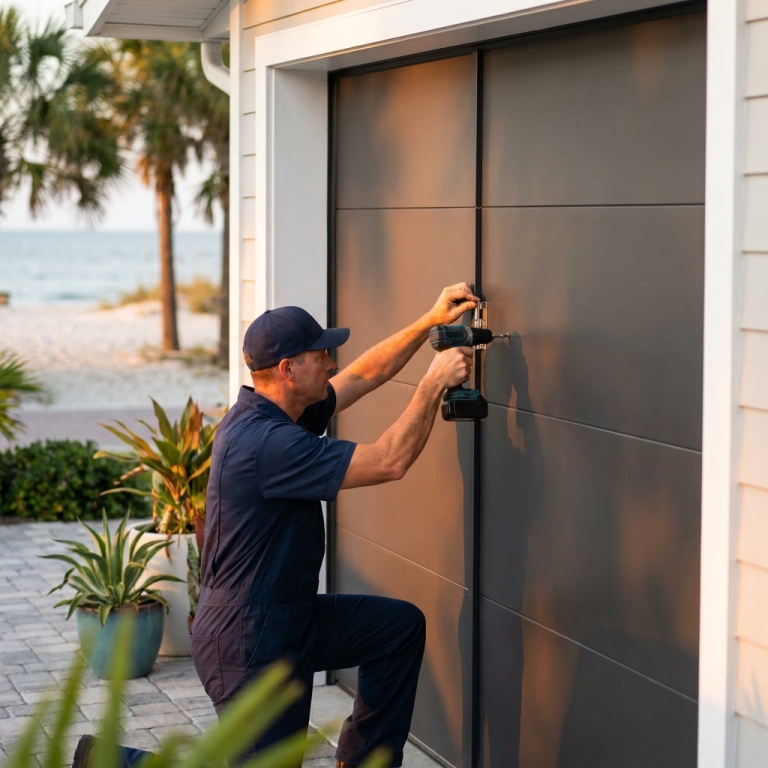
Even an excellent opener can perform poorly when installed incorrectly. The rail must be aligned, the motor securely mounted, the trolley properly connected, and the travel limits accurately programmed. Safety sensors must face each other at the correct height, and the door must move freely without binding.
Improper installation can create rattling, premature wear, inconsistent stopping, and safety failures. It can also void certain manufacturer warranties. That’s why a professional installation is not merely a convenience; it’s part of the equipment’s performance and safety system.
Ask the installer whether the existing door is suitable for the new opener. If the rollers are worn, the tracks are bent, or the springs are failing, those issues should be addressed first. Installing a new motor on a deteriorating door is like putting a new engine in a vehicle with failing brakes—it may move, but the overall system remains unsafe.
A qualified technician should explain the controls, emergency release, maintenance schedule, warranty terms, and recommended replacement parts before leaving. Good installation includes education, not just hardware.
Request a complete garage door installation evaluation and ask about opener setup and calibration.
When Garage Door Opener Repair Is the Better Choice
Replacement isn’t always necessary. Some opener problems come from misaligned sensors, depleted remote batteries, loose wiring, worn gears, damaged logic boards, or incorrect travel settings. If the motor runs but the door doesn’t move, the trolley may be disengaged or the drive gear may be worn.
Repair makes sense when the unit is relatively modern, replacement parts remain available, and the door itself is in good condition. It may also be practical when the issue is limited to a sensor, remote, wall console, battery, or minor adjustment.
Replacement is often more sensible when the opener is very old, repeatedly failing, lacks current safety features, or has suffered major electrical damage. If repair costs approach the price of a new unit, a replacement may offer better reliability and a fresh warranty.
Never ignore grinding, burning smells, sparks, uncontrolled movement, or a door that reverses unexpectedly. Disconnect the opener if necessary and keep people away until the system can be evaluated.
For troubleshooting, arrange garage door opener repair or request same-day diagnostic service.
Broken Springs and Their Effect on Opener Performance
A broken spring can make an opener appear to be the problem. When a torsion or extension spring fails, the door becomes extremely heavy. The opener may hum, strain, stop midway, or fail to lift the door altogether. Continuing to press the remote can overwork the motor and damage the drive system.
Springs are counterbalance components, not ordinary household hardware. They store significant energy, and incorrect handling can cause severe injury. A broken spring should be diagnosed and replaced by a trained professional using the correct spring size, length, wire diameter, and wind direction.
Replacing only one spring on a two-spring system may not always be appropriate. The technician should assess the complete assembly, including drums, cables, bearings, brackets, and the door’s balance. Once the spring work is complete, the opener’s force and travel settings may need to be tested again.
A powerful opener cannot compensate for failed springs. In fact, trying to use it under those conditions may turn a manageable repair into a damaged motor, stripped gear, or bent track.
If the door is suddenly heavy or won’t stay open, contact a professional for broken spring repair and garage door safety testing.
Emergency Garage Door Repair in Broward County
A garage door failure can become an urgent problem when a vehicle is trapped inside, the door is stuck open overnight, a panel has collapsed, or a spring has broken unexpectedly. In those moments, forcing the door or attempting a quick internet fix can worsen the damage and create a safety hazard.
Need emergency garage door repair near me in Broward County, Florida? Same-day service, 13+ years experience, 450+ five-star reviews. Call (954) 830-9661.
Emergency service should begin with a safety assessment. The technician should identify whether the issue involves the opener, springs, cables, rollers, tracks, panels, sensors, or structural mounting points. Temporary measures may be used when a complete repair requires special parts, but the goal should always be a safe and durable resolution.
Before calling, keep people and pets away from the door. Don’t stand beneath a partially open door, pull on loose cables, or remove spring hardware. If the door is stuck open, secure the area and protect the garage interior from rain where possible.
Reach out through emergency garage door repair or review Broward County service information.
Choosing a Broward County Garage Door Company
Selecting a service provider is about more than finding the first phone number in a search result. Look for clear communication, verifiable experience, written estimates, warranty information, and technicians who explain the problem without using confusing jargon.
A reputable Broward County garage door company should inspect the full system instead of immediately recommending the most expensive opener. Ask whether the quote includes labor, hardware, programming, disposal, safety testing, and follow-up support. If a repair is recommended, request an explanation of why repair is appropriate and how long the replacement part is expected to last.
Reviews can be useful, but they should be considered alongside licensing, insurance, responsiveness, and workmanship. Be cautious of unusually low quotes that omit essential hardware or pressure you into same-day decisions without a clear safety reason.
Good service has a human element. The technician should arrive prepared, respect the property, protect interior finishes, and leave the work area cleaner than it was found. That’s not fancy marketing; it’s basic professionalism.
Compare Broward County garage door company services and local opener specialists before scheduling work.
Miami-Dade Garage Door Services and Local Building Concerns
Miami-Dade properties often face demanding weather conditions, coastal exposure, and strict expectations for storm-resilient construction. Garage doors may need specific approvals, reinforcement, or installation details depending on the property and product selected. Homeowners should verify requirements with qualified professionals and relevant local authorities.
When selecting between drive systems, consider how the opener will interact with the door’s weight, reinforcement, and daily use. A belt-drive unit may provide a pleasant, low-vibration experience in an attached home, while a robust chain-drive model may be a practical fit for a high-use property. The door’s engineering should come first.
After severe weather, don’t rely on visual inspection alone. Tracks may shift slightly, brackets may loosen, and cables may move out of alignment without immediately causing a dramatic failure. A professional evaluation can identify problems before the next operating cycle turns them into an emergency.
Whether the project involves installation, maintenance, or storm-related repair, local knowledge is valuable. Technicians familiar with Miami-Dade homes can account for humidity, salt exposure, construction styles, and regional weather patterns.
Explore Miami-Dade garage door services and storm-ready garage door solutions.
Attached Garage or Detached Garage?
The location of the garage often settles the noise question. In an attached garage, vibration can travel through shared walls and ceiling framing. If bedrooms or offices are nearby, the quieter operation of a belt-drive system may justify its higher purchase price.
In a detached garage, workshop, or exterior storage building, sound may be far less important. A chain-drive opener can deliver reliable performance without the premium associated with low-noise operation. Its mechanical durability may also be attractive if the door is large, frequently used, or exposed to dust and heavy work conditions.
Climate still matters in either setting. A detached structure may experience greater temperature swings, while an attached garage may be better protected from direct weather. Evaluate ventilation, water exposure, electrical supply, and the distance between the opener and the home’s living spaces.
Think about future use, too. A detached garage might become a guest suite, office, or workshop later. If the space is likely to change, investing in quieter operation and smart controls today may prevent another upgrade down the road.
Discuss the property layout during opener selection and garage planning consultations.
Comparing Belt and Chain Drives at a Glance
| Feature | Belt Drive | Chain Drive |
|---|---|---|
| Noise level | Generally quieter and smoother | More mechanical noise and vibration |
| Typical price | Moderate to premium | Budget-friendly to moderate |
| Heavy-door suitability | Excellent when properly rated | Very strong choice for demanding loads |
| Climate considerations | Belt avoids chain rust, but other parts still need care | Metal components require corrosion awareness |
| Maintenance | Inspect belt tension and wear | Inspect chain lubrication, slack, and corrosion |
| Best match | Attached garages and noise-sensitive homes | Detached garages, heavy use, and value-focused buyers |
This table offers a starting point, not a substitute for a site evaluation. A door’s balance, dimensions, material, and operating frequency can change the recommendation. In other words, the “best” opener is the one properly matched to the whole system.
Use garage door consultations and opener comparison services for property-specific advice.
Questions to Ask Before Buying an Opener
A few well-chosen questions can prevent an expensive mismatch. Start by asking how much the door weighs and whether it is properly balanced. Then ask what horsepower or duty rating the proposed opener carries and whether it includes battery backup, Wi-Fi, rolling-code security, and a manufacturer warranty.
Ask whether the quote includes a new rail. Some systems are not compatible with existing rails, and mixing components can create performance or warranty problems. Confirm whether the installer will test the safety reversal system and whether follow-up adjustments are included.
Find out which replacement parts are likely to be needed in the future. A system may be excellent, but difficult-to-source components can make later repairs more expensive. It’s also reasonable to ask how the opener will handle humid, coastal, or storm-prone conditions.
Finally, ask what happens if the opener fails during a power outage. Battery backup is useful, but it has limits. Understand how to use the manual release safely and how to reconnect the door after the power returns.
Prepare with garage door buying guidance and professional opener recommendations.
Common Mistakes Homeowners Make
The first mistake is choosing by price alone. The cheapest opener may be perfectly adequate, but only if it matches the door and the property. The second is selecting horsepower without checking balance. More power isn’t a cure for worn springs or binding tracks.
Another common error is overlooking the rollers and hinges. Homeowners sometimes replace a noisy chain drive with a belt drive and expect silence, only to discover that the door hardware was responsible for most of the racket.
Some people also delay repairs after noticing intermittent problems. A door that reverses, hesitates, or shakes is communicating that something needs attention. Waiting may allow a small sensor or adjustment issue to become a motor, gear, or structural failure.
Finally, avoid do-it-yourself spring work. Online videos can explain the process, but they can’t eliminate the stored energy in a wound spring or compensate for unfamiliar tools. Professional help is the sensible route for high-tension components.
Prevent trouble with garage door maintenance and timely repair appointments.
Frequently Asked Questions About Belt and Chain Openers
Are belt-drive garage door openers quieter than chain-drive models?
Yes, belt-drive openers are generally quieter because they use a reinforced flexible belt instead of a metal chain. However, the total sound level also depends on rollers, hinges, springs, tracks, mounting hardware, and the door’s condition. A belt drive reduces opener-related noise, but it cannot eliminate noise caused by worn door components.
Do chain-drive garage door openers last longer?
Not automatically. Chain drives have a strong reputation for durability and can be excellent for heavy or frequent use. Belt drives can also provide many years of reliable service when correctly rated, installed, and maintained. Service life depends on workload, climate, door balance, component quality, and preventive care.
Can a belt-drive opener lift a hurricane-rated garage door?
It can, provided the specific opener is rated for the door’s weight and operating requirements. Hurricane resistance comes from the door, reinforcement, tracks, fasteners, and installation—not from the opener. A professional should evaluate the complete system before selecting the motor and drive type.
Is it worth replacing a chain-drive opener with a belt-drive model?
Replacement may be worthwhile when the existing opener is noisy, aging, unreliable, or located beneath a bedroom or office. If the chain-drive unit is functioning well in a detached garage, replacement may offer limited practical benefit. First confirm whether noise is actually coming from the opener rather than the door hardware.
How often should a garage door opener be serviced?
A basic safety and operational check should be performed periodically, with a more complete professional inspection at intervals appropriate to the door’s age, use, and environment. Coastal homes, heavily used doors, and properties with recurring problems may benefit from more frequent attention. Follow the opener manufacturer’s maintenance instructions.
Can I repair a garage door opener myself?
Simple tasks such as replacing remote batteries, clearing sensor obstructions, or checking the power supply may be reasonable for a homeowner. Repairs involving motors, circuit boards, springs, cables, gears, or structural hardware should be handled by a trained technician. Disconnect power before inspecting the unit and never bypass safety sensors.
What should I do if my garage door won’t open during a power outage?
If the opener has a battery backup, follow the manufacturer’s instructions. Otherwise, use the emergency release only when the door is fully closed or safely supported, because an unbalanced door can move suddenly. If the door is heavy, jammed, or damaged, don’t force it; contact a professional for assistance.
Final Recommendation for South Florida Homeowners
The debate over Belt Drive vs. Chain Drive Garage Door Openers doesn’t have a one-size-fits-all winner. Belt drives are usually the better choice for quiet, refined operation in attached homes, especially when bedrooms or offices are nearby. Chain drives remain a dependable, cost-conscious option for heavy doors, detached garages, workshops, and demanding daily schedules.
In South Florida, the decision should also account for humidity, coastal salt, storm exposure, hurricane-rated doors, battery backup, smart controls, and local installation requirements. Most importantly, the opener must be matched to a balanced, properly maintained door. The right drive system cannot overcome broken springs, damaged tracks, worn rollers, or poor installation.
Whether you need a new opener, broken spring repair, routine garage door maintenance, or dependable emergency garage door repair, choose a qualified professional who evaluates the complete system. With the right equipment and care, both belt-drive and chain-drive openers can provide secure, smooth, reliable access for years to come.
For local support, explore South Florida garage door services, Broward County garage door company resources, and Miami-Dade garage door services.
Skip the YouTube rabbit hole - we'll have a tech at your door same day across Broward, Dade and Palm Beach.