Why Family-Friendly Garage Door Safety Should Be a Priority
For many households, the garage is more than a place to park a vehicle. It may serve as the primary entrance to the home, a storage area for bicycles and sports equipment, a workshop, a laundry space, or a convenient route children use when coming home from school. Because garage doors are large, heavy, motorized systems, their safety features deserve the same attention as locks, smoke alarms, stair gates, and outdoor lighting. A properly selected and maintained garage door can help protect children, pets, vehicles, and belongings while making daily routines easier for every member of the family.
Modern garage doors are designed with several safeguards that reduce the risk of accidental closing, entrapment, property damage, and unauthorized access. These safeguards include photoelectric safety sensors, automatic reverse mechanisms, secure wall controls, rolling-code remotes, manual release systems, pinch-resistant designs, battery backups, and smartphone monitoring. However, safety technology only works as intended when it is correctly installed, regularly tested, and kept free from damage or obstruction.
Families in South Florida also face environmental conditions that make garage door safety especially important. Heat, humidity, salt air, heavy rain, tropical storms, and hurricanes can affect metal components, electrical systems, tracks, springs, weather seals, and exterior panels. A door that appears functional may still have weakened hardware or sensors that are no longer aligned. This is why professional South Florida garage door services can be valuable for homeowners who want a dependable system rather than a temporary fix.
When considering a new door or evaluating an existing one, homeowners should look beyond appearance and price. The right door should be appropriately sized, correctly balanced, compatible with the opener, resistant to local weather conditions, and equipped with safety features that match the needs of the household. Families with young children may prioritize obstruction detection and secure controls, while households with older adults may benefit from quiet operation, reliable lighting, and easy emergency access.
A family-friendly garage door should accomplish four basic goals:
- Open and close smoothly without excessive noise, shaking, or delay.
- Stop or reverse automatically when an object, child, pet, or vehicle is detected.
- Remain secure against accidental activation and unauthorized entry.
- Provide reliable operation during power interruptions, storms, and everyday wear.
It is also important to teach family members that a garage door is not a toy or a climbing surface. Children should never run beneath a moving door, hang from the bottom section, press wall buttons repeatedly, or play with remotes. Pets should be kept away from the opening while the door moves. Adults should visually confirm that the doorway is clear before activating the system and should never leave a moving door unattended.
Small warning signs should not be ignored. Grinding noises, uneven movement, a door that reverses unexpectedly, frayed cables, a loose track, a remote that works intermittently, or a door that closes too quickly may indicate a developing safety problem. Prompt inspection can prevent a minor issue from becoming a serious accident or an expensive emergency.
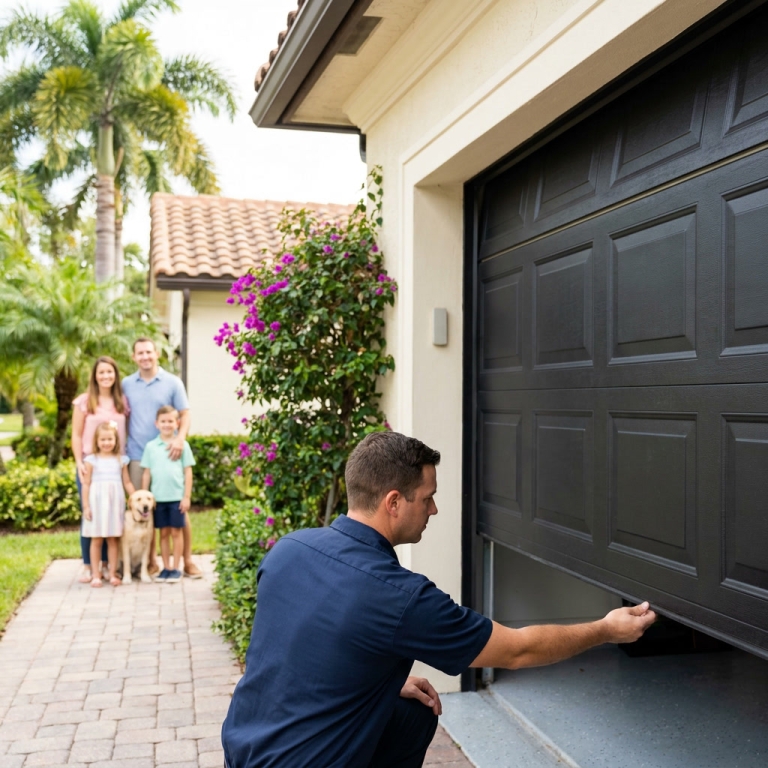
In Broward and Miami-Dade communities, professional technicians can help families select, install, test, and maintain garage doors based on local conditions and household needs. Whether the project involves a new installation, an opener upgrade, or routine maintenance, the goal should always be safe, predictable operation. Understanding the main safety features is the first step toward making an informed decision.
Essential Garage Door Safety Features Every Family Should Understand
The most important safety features on a modern garage door work together to prevent the door from closing on a person, pet, vehicle, or object. The two systems most homeowners should understand are the photoelectric safety sensors and the automatic reverse mechanism. Federal safety standards require automatic garage door openers manufactured for residential use to include these types of protection, but installation quality and ongoing testing still matter.
Photoelectric sensors are usually installed near the bottom of each side of the garage door opening. One sensor sends an invisible beam of light to the other. If a child, pet, bicycle, box, or vehicle interrupts that beam while the door is closing, the opener should stop and reverse the door. Sensors must face each other directly and remain at the correct height. Dust, spider webs, water spots, accidental bumps, or misalignment can interfere with operation.
Homeowners can perform a basic sensor test by placing a solid object, such as a piece of wood, in the doorway without standing beneath the door. When the door is closing, it should reverse as soon as the beam is interrupted. Never test the system by putting a hand, foot, child, or pet in the door’s path. If the door continues downward, stop using the opener and request professional service.
The automatic reverse system responds to resistance. If the closing door encounters an obstruction, the opener should reverse rather than continue applying force. This system depends on correct opener settings, proper door balance, and functional mechanical components. An opener that has been adjusted to compensate for a heavy or damaged door may create a dangerous condition. Increasing the closing force is not a substitute for repairing springs, rollers, tracks, hinges, or cables.
Other essential safety features include:
- Manual release handle: This allows an adult to disconnect the door from the opener during a power failure or mechanical problem. The handle should be clearly visible and accessible to adults, but cords should be positioned so young children cannot play with them.
- Wall control lock function: Many modern wall consoles include a vacation or lock mode that prevents remote controls from opening the door when the family is away.
- Rolling-code technology: This changes the access code each time a remote is used, making it more difficult for unauthorized individuals to copy the signal.
- Automatic lights: Opener lights improve visibility when family members enter or leave the garage at night. LED lighting can provide a bright, long-lasting solution.
- Battery backup: A backup battery can allow the door to operate during a power outage, which is particularly useful when the garage is the main exit or entry point.
- Pinch-resistant panels: Specially designed sections and hinges can reduce the chance of fingers becoming trapped between moving door sections.
Door weight and balance are also closely connected to safety. A properly balanced door should stay in place when manually lifted partway, although homeowners should not attempt to adjust the springs themselves. Springs contain substantial stored energy and can cause severe injury if handled incorrectly. If a door feels unusually heavy, drops rapidly, rises unevenly, or will not remain open, it may require broken spring repair or a related balance adjustment from a trained technician.
Children often learn by copying adults, so family education should accompany mechanical safeguards. Show children where they may safely stand while the door operates and explain that the sensors are not a game. Keep remote controls out of reach of small children and avoid mounting wall controls where toddlers can repeatedly activate them. If the garage connects directly to the living area, consider a self-closing interior door and remind family members never to leave that door propped open.
Safety features should be checked after any repair, storm, impact, or installation. A vehicle that bumps the door track, for example, may shift a sensor or bend a vertical track even if the panels still move. A technician can inspect the full system, verify travel limits, measure operating force, examine fasteners, and confirm that emergency release components work correctly.
Choosing Safe Garage Doors, Openers, and Weather-Ready Components
Family-friendly safety begins before installation. Homeowners selecting a new door should consider the door’s construction, weight, insulation, hardware, wind rating, and compatibility with the opener. A beautiful door that is too heavy for its opener or unsuitable for local weather can create long-term safety and maintenance problems. Professional garage door installation helps ensure that the panels, tracks, rollers, springs, cables, hinges, brackets, and opener are selected as one coordinated system.
In South Florida, weather resistance is especially important. High winds can place significant pressure on a garage door, and a failed door may expose the home to wind, rain, debris, and additional structural damage. Hurricane-rated garage doors are engineered and tested for stronger wind conditions than standard residential doors. Depending on the product, protection may include reinforced panels, stronger tracks, upgraded brackets, wind-load hardware, and approved bracing. Homeowners should verify that the door is appropriately rated for the property’s location and local building requirements.
A hurricane-rated door can improve safety, but it still needs proper installation and maintenance. Reinforcement components are only effective when fastened correctly to suitable structural points. Loose bolts, corroded brackets, damaged tracks, or deteriorated seals can weaken performance. Before storm season, homeowners should schedule an inspection and confirm that any removable storm components are installed according to the manufacturer’s instructions.
Insulation is another feature worth considering. An insulated door can help moderate garage temperatures, reduce outside noise, and improve energy efficiency when the garage shares a wall with living spaces. It may also provide greater rigidity than a lightweight, uninsulated door. However, insulation does not automatically make a door hurricane-rated or safer. The door still needs the correct structural design, hardware, sensors, and opener settings.
When choosing an opener, families should consider more than horsepower. The opener must be matched to the door’s size, weight, balance, and usage frequency. Belt-drive openers are often appreciated for quiet operation, while chain-drive models may be selected for durability and value. Screw-drive systems may suit certain environments but require attention to lubrication and manufacturer recommendations. A qualified installer can explain which option fits the door and household instead of relying on a one-size-fits-all recommendation.
Useful opener features for families may include:
- Soft-start and soft-stop movement to reduce sudden jolts.
- Integrated LED lighting for improved visibility.
- Battery backup for operation during outages.
- Vacation lock mode to disable remote access while traveling.
- Rolling-code security to help prevent code theft.
- Built-in diagnostic indicators that identify sensor or motor problems.
- Wi-Fi connectivity for notifications and remote status checks.
Smart garage door openers can be especially useful for households with children, caregivers, guests, or frequent deliveries. A connected opener may notify a parent when the garage door opens, confirm whether it is closed, create temporary access permissions, and integrate with a home security system. Some systems allow voice commands or scheduled operation. These conveniences should be configured carefully. Use strong passwords, enable two-factor authentication when available, update the opener’s software, and avoid sharing access with more people than necessary.
Smart technology should supplement—not replace—physical safety. A phone notification does not prevent a child from standing beneath a closing door, and a camera does not correct a broken spring or misaligned sensor. Families should still perform visual checks, test the reversal system, and arrange professional inspections.
Access control is another important consideration. Keep remotes out of vehicles parked outside or in unlocked areas. If a remote is lost, erase or reprogram it rather than assuming it is unlikely to be found. Teach older children how to use the wall control responsibly, but do not give young children unsupervised access. If the garage is used by service providers, temporary digital access may be safer than providing a permanent remote.
For homeowners comparing local providers, an experienced Broward County garage door company can evaluate wind requirements, installation conditions, opener compatibility, and family safety needs. Residents farther south can seek qualified Miami-Dade garage door services familiar with regional weather, building practices, and corrosion concerns. The best installation is one that combines code compliance, careful workmanship, reliable components, and clear instructions for every adult in the household.
Maintenance, Testing, and Safe Daily Habits
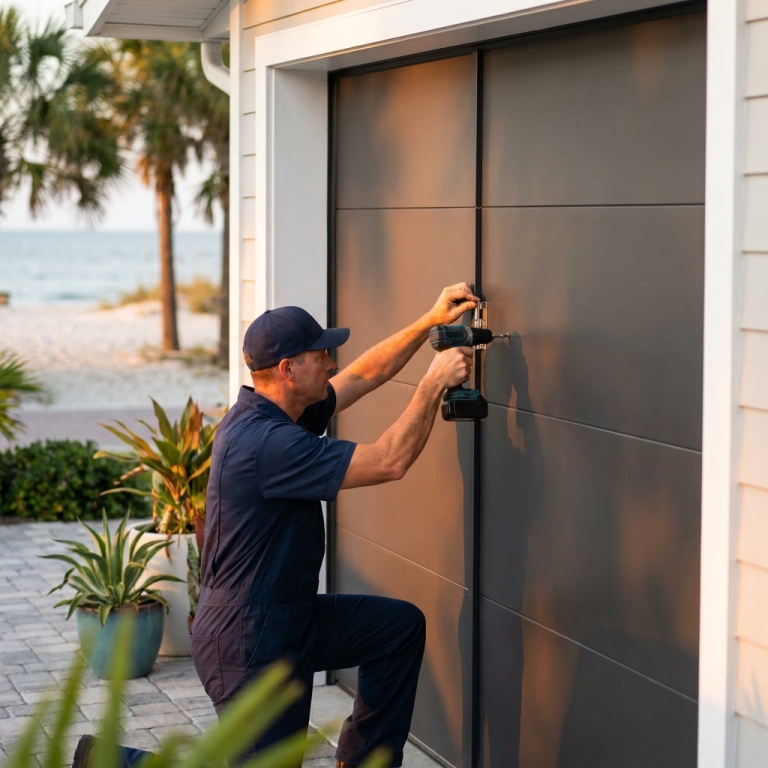
Even the best garage door will become less safe if it is neglected. Routine garage door maintenance helps identify wear before it affects operation. A maintenance program should include visual inspection, cleaning, lubrication where appropriate, fastener checks, balance testing by a professional, sensor testing, opener evaluation, and examination of weather seals. Homeowners do not need to perform every task themselves, but they should know what normal operation looks and sounds like.
Start with a visual inspection from a safe distance. Look for bent tracks, loose hardware, cracked rollers, frayed cables, rust, damaged panels, broken hinges, and gaps around the weather seal. Observe whether the door moves evenly or shakes from side to side. Listen for grinding, popping, scraping, squealing, or repeated clicking. A change in sound can be an early warning that a component needs attention.
Test the photoelectric sensors regularly. Confirm that both indicator lights are illuminated and that the lenses are clean. Do not paint over sensors, cover them with decorations, or place storage items where they can be bumped. If a sensor is knocked out of alignment, avoid forcing it into position if the mounting bracket is bent. A professional can determine whether the issue is simple alignment, damaged wiring, or a larger opener problem.
Keep the area around the door clear. Bicycles, toys, ladders, boxes, lawn equipment, and sports gear should not be stored in the travel path. A cluttered garage makes it harder to see the doorway and increases the chance that an object will block a sensor or become trapped beneath the door. Mark a safe standing area for children and keep pets away from the opening until the door is completely closed.
Never lubricate a garage door with random household products without checking the manufacturer’s instructions. Some components need a specific garage-door lubricant, while others should remain dry. Lubricating the wrong part can attract dust or affect the operation of belts and sensors. Springs, cables, and drums should not be adjusted by untrained homeowners. These components may be under extreme tension.
A practical family safety checklist includes:
- Test the automatic reverse system with an appropriate object, never a person or animal.
- Confirm that the photoelectric sensors are clean, aligned, and unobstructed.
- Check that remotes and wall controls operate only when intentionally activated.
- Keep children from playing near the door, tracks, hinges, springs, and opener.
- Replace remote batteries before they fail unexpectedly.
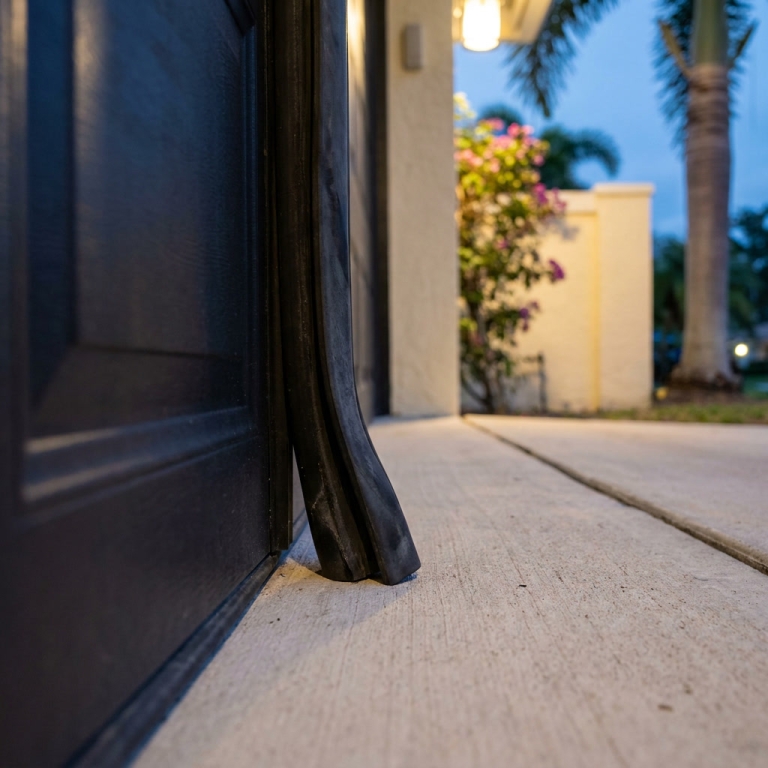
- Inspect the bottom seal and side weather seals for gaps, cracking, or movement.
- Confirm that the emergency release is accessible to adults and functions correctly.
- Schedule professional service after an impact, storm, electrical surge, or unusual noise.
Opener problems should be handled carefully. A door that does not respond may have a dead remote battery, a tripped outlet, a locked wall console, a sensor fault, or a motor problem. If basic checks do not resolve the issue, avoid repeatedly pressing the button. Repeated attempts can place additional stress on the motor and door hardware. A trained provider offering garage door opener repair can test the circuit, control board, drive system, travel limits, sensors, and safety settings.
Broken springs require particular caution. Springs help counterbalance the weight of the door, and a failed spring may make the door impossible or dangerous to lift. Do not pull the emergency release and attempt to raise a heavy door alone. Do not cut, stretch, clamp, or remove a spring. Dependable emergency garage door repair should include an inspection of both springs, cables, drums, bearings, and the door’s balance rather than replacing only the visibly broken part.
Weather can change maintenance needs. Coastal air may accelerate corrosion, while intense sunlight can deteriorate seals and exterior finishes. Heavy rain can expose drainage or electrical issues. After a hurricane or severe storm, inspect the door for impact damage and do not operate it if the panels are bent, the tracks are displaced, or the cables are loose. Even if the opener runs, forcing a damaged door can worsen the problem.
Families should also establish a simple emergency plan. Adults should know how to shut off power to the opener, use the manual release when appropriate, and contact a qualified technician. Children should know to move away from the door and tell an adult if it makes an unusual sound or stops halfway. These habits create an extra layer of protection that technology alone cannot provide.
Responding to Problems and Creating a Long-Term Safety Plan
Garage door problems range from minor inconveniences to urgent hazards. A remote that needs a new battery is different from a door hanging crookedly from one cable. Families should know when they can perform a simple user-level check and when they need professional help. If the door is stuck, unusually heavy, off its tracks, making a loud snapping sound, or showing signs of a broken spring or cable, keep everyone away from the area and contact a qualified technician.
Emergency service is appropriate when the door creates an immediate safety or security concern. Examples include a door that will not close after the home is left unattended, a damaged door after a vehicle impact, a broken spring that prevents safe closure, a door trapped open during severe weather, or an opener that causes uncontrolled movement. A reliable provider offering emergency garage door repair can secure the opening, identify the cause, and explain whether a temporary repair or complete replacement is appropriate.
Homeowners should be cautious of quick fixes that bypass safety systems. Taping down a sensor, disconnecting the reverse feature, tying up a cable, or forcing the door closed can expose the family to greater danger. A temporary measure may be necessary in an emergency, but safety components should never be permanently disabled. Any repair should restore proper operation and include testing of the complete system.
When evaluating a service provider, ask whether the technician will inspect the entire door rather than focusing only on the reported symptom. A broken spring may reveal worn bearings, stretched cables, damaged drums, or an unbalanced door. An opener failure may be caused by a power problem, sensor fault, wiring issue, or excessive door resistance. A complete diagnosis reduces repeat failures and helps families understand the repair decision.
Questions to ask before approving work include:
- What caused the problem, and are other components affected?
- Will the safety sensors and automatic reverse system be tested afterward?
- Are replacement parts compatible with the existing door and opener?
- Does the proposed door meet applicable wind-load or hurricane requirements?
- What warranty applies to parts and labor?
- What maintenance should the homeowner perform between professional visits?
- Is the door safe to operate temporarily, or should it remain closed and disconnected?
Families planning a renovation or moving into a new home should include garage door safety in the inspection process. Verify the age of the opener, the condition of the springs and cables, the availability of replacement parts, the quality of the weather seals, and the presence of modern safety sensors. Older openers may lack battery backup, smartphone compatibility, strong lighting, or current security features. Replacement may be more practical than repeated repairs when the system is outdated or unreliable.
A household safety plan should be reviewed as family circumstances change. When children begin driving, explain remote security and safe operation. When older adults move into the home, make sure controls are easy to see and use. If a family adopts a pet, establish a rule that animals remain away from the door while it moves. If caregivers, cleaners, or contractors need access, use temporary permissions whenever possible and remove access when the work is complete.
Smart monitoring can support this plan. Notifications may alert a parent that the door opened unexpectedly after school or remained open overnight. Video integration may help confirm whether the doorway is clear before closing. However, every user should understand that a connected device can lose internet access, experience a battery failure, or become vulnerable if accounts are poorly secured. Strong account management and regular software updates are essential.
Professional inspections are particularly valuable before storm season, after major weather events, and when a door begins behaving differently. A technician can assess structural condition, verify the wind rating, inspect corrosion, test the opener’s force and travel limits, and recommend repairs based on actual wear. Preventive service is generally safer and less disruptive than waiting for a failure at the worst possible time.
For homeowners who need local guidance, an established provider may offer installation, maintenance, opener service, spring replacement, storm preparation, and emergency assistance in one place. In Broward County, the company brief for this service is straightforward: Need emergency garage door repair near me in Broward County, Florida? Same-day service, 13+ years experience, 450+ five-star reviews. Call (954) 830-9661. Customers should still request clear pricing, understand the recommended work, and confirm that safety testing is included.
The safest garage door is not necessarily the most expensive model. It is the system that is correctly sized, professionally installed, properly reinforced, regularly inspected, and used responsibly. Features such as sensors, automatic reversal, rolling-code remotes, battery backup, pinch-resistant construction, secure controls, and smart notifications can significantly improve family protection when they are maintained and used correctly.
By making safety part of everyday garage use, families can reduce risks while enjoying the convenience of modern access technology. Keep the doorway clear, teach children and guests responsible habits, respond promptly to warning signs, and never attempt high-tension repairs without professional training.
A safe garage door protects more than vehicles—it helps protect the people and pets who rely on the home every day. From choosing hurricane-rated garage doors and dependable smart garage door openers to scheduling garage door maintenance, opener service, and broken spring repair, each decision contributes to a safer household. If your door is noisy, unreliable, damaged, or no longer meets your family’s needs, call (954) 830-9661 for dependable South Florida garage door services and prompt assistance from an experienced local team.
Skip the YouTube rabbit hole - we'll have a tech at your door same day across Broward, Dade and Palm Beach.