Garage Door Spring Warranties Explained: Coverage, Exclusions, and Smart Buying Tips
Garage door springs don’t get much attention—until one breaks. Then, suddenly, the door may become dangerously heavy, refuse to open, or hang crookedly in its tracks. A warranty can soften the financial blow, but only if you understand what the warranty actually promises. “Lifetime” doesn’t always mean lifetime ownership, and a spring warranty rarely covers every part of a garage door system.
This guide breaks down Garage Door Spring Warranties in practical, homeowner-friendly language. We’ll explore coverage periods, labor costs, rust, improper installation, maintenance obligations, transferable protection, and the questions you should ask before approving garage door repair. Along the way, we’ll also explain how warranties relate to garage door installation, opener problems, storm preparation, and routine service.
Garage Door Spring Warranties: What Do They Cover?
Question: What does a typical garage door spring warranty cover?
Answer: A typical warranty covers premature failure of the spring itself due to defective materials or workmanship during the stated warranty period. Depending on the manufacturer and installer, it may provide a replacement spring, partial credit, or a complete spring replacement. Labor may be included, limited, or excluded altogether.
That last point is the one that catches many homeowners off guard. A company may advertise a ten-year spring warranty, but the warranty might only cover the metal spring. You could still be responsible for the technician’s visit, removal of the failed spring, installation of the replacement, service fees, or additional hardware. In other words, the warranty may cover the “what,” while you pay for the “how.”
Before relying on any warranty, read the written terms and ask whether the coverage is from the manufacturer, the installer, or both. A reputable South Florida garage door service provider should explain the difference without burying you in fine print.
How Garage Door Spring Warranties Actually Work
Garage Door Spring Warranties are contractual promises, not automatic insurance policies. The warranty identifies the product, the coverage period, the remedy available if the spring fails, and the circumstances that can void protection. Some warranties begin on the installation date, while others begin when the spring leaves the manufacturer.
There are usually two separate layers of protection. The first is the manufacturer’s warranty, which addresses defects in the spring’s materials or construction. The second is the installer’s workmanship warranty, which addresses errors such as incorrect spring sizing, poor adjustment, or improper attachment. These warranties may overlap, but they are not interchangeable.
Suppose a spring snaps after two years. If the spring was defective, the manufacturer may provide a replacement. If it was installed incorrectly, the installer may be responsible. If the spring simply reached the end of its expected cycle life, neither party may owe you a free replacement. That distinction is why documentation matters.
What Is a Torsion Spring?
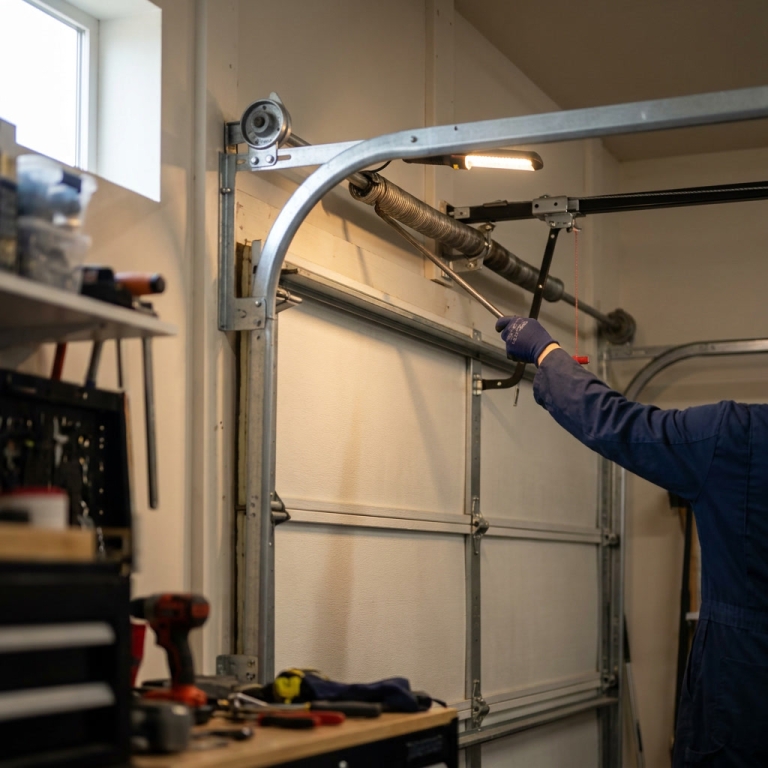
A torsion spring is a tightly wound steel coil mounted above the garage door. As the door closes, cables and drums transfer energy into the spring. When the door opens, the spring releases that stored energy to help lift the door’s weight. Torsion systems are common because they offer balanced movement and controlled operation when properly installed.
Because torsion springs store substantial mechanical energy, they’re not ordinary do-it-yourself hardware. A broken spring can look simple, but removing or winding one incorrectly can cause severe injury. The safest approach is to have a trained professional inspect the entire counterbalance system, including the drums, cables, end bearings, center bearing, and brackets.
A warranty usually applies to the spring coil—not necessarily to every part connected to it. If a damaged cable caused the spring to fail, or if a worn bearing created excessive resistance, the warranty provider may investigate the surrounding components before approving a claim.
What Is an Extension Spring?
Extension springs stretch and contract along the horizontal tracks on either side of the door. When the door closes, the springs extend; when it opens, they contract and help lift the panels. Older residential systems often use extension springs, frequently paired with safety cables.
Extension spring warranties may differ from torsion spring warranties because the product design, cycle rating, and installation requirements are different. Some manufacturers specify that safety cables must be installed for the warranty to remain valid. Others require matched spring pairs so the door remains balanced.
If one extension spring breaks, replacing only that spring may create uneven lifting and accelerated wear. A professional may recommend replacing both, especially when the springs are the same age. The warranty might cover the failed component, but it may not cover the second spring or the labor needed to bring the entire system back into balance.
Cycle Ratings and Warranty Lengths
Spring life is commonly described in cycles. One cycle equals one complete opening and closing of the garage door. A standard spring may be rated for approximately 10,000 cycles, while upgraded springs can be rated for 25,000, 50,000, or more cycles.
| Spring rating | Approximate use | Warranty question to ask |
|---|---|---|
| 10,000 cycles | Basic household use | Is coverage limited to defects? |
| 25,000 cycles | Moderate or frequent use | Is labor included during the term? |
| 50,000 cycles | High-use households or upgraded systems | Does the warranty have a pro-rated schedule? |
A cycle rating is not the same as a calendar guarantee. A busy family may use the door far more often than a homeowner who parks in a driveway. Climate, corrosion, door weight, balance, and maintenance also influence service life. Ask whether the warranty promises a number of years, a number of cycles, or only protection against manufacturing defects.
Manufacturer Warranty Versus Installer Warranty
A manufacturer warranty generally covers the spring product. An installer warranty generally covers the work performed during installation. This distinction becomes especially important when a spring fails shortly after service.
- Manufacturer coverage: May address defective steel, faulty winding, or premature product failure.
- Installer coverage: May address incorrect sizing, poor adjustment, loose fasteners, or improper installation.
- Service agreement: May include labor, inspections, tune-ups, or discounted future visits.
Not every company offers all three. Before authorizing broken spring repair, ask for the warranty in writing and identify who will honor it. A verbal statement such as “you’re covered for life” is too vague to be useful. Life of what—the spring, the door, the original owner, or the company’s business relationship with you?
Does a Spring Warranty Cover Labor?
Sometimes—but never assume it. Labor coverage is often stated in a separate clause, and it may change over time. For example, a warranty might cover labor for the first year, provide parts-only coverage for years two through five, and offer a prorated discount afterward.
Labor exclusions can include more than the technician’s time. A company may charge a dispatch fee, diagnostic fee, disposal fee, or after-hours surcharge even when the spring itself qualifies for replacement. If the repair requires two technicians because of door size or access conditions, that cost may also fall outside the warranty.
Ask for a sample warranty invoice scenario: “If this spring fails next year, what exactly would I pay?” A straightforward answer should identify parts, labor, trip charges, taxes, and any required companion components. That simple conversation can prevent a frustrating surprise when you need emergency garage door repair.
Are Garage Door Cables Covered?
Usually, no. Lift cables, drums, bearings, brackets, rollers, and hinges are separate components. Even though they work closely with the springs, a spring warranty generally does not cover normal wear on those parts.
That said, a cable can fail because of an installation problem or because the door was badly out of balance. If the warranty includes workmanship protection, the installer may inspect the system and determine whether the related damage resulted from an error covered by the agreement.
Never continue operating a door with a loose cable or a spring that has snapped. The door can shift sideways, fall unexpectedly, or place excessive force on the opener. If you hear grinding, see a hanging cable, or notice a gap in the spring coil, stop using the system and arrange a professional evaluation.
Rust, Humidity, and South Florida Conditions
Coastal humidity and salt air can be tough on garage door hardware. Surface rust doesn’t necessarily indicate a warranty defect, especially when the warranty excludes corrosion, environmental exposure, or lack of maintenance. In coastal neighborhoods, spring life may be reduced if the metal is repeatedly exposed to moisture and airborne salt.
Good installation helps, but it doesn’t eliminate environmental wear. Homeowners should keep the garage reasonably dry, address roof or driveway drainage problems, and avoid spraying corrosive chemicals near the hardware. A technician can recommend protective measures appropriate for the door system.
For property owners comparing South Florida garage door services, emergency garage door repair, garage door installation, broken spring repair, hurricane-rated garage doors, garage door opener repair, garage door maintenance, smart garage door openers, Broward County garage door company, Miami-Dade garage door services, the warranty conversation should include corrosion exclusions and local climate conditions. A warranty designed for a dry inland region may not tell the whole story in South Florida.
Improper Installation and Voided Coverage
Incorrect spring sizing is one of the most serious installation problems. A spring that is too weak may struggle to lift the door, while one that is too strong can make the door rise too quickly or remain difficult to close. Both situations place stress on cables, drums, rollers, hinges, and the opener.
Warranty terms may be voided when an unauthorized person modifies the system, when mismatched springs are installed, or when the door is used with an unapproved configuration. Some manufacturers also exclude damage caused by alterations, accidents, misuse, impact, flooding, lightning, or storm events.
Keep your installation invoice, spring specifications, service notes, and photographs. Those records provide useful evidence if a claim is disputed. They also help the next technician understand what was installed and why.
Garage Door Maintenance and Warranty Compliance
Routine maintenance doesn’t make a spring immortal, but it can help the system operate within reasonable conditions. Maintenance may include inspecting cables, lubricating appropriate moving parts, checking fasteners, testing balance, examining rollers, and confirming that the safety reversal system works correctly.
Some warranties require periodic professional inspections. Others merely recommend maintenance without making it a formal condition of coverage. Read the wording carefully. “Recommended” and “required” have very different legal and practical meanings.
Do not lubricate a spring with an unsuitable product or attempt to adjust its tension. A technician can identify which components need lubrication and which should remain dry. Regular garage door maintenance may also reveal a worn bearing or frayed cable before it contributes to a larger failure.
Do Smart Garage Door Openers Affect Spring Coverage?
Smart garage door openers generally don’t change the spring warranty, because the spring and opener are separate systems. However, connected technology can help homeowners notice unusual operation earlier. An app may report repeated opening attempts, excessive operating time, or an unexpected door position.
A smart opener cannot compensate for a broken spring. In fact, repeatedly commanding the opener to lift a door with a failed spring can damage the motor, rail, trolley, or drive gear. If the app shows an error after a spring failure, don’t assume the opener caused the problem or that its warranty covers the spring.
When comparing smart garage door openers, ask how the system detects obstructions, whether battery backup is included, and whether the manufacturer requires professional installation. Smart features are useful, but they don’t replace mechanical inspection or a sound counterbalance system.
Garage Door Opener Repair and Spring Failures
A broken spring can make an opener appear defective. The opener may hum, strain, stop halfway, or reverse because it’s trying to move a door that has suddenly become too heavy. In many cases, the correct first step is spring diagnosis rather than opener replacement.
After spring work, the technician should test the door manually before reconnecting the opener. A properly balanced door should move smoothly and remain in place when positioned halfway open. If it drops, rises, or feels unusually heavy, the spring system requires further adjustment.
Warranty coverage for garage door opener repair is usually separate from Garage Door Spring Warranties. Still, improper spring installation can contribute to opener damage, which is why a complete system inspection is worthwhile after any counterbalance repair.
Hurricane-Rated Garage Doors and Spring Protection
Hurricane-rated garage doors are engineered to resist wind pressure when installed with the correct tracks, hardware, bracing, and building connections. Their warranty may cover the door sections or structural components, but that doesn’t automatically include torsion springs or extension springs.
Severe weather can cause impact damage, water intrusion, power surges, or structural movement. Many warranties exclude damage from hurricanes, named storms, flooding, or other acts of nature. A spring that fails after a storm may need to be evaluated alongside the tracks, panels, drums, and mounting points.
Homeowners in exposed areas should confirm whether the door’s wind-rating documentation remains valid after hardware modifications. Replacing a spring with an incompatible part could affect both performance and warranty protection. For storm-conscious properties, hurricane-rated garage doors and properly matched spring hardware should be treated as one coordinated system.
Garage Door Installation and Warranty Paperwork
New-door installation is the best time to clarify warranty boundaries. Ask for separate details on panels, hardware, springs, tracks, weather seals, the opener, and labor. A single sales brochure may describe the entire package, but each component can have different coverage.
Your installation file should include:
- The manufacturer and model of each major component.
- The spring type, dimensions, wire size, and cycle rating.
- The installation date and original invoice.
- The labor warranty and exclusions.
- Maintenance recommendations and claim instructions.
Professional garage door installation should also include a safety demonstration. You should know how to use the manual release, test the photo-eye sensors, and recognize signs of spring failure. Paperwork is important, but practical knowledge is just as valuable.
Transferable Garage Door Spring Warranties
Some warranties stay with the original purchaser; others transfer to a new homeowner. Transferability may require written notice, proof of sale, a transfer fee, or completion within a specific number of days. If you’re buying a home, ask the seller for the original garage door invoice and warranty documents.
A transferable warranty may cover only the remaining term. If the original owner had five years left, the buyer may receive those five years—not a new full-term warranty. The company may also require an inspection before recognizing the transfer.
If you sell your home, provide accurate information rather than promising “the garage door is under warranty.” The new owner should understand whether coverage is parts-only, whether labor is included, and what maintenance records exist.
Prorated Coverage and Depreciating Benefits
Prorated warranties provide decreasing benefits as the product ages. A spring may qualify for a full replacement during the first part of the warranty and only a percentage discount later. This structure is common because springs are wear components with finite cycle lives.
| Warranty wording | What it may mean | What to verify |
|---|---|---|
| Lifetime | Coverage lasts while the original owner has the product | Does labor remain included? |
| Limited lifetime | Specific exclusions or a restricted remedy apply | What limits are listed? |
| Prorated | Your benefit decreases over time | How is the percentage calculated? |
| Parts only | The spring may be supplied, but service costs remain | Are trip and disposal fees excluded? |
When comparing prices, compare the actual remedy—not just the headline term. A shorter warranty with clear labor coverage may be more valuable than a “lifetime” warranty with extensive exclusions.
How to File a Garage Door Spring Warranty Claim
Start by contacting the party named in the warranty. Explain what happened, when the problem began, and whether the door was operating normally beforehand. Avoid removing the spring or altering the system before an inspection, since modifications can make the cause harder to determine.
Gather your invoice, warranty certificate, photos, service history, and any relevant app notifications. If the spring is visibly broken, photograph it from a safe distance. Don’t touch the coil, cables, drums, or brackets.
Ask the warranty provider to confirm the claim number, inspection process, expected response time, and possible charges. If the claim is denied, request the reason in writing and ask which specific clause applies. Calm, organized documentation often resolves misunderstandings faster than an angry phone call.
When Emergency Garage Door Repair Is Necessary
Emergency service is appropriate when the door is stuck in a dangerous position, blocking a vehicle, leaning off the tracks, exposing the home, or creating an immediate security concern. A broken spring isn’t always an after-hours emergency, but operating the door can make the situation worse.
Need emergency garage door repair near me in Broward County, Florida? Same-day service, 13+ years experience, 450+ five-star reviews. Call (954) 830-9661.
When calling, describe the symptoms rather than diagnosing the part yourself. Mention whether the door is open or closed, whether a cable is loose, whether the opener runs, and whether anyone attempted a repair. A professional can bring the likely spring size and necessary safety hardware when given accurate information.
Broward County and Miami-Dade Warranty Considerations
Local homeowners often compare Broward County garage door company providers based on price alone. Warranty quality deserves equal attention. Ask whether the company performs its own warranty work, how long it has operated locally, and whether service is available after installation.
In neighboring areas, Miami-Dade garage door services may involve different permitting expectations, storm exposure, building conditions, and travel charges. A company should explain any location-based fee before dispatching a technician. The warranty itself may be regional, but service logistics can still affect the cost of making a claim.
For customers comparing South Florida garage door services, emergency garage door repair, garage door installation, broken spring repair, hurricane-rated garage doors, garage door opener repair, garage door maintenance, smart garage door openers, Broward County garage door company, Miami-Dade garage door services, the right provider should explain both the product warranty and the practical service process.
Questions to Ask Before Buying Spring Coverage
A few direct questions can reveal whether a warranty is genuinely useful:
- Is this a manufacturer warranty, an installer warranty, or both?
- Is labor included for the entire term?
- Are dispatch fees, after-hours fees, and disposal charges excluded?
- What cycle rating does the spring have?
- Does salt air or corrosion affect eligibility?
- Does the warranty require annual maintenance?
- Is the coverage transferable if I sell the home?
- What happens if a cable, bearing, or drum fails at the same time?
- Who handles the claim—the installer or the manufacturer?
Write down the answers. If the salesperson won’t provide the warranty terms before payment, treat that as a warning sign. Clear documentation is a basic mark of a professional operation.
Red Flags in Garage Door Spring Warranties
Not every attractive warranty is a good warranty. Watch for vague language, exaggerated promises, and pressure to decide immediately. “Never breaks,” “guaranteed forever,” and “all parts covered” are marketing phrases unless the written contract defines them precisely.
Another warning sign is a warranty that excludes nearly every realistic cause of failure. If it excludes normal use, corrosion, humidity, weather, improper balance, lack of maintenance, and labor, its practical value may be minimal.
Be cautious when a technician recommends replacing unrelated parts solely to “keep the warranty valid.” Some upgrades may be sensible, but the provider should explain the technical reason and identify the warranty clause supporting the recommendation. A second opinion is reasonable when the proposed work is extensive.
Safety Rules for Homeowners
Garage door springs store dangerous energy. Homeowners should not wind, unwind, cut, stretch, or remove them without appropriate training and tools. Avoid standing beneath a partially supported door and never rely on the opener to hold a heavy door in place.
If a spring breaks, disconnecting the opener may prevent accidental activation, but only if you can do so safely and without touching damaged hardware. Keep children and pets away from the area. Don’t pull loose cables, insert tools into the spring, or attempt to lift a large door manually.
For general background on mechanical energy and safety concepts, resources such as Wikipedia’s torsion spring overview can be informative. However, online reading isn’t a substitute for an on-site inspection of a loaded garage door mechanism.
How Professional Technicians Evaluate a Claim
A technician evaluating a warranty claim will typically inspect the spring, door weight, spring dimensions, winding direction, drums, cables, bearings, tracks, rollers, hinges, and opener connection. They may look for overstretching, corrosion, incorrect wire size, uneven wear, impact damage, or signs of unauthorized adjustment.
The purpose isn’t to make the claim difficult. It’s to determine why the spring failed. A defect in the steel requires a different remedy from a door that became heavier because of damaged panels or water absorption. Likewise, a spring installed on the wrong door may fail quickly even if the spring itself was manufactured correctly.
Ask the technician to explain the diagnosis in plain terms. A good report should distinguish the failed part, the probable cause, the recommended repair, and which costs appear warranty-eligible.
Repair, Replacement, or Upgrade?
A warranty claim may result in a repair rather than a full system upgrade. If one spring fails early and the rest of the system is sound, replacing the matched spring set may be appropriate. If the door is old, heavy, corroded, or repeatedly problematic, an upgraded counterbalance system may offer better long-term value.
Upgrading to higher-cycle springs can reduce the frequency of future spring replacements, but it doesn’t eliminate maintenance or guarantee against environmental damage. The springs must still be correctly sized for the actual door weight.
Don’t choose a spring solely because it has the longest advertised warranty. Choose a system that matches the door, usage pattern, climate, and service expectations. The best solution is the one that balances safety, reliability, total cost, and clear accountability.
FAQ: Do Garage Door Springs Have Lifetime Warranties?
Answer: Some springs are sold with lifetime or limited-lifetime warranties, but the phrase requires careful interpretation. “Lifetime” may refer to the original owner’s time in the home, the expected life of the product, or a limited period defined in the written terms. It may cover only the spring and exclude labor, trip charges, corrosion, and normal wear.
Ask whether the warranty is transferable, whether it is prorated, and what event ends coverage. A cycle rating may be more informative than a broad lifetime claim because it describes the amount of use the spring was designed to handle.
FAQ: Does a Warranty Cover a Broken Spring Caused by Normal Use?
Answer: Often, it does not. Springs are wear components, and many warranties cover manufacturing defects rather than ordinary fatigue after the rated cycle life. Some upgraded products provide limited protection against premature wear, but the terms may still exclude a spring that reached its expected service life.
If a spring fails far earlier than its stated cycle rating, the provider may inspect the system for defects or installation problems. Usage frequency, door weight, corrosion, and maintenance history can influence the decision.
FAQ: Is Labor Included in Broken Spring Repair?
Answer: Labor is included only when the warranty says so. Some installers include labor for a limited period, while others provide replacement parts but charge for diagnosis, travel, and installation. Ask specifically about service calls, after-hours visits, disposal, and required companion parts.
Before scheduling broken spring repair under warranty, request a written estimate showing the expected out-of-pocket amount. This avoids confusion when a “free” spring still requires a paid service visit.
FAQ: Can I Replace a Garage Door Spring Myself and Keep the Warranty?
Answer: You may void the warranty by installing the spring yourself, especially if the warranty requires professional installation. More importantly, spring replacement is hazardous because the component stores considerable energy. Incorrect winding, mismatched sizing, or damaged hardware can cause serious injury and additional property damage.
Have a qualified technician identify the spring and inspect the entire counterbalance system. The cost of professional service is small compared with the consequences of an improperly handled spring.
FAQ: Does Garage Door Maintenance Extend the Warranty?
Answer: Maintenance may help you comply with warranty conditions, but it doesn’t automatically extend the warranty term. Some agreements require documented inspections or exclude problems caused by neglected maintenance. Keep receipts and service reports, particularly for newer doors or high-cycle springs.
Maintenance also helps identify balance problems and worn components before they place abnormal strain on the spring. It supports reliable operation even when it doesn’t change the legal coverage period.
FAQ: Are Storm and Hurricane Damages Covered?
Answer: Usually, storm-related damage is limited or excluded. A warranty may not cover wind, flooding, lightning, impact, power surges, or structural movement. Hurricane-rated systems can provide stronger protection, but their warranties still have specific conditions and exclusions.
After a major storm, don’t operate a door that is bent, off track, unusually heavy, or making new noises. Arrange an inspection of the door, springs, tracks, opener, and mounting structure before returning it to normal use.
FAQ: What Should I Do If a Warranty Claim Is Denied?
Answer: Request the denial in writing and ask the provider to identify the exact exclusion or condition involved. Review your invoice, warranty certificate, inspection report, and maintenance records. If the dispute concerns installation quality, an independent professional opinion may help clarify the issue.
Keep communication factual and organized. If a company made a clear written promise that conflicts with the warranty language, preserve advertisements, messages, estimates, and receipts. Depending on the circumstances, you may also consult a local consumer-protection agency or legal professional.
Final Takeaway: Read the Fine Print Before the Spring Breaks
Garage Door Spring Warranties can provide meaningful protection, but their value depends on details. The most important questions are whether the warranty covers defects or ordinary wear, whether labor is included, how cycle ratings are defined, whether corrosion and storms are excluded, and who is responsible for handling a claim.
Choose a properly sized spring, insist on professional installation, keep your paperwork, and schedule sensible maintenance. If the spring breaks, don’t force the door or attempt a hazardous repair. A qualified technician can determine whether the failure is covered and restore the system safely.
Ultimately, a strong warranty is more than a long number printed on an advertisement. It’s a clear promise backed by written terms, competent workmanship, accessible service, and honest explanations. That’s the combination that helps homeowners protect their property, control repair costs, and keep the garage door operating smoothly for years to come.
Skip the YouTube rabbit hole - we'll have a tech at your door same day across Broward, Dade and Palm Beach.