Glass Garage Doors in Florida: Are They a Smart Choice?
Short answer: Glass garage doors can be an excellent choice in Florida when homeowners prioritize natural light, modern design, and indoor-outdoor living—but the right glass, frame, insulation, and wind rating are essential.
Glass Garage Doors in Florida have moved well beyond trendy showroom features. They now appear on coastal residences, contemporary renovations, restaurants, home offices, pool cabanas, and luxury garages designed to function as entertainment spaces. Their clean lines and broad glass panels can make a narrow garage feel larger, brighter, and more connected to the outdoors.
Still, beauty isn’t the whole story. Florida’s intense sun, humidity, salt air, driving rain, and hurricane-force winds create conditions that demand careful product selection. A door that performs beautifully in a mild inland climate may deteriorate faster near the coast if its hardware, seals, and finish aren’t suited to the environment. Homeowners should also consider privacy, heat gain, impact resistance, and the cost of professional installation.
This guide examines both sides of the decision in plain language. It also explains how glass garage doors compare with insulated steel doors, what hurricane ratings mean, how maintenance affects service life, and when to call a qualified Florida garage door professional. For broader background on architectural glass, readers may also consult this overview of glass.
What Makes Glass Garage Doors in Florida Different?
Florida isn’t one uniform environment. A garage in inland Central Florida experiences different conditions from a property facing Biscayne Bay, the Atlantic Ocean, or the Gulf Coast. Glass Garage Doors in Florida must be selected according to location, exposure, building design, and local code requirements.
Most modern systems use aluminum frames combined with tempered, laminated, insulated, frosted, tinted, or impact-rated glass. The panels may be full-view, partial-view, opaque, or arranged in a grid pattern. Some doors resemble oversized windows, while others create a sleek architectural wall that opens vertically.
The frame matters just as much as the glass. Powder-coated aluminum resists corrosion better than untreated metal, while stainless-steel rollers, hinges, fasteners, and brackets can be valuable in salty environments. Weather seals also deserve attention because Florida’s rain can arrive sideways, especially during tropical storms.
Homeowners should ask for written specifications rather than relying on phrases such as “storm ready” or “heavy duty.” A reputable garage door installation team can explain the product’s wind-load documentation, structural requirements, warranty terms, and maintenance schedule before any contract is signed.
The Modern Curb Appeal of Glass Garage Doors
One of the strongest arguments for glass garage doors is visual appeal. A plain garage often occupies a large portion of a home’s front elevation, yet it receives little architectural attention. Replacing a dated, opaque door with a full-view model can transform the appearance of the property without changing the roofline or exterior walls.
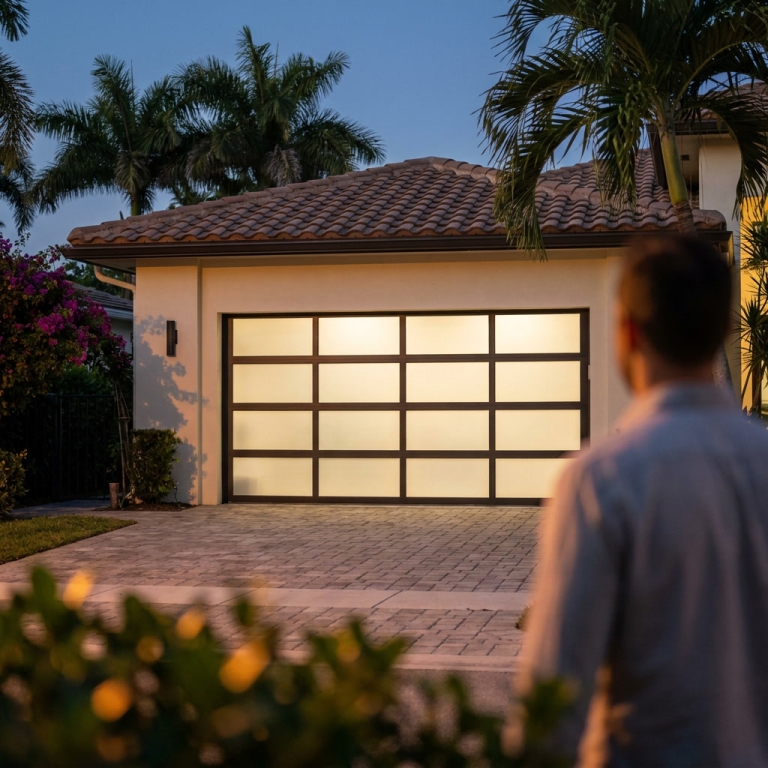
Glass panels pair especially well with stucco, concrete, natural stone, wood siding, metal accents, and minimalist landscaping. Black or bronze aluminum frames can create a dramatic contrast, while white or lighter finishes tend to blend into coastal and Mediterranean-inspired architecture.
There’s also a practical design benefit: the garage can become visually connected to a driveway, courtyard, patio, or pool deck. With the door open, the space may work as a workshop, home gym, gathering area, or covered outdoor room.
That said, design trends come and go. Before choosing a highly distinctive style, homeowners should consider whether the door complements the rest of the property. The best installation doesn’t merely look fashionable; it appears intentional, proportionate, and compatible with the home’s architecture. A professional door design consultation can help prevent an expensive mismatch.
Natural Light and Flexible Living Space
Garages are often dark, underused spaces. Glass garage doors can change that in a surprisingly dramatic way. During the day, sunlight enters through the panels and reduces the need for artificial lighting. This can make a garage feel more welcoming, especially when it serves as a workshop, studio, home office, or recreational area.
Natural light also improves visibility. Homeowners can see vehicles, tools, storage cabinets, and work surfaces more easily. For people who spend time repairing bicycles, maintaining equipment, painting, or exercising in the garage, that brightness may be more than a decorative perk.
However, Florida sunlight is powerful. Uncontrolled solar exposure can raise indoor temperatures, fade flooring and furnishings, and make the space uncomfortable during the afternoon. Clear glass offers the most light but may also create the greatest heat gain. Tinted, reflective, frosted, or low-emissivity glass can help, though every option produces a different appearance.
Window coverings, exterior shade structures, ceiling fans, and proper insulation can further improve comfort. A knowledgeable garage door specialist can discuss glass selection in relation to the garage’s direction, roof overhang, and intended use.
Privacy Concerns and Glass Garage Door Solutions
Privacy is one of the most common objections to Glass Garage Doors in Florida. Clear panels may reveal vehicles, tools, storage items, or activity inside the garage. For a home located close to the street or neighboring properties, that visibility may feel uncomfortable.
Fortunately, “glass” doesn’t have to mean transparent. Homeowners can choose frosted, satin, opaque, smoked, bronze, gray, mirrored, or textured panels. These materials allow daylight into the room while obscuring details. Some designs use clear glass on upper sections and privacy glass below, creating a balance between brightness and discretion.
Window film is another option, but it should be selected carefully. Film quality, adhesion, heat exposure, and manufacturer approval all matter. A film that traps heat or fails to bond correctly may bubble, peel, or interfere with the glass warranty.
Automatic shades can provide flexible control, although they add expense and require their own maintenance. Homeowners should think about privacy at night, when interior lights can make clear panels especially revealing. A well-planned garage door upgrade addresses daytime and nighttime visibility rather than treating privacy as an afterthought.
Florida Heat, Solar Gain, and Energy Efficiency
Florida’s heat is a serious consideration. A garage door with large glass panels can absorb and transmit substantial solar energy, particularly when it faces south or west. If the garage is attached to the home, that heat may affect rooms next to or above the garage.
Glass selection makes a meaningful difference. Double-pane insulated glass generally performs better than single-pane panels because the sealed airspace reduces heat transfer. Low-emissivity coatings can limit infrared energy while preserving useful daylight. Tinted glass can reduce glare, although darker tints may change the color and mood of the room.
The frame and panel seals also affect performance. Small gaps around the perimeter allow hot air, dust, moisture, and insects to enter. A door with premium glass but poor weatherstripping may perform worse than a simpler, well-sealed design.
It’s important to keep expectations realistic. A garage door isn’t a substitute for a properly insulated wall, and glass will usually have different thermal characteristics from an insulated steel or composite panel. If energy performance is a top priority, discuss U-factor, solar heat gain coefficient, glass construction, and insulation options with the installation contractor.
Impact Glass and Hurricane Protection
Hurricane protection is not optional in many parts of Florida. Local requirements vary by region, wind-borne debris zone, building age, opening size, and proximity to the coast. A glass garage door must be evaluated as a complete engineered system—not simply as a collection of attractive glass panels.
Impact-rated glass typically combines multiple layers with an interlayer designed to help keep the panel together when struck. The surrounding frame, tracks, hinges, rollers, brackets, and anchoring system must also withstand the required pressure. If one component is underdesigned, the entire assembly may be vulnerable.
Some products are approved for specific wind pressures and installation conditions. Approval does not mean every property can use the product without modification. The garage structure, header, side jambs, and attachment points must be capable of supporting the system.
Before purchasing hurricane-rated glass garage doors, ask for documentation and confirm requirements with the local building department or a qualified professional. A reputable hurricane door installer should never dismiss wind ratings as a minor technicality.
Understanding Wind Ratings and Building Codes
Wind ratings can seem confusing because they involve design pressure, positive and negative pressure, testing standards, and geographic requirements. In simple terms, the rating indicates how much wind pressure the door assembly is designed to withstand under specified conditions.
Florida properties may need products approved for particular wind zones. Miami-Dade and Broward County, for example, are known for rigorous product approval and high-wind requirements. A door approved for one area may not automatically satisfy the requirements of another location.
Homeowners should obtain the product approval number, engineering documentation, installation instructions, and any required permits. The correct anchoring pattern is just as important as the product label. Cutting corners during installation can undermine the performance of an otherwise excellent door.
When reviewing proposals, look for clear language about permitting, inspections, wind-load compliance, and responsibility for corrections. An experienced Florida garage door company can coordinate these details and explain what the homeowner should expect before installation begins.
Durability in Humidity, Rain, and Salt Air
Florida’s humidity can expose weak materials quickly. Condensation, rainwater, airborne salt, and organic debris can attack fasteners, tracks, hinges, and frame finishes. Coastal homes generally require more frequent cleaning and inspection than inland properties.
Powder-coated aluminum frames are popular because they offer a durable finish and resist rust better than many untreated metals. Still, powder coating isn’t magic. Scratches, chips, and neglected salt deposits can eventually compromise the surface. Stainless-steel hardware and corrosion-resistant rollers are worthwhile upgrades in coastal areas.
Glass itself is usually easy to clean, but mineral deposits and salt spray can create a cloudy appearance. Abrasive cleaners may scratch or damage the surface. A soft cloth, mild soap, and fresh water are often safer choices. Drainage around the garage should also be checked so stormwater doesn’t repeatedly collect near the bottom seal.
Routine care helps protect the investment. Homeowners seeking garage door maintenance should ask for inspection of the frame, seals, rollers, hinges, cables, springs, tracks, and opener—not just a quick visual glance at the glass.
Noise, Operation, and Daily Convenience
Glass garage doors can operate quietly when they’re properly balanced and equipped with quality hardware. Many homeowners appreciate the smooth, refined movement of a modern full-view system, particularly when paired with a belt-drive opener.
Noise usually comes from the moving components rather than the glass. Dry rollers, loose hinges, worn bearings, bent tracks, or an aging opener can create grinding, rattling, popping, or vibration. Humidity and corrosion can accelerate these problems.
The door should move evenly and remain balanced when disconnected from the opener by a trained technician. A door that feels unusually heavy, drops quickly, or hesitates may have a spring or hardware issue. Homeowners shouldn’t attempt to adjust high-tension springs without proper tools and training.
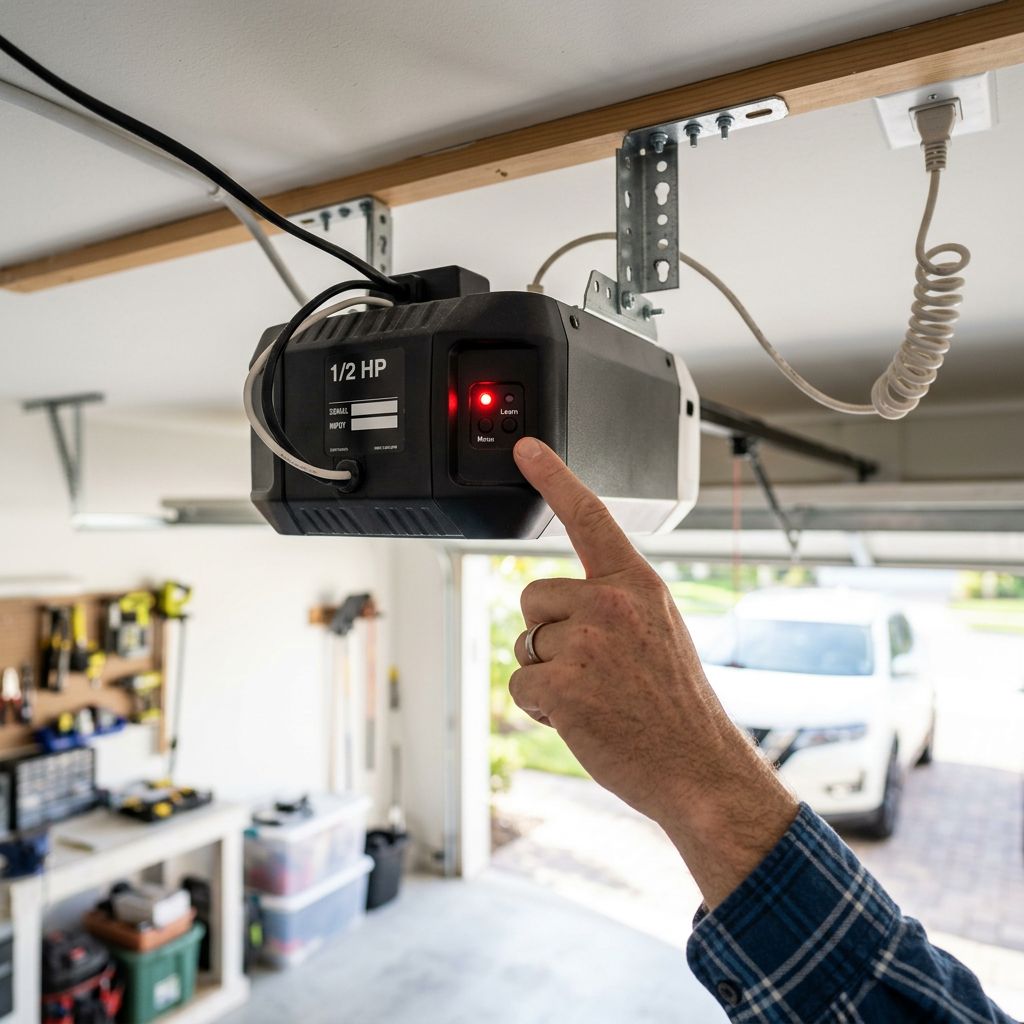
For convenience, many people combine full-view doors with garage door opener repair, battery backup, keypad entry, and smartphone controls. Quiet operation is valuable, but safety and reliable balance should always come before convenience features.
Glass Garage Doors and Home Security
Security depends on more than whether a door contains glass. A properly designed system can include laminated or impact-resistant panels, strong locking hardware, reinforced tracks, automatic reversal sensors, and rolling-code opener technology.
Some homeowners worry that glass automatically makes the garage easier to break into. Clear, ordinary glass may create a visibility concern, but laminated or security-rated glass can make forced entry more difficult. Privacy glass also prevents outsiders from seeing what’s stored inside.
Security lighting, cameras, alarm contacts, and smart notifications can add another layer of protection. However, internet-connected devices should use strong, unique passwords and current firmware. Convenience shouldn’t come at the cost of basic digital security.
Most importantly, homeowners should avoid leaving the opener remote in an unattended vehicle and should test the door’s auto-reverse feature monthly. A qualified garage door technician can inspect both mechanical and electronic security features during a service visit.
Glass Garage Door Installation: What to Expect
Professional garage door installation begins with measurement and structural evaluation. Technicians assess the opening width and height, headroom, side room, ceiling configuration, framing, electrical access, and existing opener compatibility.
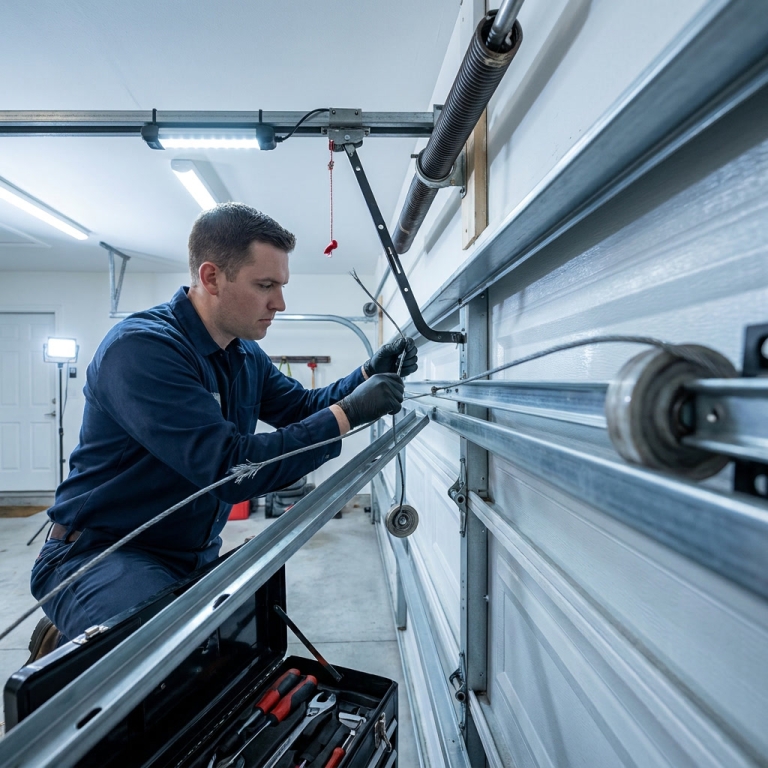
The installation process may include removing the old door, preparing the opening, assembling tracks, installing panels, mounting torsion or extension springs, attaching cables and rollers, connecting the opener, and programming safety devices. The work should finish with balance testing, force testing, travel-limit adjustments, and a homeowner demonstration.
Full-view doors can be heavier or structurally different from standard residential doors. The opener must be correctly sized, and the tracks must be aligned precisely. Even a small misalignment can create premature wear or uneven movement.
Ask whether the quote includes permits, disposal, trim work, weather seals, electrical modifications, tax, and warranty service. Choosing the lowest initial price can backfire if critical components are excluded. A complete garage door installation estimate should be detailed enough that there are no unpleasant surprises later.
The Importance of Professional Measurement
Accurate measurement is one of the least glamorous but most important parts of the project. Garage openings aren’t always perfectly square, especially in older homes or structures that have settled over time.
Technicians should measure the opening at multiple points and inspect the header, jambs, floor, and ceiling. They also need to confirm whether the existing frame can support the new door’s weight and wind loads. A beautiful door cannot compensate for a weak or improperly prepared opening.
Measurement also influences glass layout. Panel height, frame proportions, track position, and opener clearance can affect both appearance and performance. If the door is intended to open onto a patio or entertainment area, threshold and drainage details deserve special attention.
Homeowners should receive a written record of the measurements and product specifications. This documentation can help with future repairs, replacement panels, warranty claims, and insurance questions. Professional door measurement services are a modest investment compared with correcting an incorrectly ordered system.
Garage Door Opener Compatibility
Not every opener is ideal for a glass garage door. The correct unit depends on the door’s weight, size, balance, cycle frequency, track arrangement, and available power. An opener that is too weak may strain, overheat, or fail prematurely.
Belt-drive openers are often chosen for quieter operation, while chain-drive models may appeal to homeowners prioritizing durability and cost. Wall-mounted jackshaft openers can save ceiling space, but they require compatible hardware and careful installation.
Battery backup is particularly valuable in Florida, where storms can cause power interruptions. Homeowners should be able to open and secure the garage when electricity is unavailable, provided the system is maintained and the battery remains functional.
If the existing opener makes unusual sounds, reverses unexpectedly, or struggles with the new door, stop using it until it’s inspected. Professional garage door opener repair can identify whether the issue is electrical, mechanical, or related to door balance.
Smart Garage Door Openers and Connected Homes
Smart garage door openers offer smartphone alerts, remote access, activity logs, voice-assistant integration, and compatibility with home automation platforms. For busy Florida homeowners, notifications can confirm whether the garage was left open after leaving for work or heading to the airport.
These systems can also support temporary access for guests, cleaners, delivery drivers, or contractors. Some models allow users to set schedules or integrate the garage with security cameras and alarm systems.
Connectivity introduces responsibility. Homeowners should choose products with reputable security practices, enable two-factor authentication when available, use strong passwords, and update the app and opener firmware. It’s also wise to retain a physical wall control and manual release procedure.
Smart features are convenient, but they don’t replace mechanical maintenance. A phone notification won’t fix a frayed cable, cracked roller, loose hinge, or failing spring. Combine smart garage door openers with regular professional inspections for dependable performance.
Maintenance for Glass Garage Doors in Florida
Maintenance is the difference between a door that looks good for a few years and one that remains dependable for much longer. Florida homeowners should inspect visible components several times a year and arrange professional service according to usage and environmental exposure.
Basic care includes rinsing salt and dust from the exterior, cleaning glass with nonabrasive materials, checking weatherstripping, and removing leaves or debris from the tracks. Lubrication should be applied only where recommended; some components can be damaged by excessive or incorrect lubricant.
Never lubricate or adjust springs, cables, or other high-tension components casually. These parts store significant energy and can cause severe injuries if handled incorrectly. Instead, look for warning signs such as uneven movement, sagging, grinding, shaking, delayed response, or a door that won’t remain open.
A proper garage door maintenance appointment should include safety testing, balance evaluation, hardware inspection, weather-seal review, opener testing, and recommendations based on the home’s location.
Common Repairs and Broken Spring Repair
Even a premium glass door eventually needs service. Springs may wear out after thousands of cycles, rollers can become noisy, cables may fray, and tracks can shift after impact or structural movement.
A broken spring often announces itself with a loud snap, a door that suddenly feels extremely heavy, or an opener that runs while the door barely moves. The door may lift only a few inches or remain stuck on the floor. Do not continue pressing the opener button in an attempt to force movement; this can damage the motor and other components.
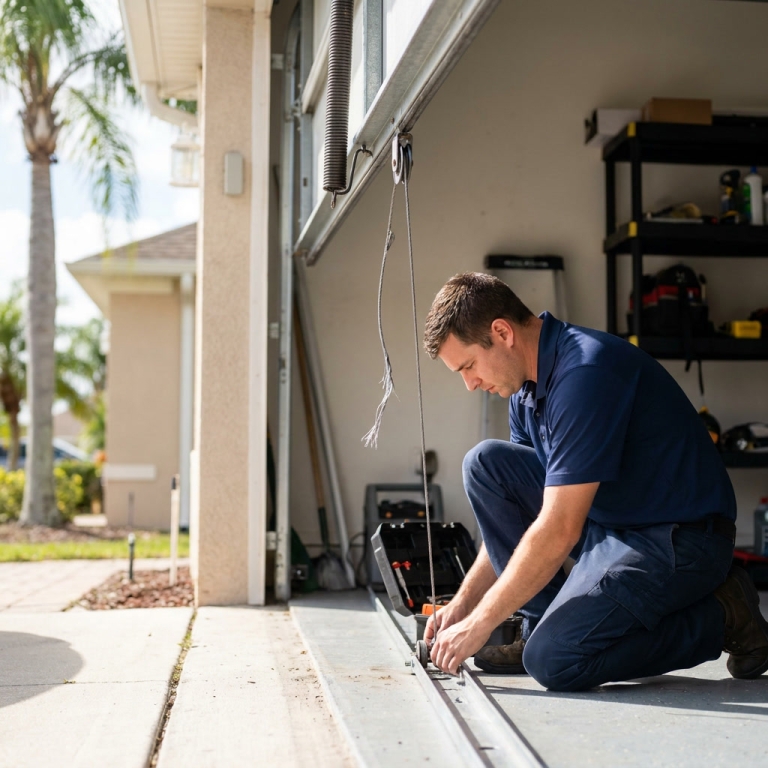
Broken spring repair should be performed by a trained professional. Springs must be matched to the door’s weight and installed with correct winding tension. Replacing only one spring on a two-spring system may also create imbalance, depending on the condition and design of the existing hardware.
Reliable spring repair service includes inspection of cables, drums, bearings, rollers, and balance—not merely swapping a visible part.
Emergency Garage Door Repair in South Florida
Garage doors rarely fail at a convenient moment. A door may jam before work, refuse to close during a storm warning, or break after a vehicle makes contact with the lower panel. A stuck door can create security, weather, and safety concerns.
Need emergency garage door repair near me in Broward County, Florida? Same-day service, 13+ years experience, 450+ five-star reviews. Call (954) 830-9661.
When requesting emergency service, describe the symptoms clearly. Mention whether the door is open or closed, whether the opener is making noise, whether a spring or cable appears broken, and whether the door was struck. If the door is leaning, hanging unevenly, or partially off its tracks, keep people and vehicles away from the area.
Emergency service should focus first on stabilization and safety. The technician may secure the opening, disconnect a damaged opener, replace broken hardware, or recommend temporary protection until a permanent repair is possible. Search terms such as emergency garage door repair are useful, but homeowners should still verify licensing, reviews, pricing, and warranty details.
South Florida Service Coverage and Local Expertise
Local knowledge matters because South Florida properties face a distinctive combination of heat, humidity, salt air, tropical weather, dense neighborhoods, and strict construction requirements. A technician familiar with these conditions can recommend finishes, seals, hardware, and wind-rated systems more appropriately than a general handyman.
Homeowners may encounter the terms South Florida garage door services, emergency garage door repair, garage door installation, broken spring repair, hurricane-rated garage doors, garage door opener repair, garage door maintenance, smart garage door openers, Broward County garage door company, and Miami-Dade garage door services while researching options. Those services are related, but each addresses a different need—from planned upgrades to urgent safety problems.
When comparing companies, review their service area, experience with local approvals, warranty practices, insurance coverage, and approach to estimates. A professional should be willing to explain why a specific product fits the property rather than pushing the most expensive option.
For homeowners seeking South Florida garage door services, the best choice is usually a company that combines installation expertise with ongoing repair and maintenance support.
Costs: Are Glass Garage Doors Worth the Investment?
Glass garage doors typically cost more than basic noninsulated steel doors because they involve specialized panels, architectural frames, upgraded hardware, and sometimes impact or wind-rated engineering. The final price depends on door size, glass type, frame finish, insulation, opener, permitting, structural work, and installation complexity.
A fair comparison should consider the complete system rather than the door alone. A low quote may exclude removal, trim, upgraded rollers, weather seals, electrical work, wind-load engineering, or permit fees. Conversely, a higher quote may include better corrosion resistance, insulated glass, stronger hardware, and a longer warranty.
| Feature | Typical Value | Potential Cost Effect |
|---|---|---|
| Single-pane clear glass | Bright and economical | Lower initial cost, higher heat gain |
| Insulated glass | Improved thermal comfort | Moderate increase |
| Frosted or tinted glass | More privacy and glare control | Moderate increase |
| Impact-rated glass | Enhanced storm and debris protection | Higher investment |
| Premium corrosion-resistant hardware | Better coastal durability | Higher initial cost |
A detailed garage door cost estimate allows homeowners to compare value, not just price.
Glass Versus Steel Garage Doors
Steel remains a popular choice because it offers strength, broad availability, insulation options, and familiar maintenance requirements. Insulated steel doors often provide better thermal performance than single-pane glass and may be less expensive to repair after minor damage.
Glass doors, however, offer a distinctive architectural appearance and more daylight. They can make a garage feel like a deliberate extension of the home rather than a utility space. For owners who entertain, work out, or use the garage as a studio, that design advantage may justify the additional investment.
Steel panels can dent, while glass can crack or break. Both materials have vulnerabilities, and neither is automatically maintenance-free. In coastal areas, the frame and hardware quality may matter more than the panel material itself.
The right choice depends on priorities. Choose steel when maximum insulation, traditional appearance, and budget control lead the decision. Consider glass when natural light, modern style, and flexible use of the space matter most. An experienced garage door replacement professional can compare both systems at the property.
Glass Versus Full-View Aluminum Doors
Many full-view garage doors are described as glass doors, but their structural identity comes from the aluminum frame. This combination is lighter and more corrosion-resistant than many steel alternatives, while still producing a broad expanse of glass.
Aluminum frames can be powder-coated in numerous colors and may create a slimmer visual profile. They’re well suited to contemporary homes and commercial-style residential architecture. However, aluminum can dent, and thinner frames may feel less substantial if the system isn’t engineered carefully.
Glass thickness, panel construction, frame joints, hinges, rollers, and track design all influence performance. Homeowners should ask whether replacement panels can be ordered individually. If one panel is damaged, a replaceable modular design can reduce future repair costs.
Because product quality varies widely, don’t judge a door by photographs alone. Visit a showroom or completed installation if possible. A trusted full-view garage door installer can explain differences that aren’t obvious in online images.
What Happens During a Storm?
Before a tropical storm or hurricane, homeowners should secure outdoor objects, inspect drainage, test the garage door, and follow official emergency guidance. If the door is designed and approved for the property’s wind conditions, it may offer valuable protection—but it still needs to be closed, latched, and maintained correctly.
Never rely on a damaged door during a storm. Cracked glass, loose tracks, missing fasteners, or a malfunctioning locking system should be addressed beforehand. Garage doors are large openings, and failure can expose the home to wind pressure and water intrusion.
After a storm, don’t operate a door that appears bent, off track, or structurally compromised. Keep clear of broken glass and hanging components. Photograph damage for insurance purposes, then contact a qualified technician for an inspection.
Storm preparation is not a once-in-a-decade task. Regular hurricane garage door inspections can reveal corrosion, loose anchors, deteriorated seals, or worn springs before severe weather arrives.
When Glass Garage Doors May Not Be the Best Choice
Glass garage doors aren’t ideal for every home. If the garage faces intense afternoon sun and has no shade, clear panels may create uncomfortable heat. If privacy is essential and the homeowner dislikes frosted or tinted options, an opaque door may be more practical.
They may also be a poor fit where the existing structure cannot support the required wind-rated system without significant reinforcement. Likewise, a very tight budget may be better served by an insulated steel door that meets the home’s functional needs.
Properties near the coast may require more frequent cleaning and hardware care. Homeowners who prefer a virtually hands-off exterior should understand that salt, humidity, and storms eventually demand attention regardless of the door material.
The goal isn’t to choose the most fashionable option. It’s to choose the door that suits the property, climate, budget, privacy needs, and lifestyle. A candid garage door evaluation should include reasons not to buy a particular product when it isn’t the right fit.
How to Choose a Reliable Florida Garage Door Company
Start by looking for experience with the exact type of system you want. A company that primarily repairs basic steel doors may not have the same expertise with full-view aluminum frames, impact glass, architectural hardware, or local wind approvals.
Ask for proof of insurance, written estimates, warranty details, product documentation, and references. Online reviews can be useful, but read them for patterns involving punctuality, workmanship, communication, cleanup, and follow-up service.
A dependable contractor explains options without using fear-based sales tactics. They’ll discuss the benefits and limitations of clear, tinted, frosted, insulated, and impact-rated glass. They’ll also inspect the opening instead of quoting a final number from a photograph.
Whether you’re comparing a Broward County garage door company or researching Miami-Dade garage door services, look for transparent recommendations and a willingness to support the door after installation. Long-term service is often more valuable than a flashy sales pitch.
Questions to Ask Before Signing a Contract
Good questions uncover hidden costs and reduce misunderstandings. Before approving the work, ask:
- Is the glass impact-rated or simply tempered?
- What wind-load approval applies to my address?
- Does the quoted price include permits and inspections?
- Which components are corrosion-resistant?
- Is the opener compatible with the door’s weight and design?
- What happens if a panel breaks later?
- How long are labor, glass, hardware, and finish warranties?
- Who handles emergency service and warranty repairs?
Also ask whether the installer will remove the old door, haul away debris, adjust the opener, test safety reversal, and provide maintenance instructions. A written answer is preferable to a casual verbal promise.
Use a detailed garage door installation checklist to compare proposals fairly. The best contract describes products, quantities, labor, exclusions, payment terms, completion expectations, and warranty responsibilities.
Frequently Asked Questions About Glass Garage Doors in Florida
Are glass garage doors safe in Florida hurricanes?
They can be safe when the complete door system is engineered, approved, installed, and maintained for the property’s required wind loads. Ordinary decorative glass should not be confused with impact-rated or wind-rated construction. Always verify documentation and local requirements.
Do glass garage doors make a garage hotter?
They can, particularly when using clear single-pane glass in direct afternoon sun. Insulated, tinted, low-emissivity, or privacy glass may reduce heat gain. Shade structures, ventilation, and insulation can also improve comfort.
Can glass garage doors be private?
Yes. Frosted, satin, opaque, smoked, tinted, textured, and reflective glass options can obscure views while allowing daylight inside. Homeowners should consider nighttime visibility as well as daytime privacy.
How often should a glass garage door be serviced?
Many residential doors benefit from a professional inspection at least annually. Coastal homes, heavily used doors, and properties exposed to salt spray may require more frequent cleaning and inspections. Visual checks should occur throughout the year.
Can a smart opener be installed on a glass garage door?
Usually, yes, provided the opener is correctly sized and compatible with the door’s weight, track system, and balance. Smart functions should supplement—not replace—mechanical safety testing and professional maintenance.
What should I do if my glass garage door breaks?
Keep people and vehicles away from the area, avoid touching shattered or hanging panels, and disconnect use of the opener if the door is unstable. Contact a professional for emergency stabilization and repair. Don’t attempt to force the door open or closed.
Are glass garage doors more expensive to maintain?
Routine maintenance may be comparable to other premium garage doors, but replacement panels, specialized hardware, and coastal corrosion treatment can increase costs. Regular cleaning and inspections help prevent larger repairs.
How long do glass garage doors last?
Service life depends on product quality, installation, usage, weather exposure, cleaning, and repairs. A well-installed system with corrosion-resistant hardware and consistent maintenance can provide many years of service, but springs, rollers, seals, and openers remain wear items.
The Final Verdict on Glass Garage Doors in Florida
Glass Garage Doors in Florida offer genuine advantages: striking curb appeal, abundant daylight, flexible use of garage space, modern architectural character, and a strong connection between indoor and outdoor areas. For the right property, they can turn an overlooked garage into one of the home’s most attractive features.
The drawbacks are equally real. Clear glass can create privacy and heat concerns. Impact-rated systems cost more. Coastal environments demand thoughtful material selection and regular maintenance. Hurricane protection depends on engineering, installation, anchoring, and code compliance—not appearance alone.
The smartest decision begins with the property rather than the product. Consider sun exposure, wind zone, privacy, drainage, garage usage, structural conditions, budget, and long-term service needs. Compare insulated and impact-rated options, request written specifications, and choose an installer who understands Florida’s climate.
With the right planning, professional garage door installation, and consistent care, a full-view system can be more than a beautiful façade. It can be a durable, functional, and highly personal part of the home—one that brings daylight into the garage without ignoring the realities of Florida weather.
Skip the YouTube rabbit hole - we'll have a tech at your door same day across Broward, Dade and Palm Beach.