Short answer: The most common hidden costs in garage door repair are the after-hours/emergency surcharge ($75-$150), a trip or diagnostic fee that isn't credited toward the repair ($50-$100), code-compliance upgrades required by Florida's High-Velocity Hurricane Zone (HVHZ) rules ($100-$400), haul-away/disposal of the old parts ($25-$75), and a credit-card processing surcharge (2-4%). A written, itemized quote before any work starts is the only reliable way to avoid all five.
The 5 hidden costs that show up most often
| Hidden cost | Typical range | When it applies |
|---|---|---|
| After-hours / emergency surcharge | $75-$150 | Evening, weekend, or same-day emergency calls |
| Trip / diagnostic fee (non-credited) | $50-$100 | Some companies charge this even if you approve the repair |
| HVHZ code-upgrade requirement | $100-$400 | Broward/Miami-Dade homes needing wind-load-rated hardware |
| Haul-away / disposal fee | $25-$75 | Removing an old door, opener, or spring set |
| Card-processing surcharge | 2-4% of total | Companies that don't disclose it until checkout |
Why these costs get left off the initial quote
Most garage door companies advertise a low base price to win the phone call, then add line items once a technician is already standing in your driveway. This isn't always dishonest - some of these costs (like an HVHZ hardware upgrade) genuinely can't be priced until a technician sees the door in person. But the least transparent operators use that same uncertainty as cover to pad the invoice with fees that have nothing to do with your actual repair.
The trip fee is the most common bait. A "$19 service call" ad gets the phone to ring, but that fee almost never applies once real work is quoted - and on some jobs, it's charged again as a separate line item even after you approve the repair.
South Florida's extra layer: HVHZ code-upgrade costs
If your home is in Broward or Miami-Dade County, it likely falls inside Florida's High-Velocity Hurricane Zone (HVHZ). Any full door replacement - and some larger repairs - must meet the Florida Building Code's wind-load rating (165+ mph design speed) with impact-rated hardware and a Florida Product Approval (FPA) number on file. If your existing door or hardware predates that code, an inspector or technician may require an upgrade before the job can be signed off, which is where the $100-$400 line item comes from. This isn't a scam add-on - it's a real code requirement - but it should be disclosed as a possibility before the technician arrives, not sprung on you afterward.
How to spot a company that hides fees before they show up
- No written quote before the work starts. A reputable company gives you a line-item quote - part, labor, and any potential add-ons - before touching the door, not after.
- Vague answers about the trip fee. Ask directly: "Is the service-call fee waived if I approve the repair?" A straight yes/no answer is a good sign; hedging is not.
- No mention of HVHZ requirements up front. If you're in Broward or Miami-Dade and the company doesn't ask about your door's age or current hardware rating, they haven't accounted for a possible code-upgrade cost.
- Card surcharge disclosed only at checkout. Florida law requires card surcharges to be disclosed before payment - if it's a surprise on the final receipt, that's a red flag for how the rest of the invoice was built.
- Pressure to sign before reading line items. Reputable techs walk you through each line on a tablet or paper invoice before asking for a signature.
What a transparent quote looks like
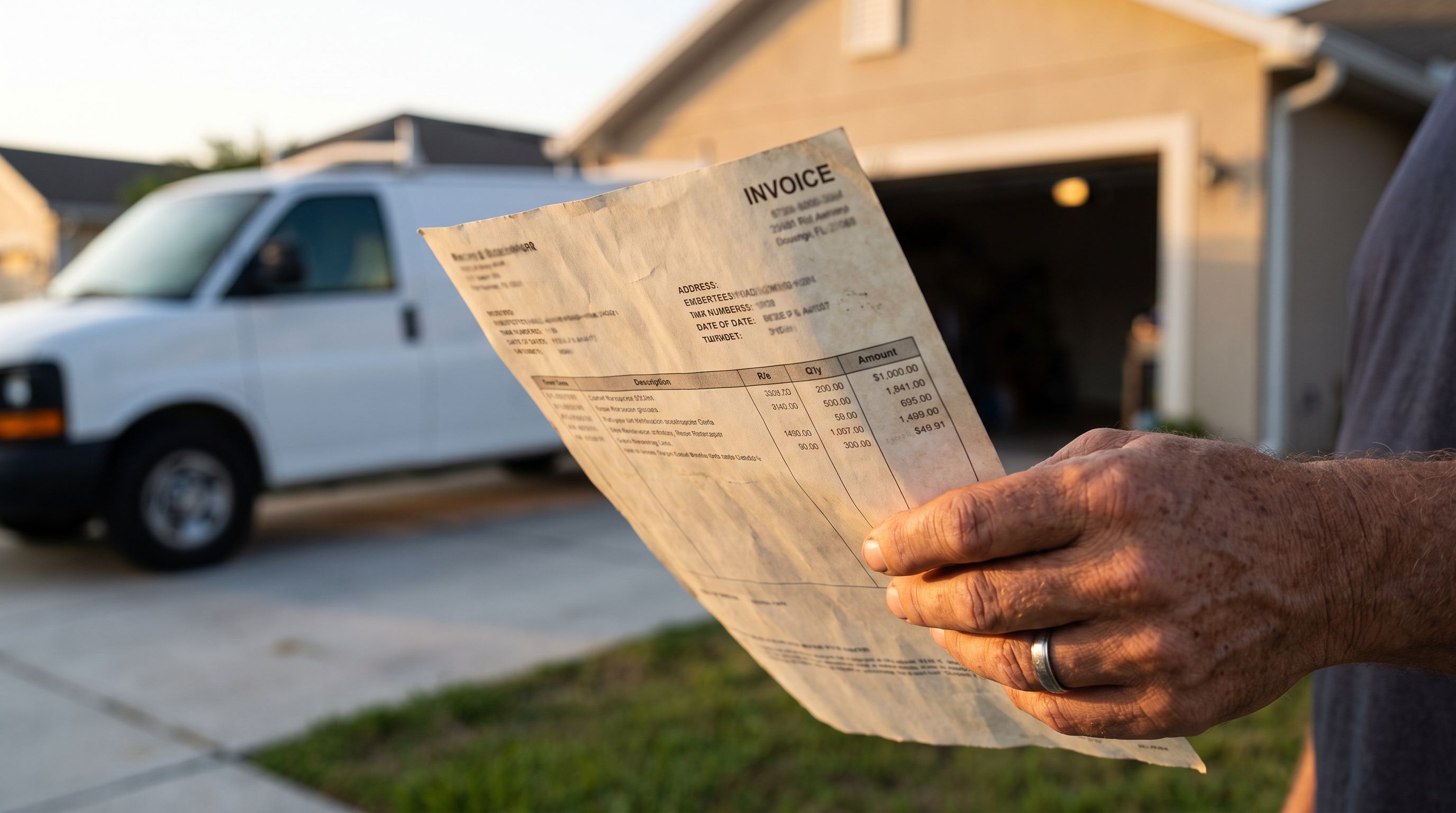
A fair, itemized quote separates every cost into its own line: the part itself, labor, any code-required hardware upgrade (with the code section cited), and any after-hours or weekend surcharge, stated as a flat number before the truck rolls. If the diagnostic or trip fee is waived when you approve the repair, that's written on the invoice too - not just promised verbally. Disposal of old parts should either be included in the base labor rate or listed as its own small line item, never bundled invisibly into "misc materials."
FAQs about hidden garage door repair costs
Will I be charged a trip fee even if I don't approve the repair?
Sometimes, yes - many companies charge $50-$100 for the technician's visit and diagnosis regardless of whether you move forward. Ask this specifically before booking the appointment, and get the answer in writing if the fee is meaningful to your decision.
Is the HVHZ code-upgrade fee negotiable?
The code requirement itself isn't negotiable - it's Florida Building Code, not a company policy. What's worth asking about is whether the upgrade can be scoped to the minimum required hardware rather than a full-system replacement, which can meaningfully change the cost.
Do all South Florida companies charge a card-processing surcharge?
No - many absorb it into their base pricing. If a company does pass it through, Florida law requires it to be disclosed before you pay, not added silently to the final total.
Can I avoid the after-hours surcharge by waiting until Monday?
Usually, yes, if the door is safely closed and not blocking a vehicle you need. If the spring or opener failure leaves the door stuck open overnight, weigh the $75-$150 surcharge against the security and weather exposure of an open garage.
What's the single best way to avoid all of these hidden costs?
Get the quote in writing before any work begins, and ask the technician to state - out loud, before starting - whether the total on the invoice already includes disposal, whether the trip fee is waived on approval, and whether any code-upgrade is expected. A company with nothing to hide will answer all three without hesitation.
Skip the YouTube rabbit hole - we'll have a tech at your door same day across Broward, Dade and Palm Beach.