The honest answer: a standard garage door spring is rated for 10,000 cycles. One cycle = one full open + one full close. At the national average of 3 - 4 cycles per day, that's about 7 - 9 years. In South Florida - where most families use the garage as the main entry door and cycle it 6 - 8 times daily - the same spring typically fails in 4 - 6 years.
Torsion Springs vs Extension Springs: Different Lifespans
The type of spring in your door determines not just how long it lasts, but how it fails - and that matters a lot for safety.
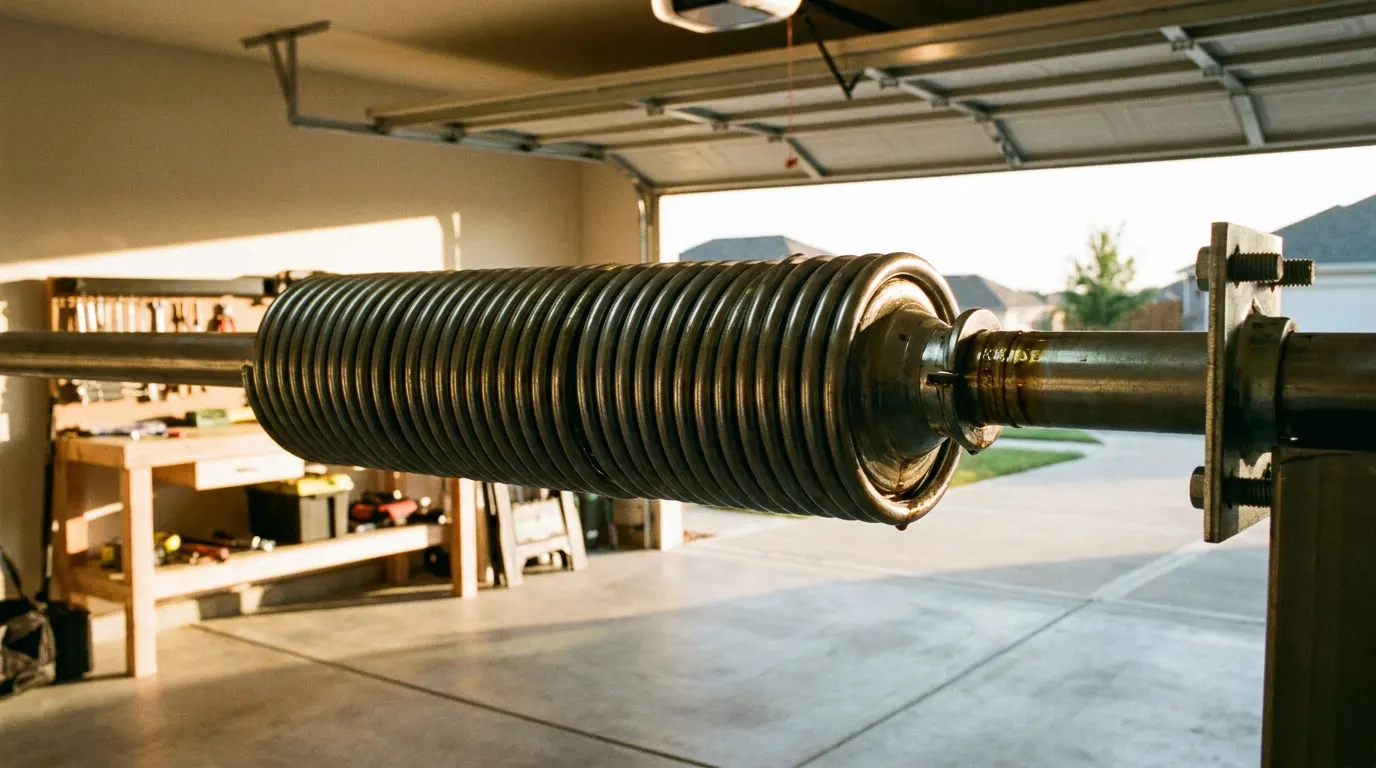
Torsion springs sit horizontally on a steel shaft above the door opening. Most South Florida homes built after 1990 have them. When they fail, they typically snap with a loud bang but stay on the shaft - contained damage. Standard torsion springs are rated 10,000 cycles; high-cycle torsion springs (available for a modest upcharge) are rated at 25,000 - 100,000 cycles.
Extension springs run alongside the horizontal tracks on either side of the door. Common in homes built before 1990 and in lightweight doors. When an extension spring snaps, it can thrash around violently - a serious safety hazard if safety cables aren't installed through the spring. Extension springs typically carry the same 10,000-cycle rating but fatigue faster due to the different stress pattern (stretching vs twisting).
What the Cycle Math Looks Like for South Florida
Here's the actual arithmetic for a Broward or Miami-Dade household that cycles the garage door an average of 6 times per day:
- 10,000 cycles ÷ 6 cycles/day = 1,667 days = 4.6 years (standard spring)
- 25,000 cycles ÷ 6 cycles/day = 4,167 days = 11.4 years (high-cycle spring)
- 50,000 cycles ÷ 6 cycles/day = 8,333 days = 22.8 years (heavy-duty spring)
This is why we almost always recommend high-cycle springs for daily-use doors in South Florida. The upcharge (typically $40 - $80 per spring) pays for itself immediately in avoided service calls.
Florida-Specific Factors That Shorten Spring Life
Beyond cycle count, three environmental factors accelerate spring wear in South Florida more than almost anywhere else in the country:
Humidity and salt air. Coastal Broward and Miami-Dade homes (within a few miles of the ocean) see spring steel corrode at 2 - 3x the rate of inland homes. Rust forms inside the coil where you can't see it, weakening the metal before it reaches its rated cycle count. Galvanized or oil-tempered springs resist this better than standard zinc-coated springs.
Temperature swings. Florida summers average 90°F with near-100% afternoon humidity; winter nights can drop to 40°F. The daily thermal expansion and contraction of the coil steel adds cumulative metal fatigue beyond what the cycle count alone predicts.
Two-car doors with a single spring. Many South Florida homes have an 18-ft or wider double-car opening with only one torsion spring installed by the original builder. That single spring is doing double the work it was designed for. If your two-car door has only one spring, it will fail early - and when it does, it drops the full weight of the door with zero counterbalance.
4 Warning Signs Your Spring Is Near the End
- The door feels heavy when you lift it manually. Disconnect the opener, lift the door halfway, and let go. A balanced door should stay where you put it. If it drops, the spring is losing tension - likely within weeks of failure.
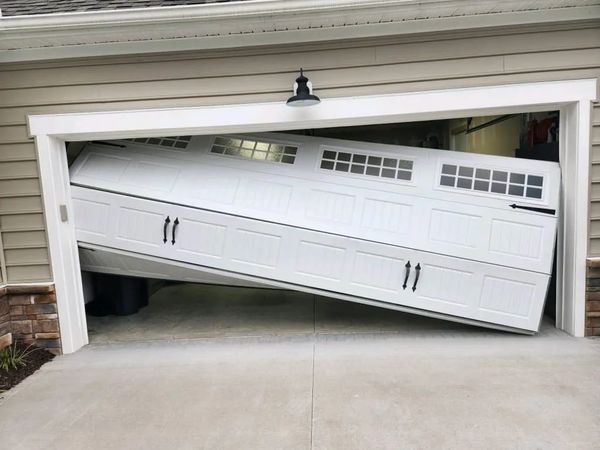
- The door opens unevenly or tilts to one side. On a two-spring system, one spring is losing tension faster than the other. Common in uneven garage openings or doors that weren't balanced properly at install.
- Squealing or creaking with every cycle. Some noise is normal; a metallic screech that gets louder over time is the spring coils binding or the shaft bearings wearing. Lubrication helps temporarily; if it returns within a few cycles, the spring is failing.
- Visible gaps, corrosion, or compressed coils. Look at the spring (carefully, from a distance - never touch a torsion spring under tension). A gap in the coil means it's already broken. Heavy rust or spots where coils are compressed together mean it's very close to breaking.
Replace One Spring or Both?
If your door has two springs and one breaks, the other one has the same number of cycles on it - the same wear history. In our experience, the surviving spring fails within 3 - 6 months in the vast majority of cases. Replacing both in one visit typically adds $80 - $120 to the job but eliminates that second service call entirely. We strongly recommend replacing in matched pairs.
What a Spring Replacement Costs in South Florida (2026)
Standard single torsion spring replacement typically runs $250 - $350. Dual-spring replacement (both at once) runs $350 - $450. High-cycle spring upgrade (25,000-cycle) adds about $40 - $80 per spring to either job. All prices include labor, hardware inspection, and a door balance test. For full pricing across all repair types, see our garage door repair and spring repair pages.
Can You Extend Spring Life?
Annual lubrication helps significantly. Spray a silicone-based lubricant (or white lithium grease) along the full length of the spring coils every 12 months - don't use WD-40, which evaporates and leaves residue. The lubricant reduces friction inside the coils and slows corrosion. This is included in our annual garage door tune-up, or you can do it yourself in about 5 minutes.
Frequently Asked Questions
These are the questions we get most often on spring lifespan calls:
-
Standard torsion springs (10,000 cycles) last 4 - 6 years in South Florida households that cycle the door 6 - 8 times per day. High-cycle springs (25,000 cycles) typically last 11 - 14 years at the same usage rate. Coastal homes near salt air may see shorter lifespans due to corrosion.
-
Yes, if you know the spring is approaching its rated cycle count or showing warning signs (heavy door, uneven opening, visible corrosion). A broken torsion spring can drop 200+ lbs of door weight with zero counterbalance - a safety risk and a much more urgent repair than a planned replacement.
-
Look above the garage door with the door closed. If you see a horizontal spring assembly centered above the door on a steel bar - that's a torsion spring. If you see springs running horizontally alongside the tracks on each side of the door - those are extension springs.
-
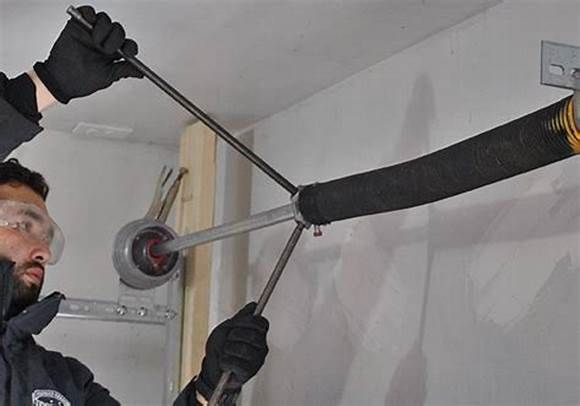
We strongly advise against DIY spring replacement. Torsion springs hold 300 - 400 lbs of stored mechanical energy. A winding bar slip or incorrect technique can eject the winding bar at lethal velocity. The US sees roughly 30,000 ER visits per year from garage door spring DIY injuries. The $80 - $150 labor savings is not worth the risk.
-
A high-cycle spring is wound from heavier-gauge steel and rated for 25,000 - 100,000 cycles instead of the standard 10,000. The upcharge is typically $40 - $80 per spring. For a South Florida household cycling the door 6x/day, this is almost always worth it - the spring pays for itself by eliminating one or two extra service calls.
Skip the YouTube rabbit hole - we'll have a tech at your door same day across Broward, Dade and Palm Beach.