Garage doors make some noise - it's unavoidable when 200 lbs of steel slides through a metal track system. But there's a big difference between the normal operational sound of a well-maintained door and the grinding, banging, rattling, or screaming that signals a real problem. This guide matches the noise to the cause, with specific fixes for each.
1. Worn or Damaged Rollers (Grinding or Rumbling)
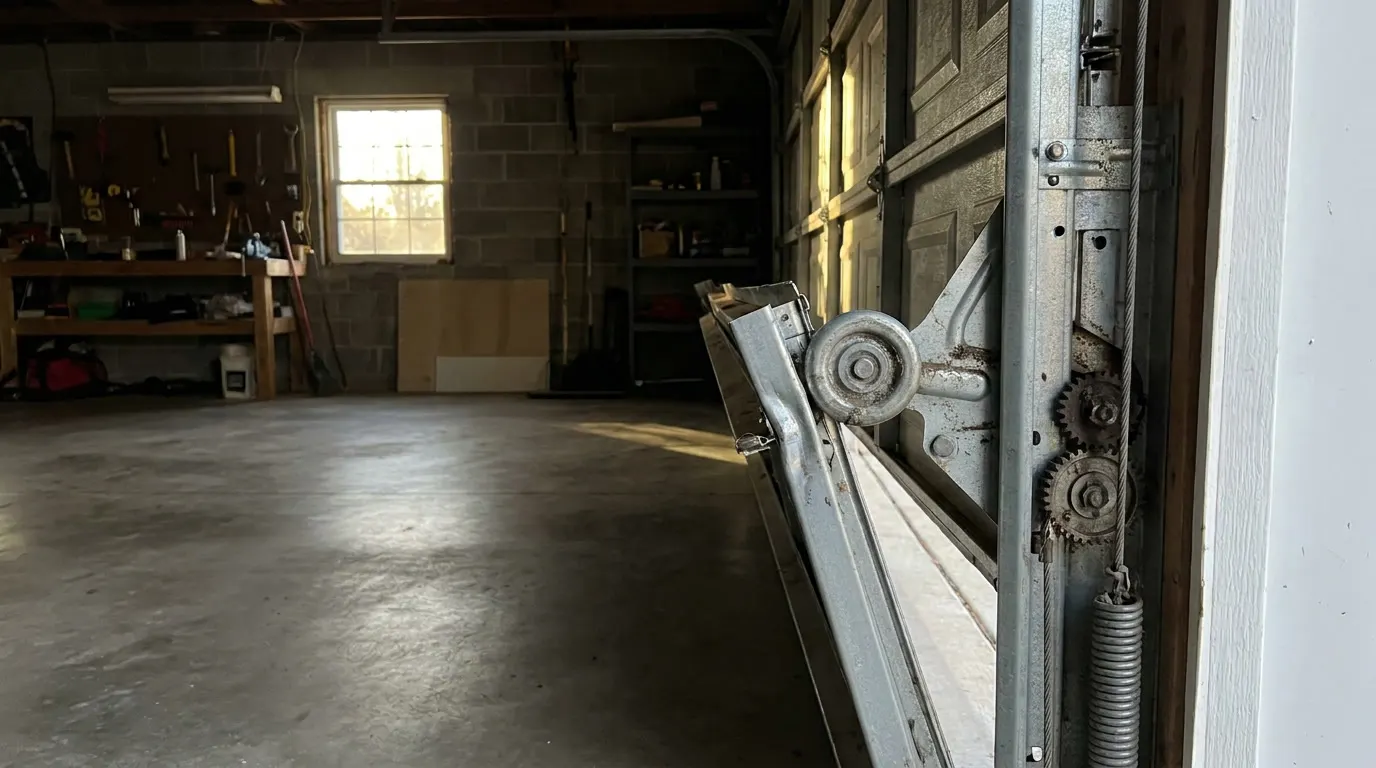
The rollers are the small wheels that ride inside the vertical and horizontal tracks. Most residential doors come with standard nylon or steel rollers. In South Florida's heat and humidity, roller bearings deteriorate faster than the manufacturer ratings - typically 5 - 7 years instead of the claimed 10+.
Sound: A rhythmic grinding or heavy rumbling that happens with every inch the door travels, not just at one point.
Fix: Inspect the rollers visually. Steel rollers with metal-on-metal bearings are the loudest; swapping to sealed nylon rollers (usually around $8 - $15 each, 8 - 10 per door) makes a significant noise difference. This is an easy upgrade to combine with any annual tune-up service.
2. Dry or Rusting Springs (Squealing or Scraping)
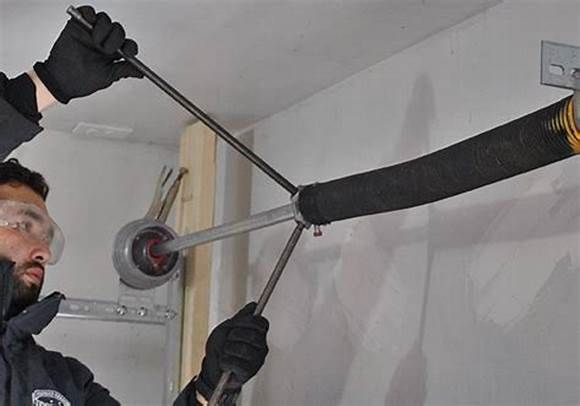
Torsion springs need lubrication to operate quietly. In South Florida's salty, humid air, an unlubricated spring can develop rust inside the coil within 18 months - especially in coastal homes within a few miles of the ocean. The rust causes coil-to-coil friction that produces a persistent metallic squeal or scraping sound on every cycle.
Sound: A high-pitched squeal or scratching metal sound as the door moves, usually most prominent as the door starts to open.
Fix: Apply silicone spray or white lithium grease to the full length of the spring coils. Don't use WD-40 (it evaporates and leaves residue) or heavy grease (it attracts debris). If the squeal returns within a few cycles or if you see heavy rust, the spring is likely near the end of its life. Our spring repair page explains when replacement makes more sense than lubrication.
3. Loose Hardware (Rattling or Vibrating)
Every bolt, lag screw, and fastener on a garage door works against vibration with every cycle. Over months and years, they loosen. The most common culprits: mounting bolts on the track brackets, carriage bolts on the hinges, and the bolts holding the opener motor unit to the ceiling mount.
Sound: A loose, metallic rattling that's synchronized with door movement but isn't smooth or rhythmic - like a cabinet door shaking on a dirt road.
Fix: Go around the door systematically with a socket wrench and tighten every visible bolt and nut. Don't overtighten - snug is enough. The opener ceiling mount bolts are worth checking first; a loose motor can vibrate the entire garage ceiling and make noise that sounds like it's coming from the door itself.
4. Bent or Misaligned Track (Banging or Popping)
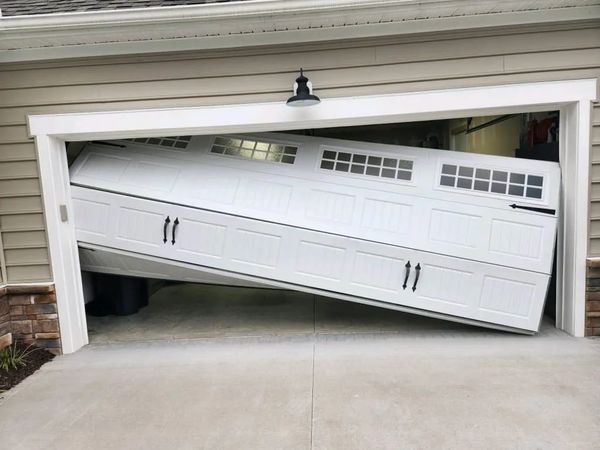
A bent track - usually from a vehicle bumping the door frame or a delivery truck clipping the track - forces the rollers to pop through the damaged section with each cycle. This is one of the louder failure modes and the most likely to escalate if ignored.
Sound: A sharp pop or bang that happens at one specific point in the door's travel, consistently. The door may also slow slightly or hesitate at that point.
Fix: Identify the exact point in the travel where the noise and hesitation happen. Look at the track section there for a visible bend, crimp, or section pulled away from the wall. Minor bends can be corrected by loosening the track bracket screws, re-aligning, and re-tightening. A severely bent section needs track replacement. This is a repair worth doing promptly - a roller that pops through a bad section can jump the track entirely.
5. Worn Opener Drive Components (Grinding from Ceiling)
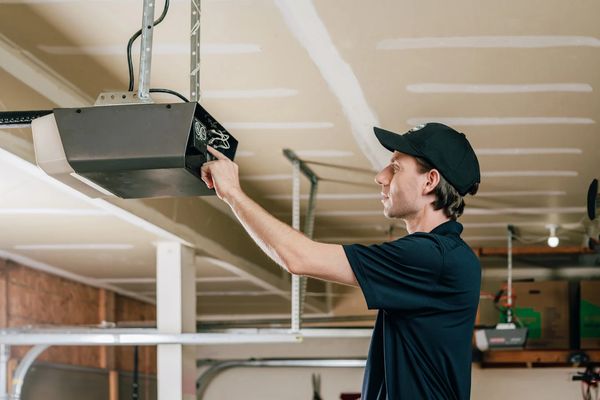
If the noise is coming from overhead - specifically from the opener unit - rather than from the door itself, the most likely causes are: a worn drive gear (plastic gear that meshes with the motor sprocket), a loose chain or belt, or a dry trolley carriage.
Sound: A grinding or slipping sound from the opener box on the ceiling. The door may still open but sound labored. Or the motor runs but with a chattering slippage.
Fix: Lubricate the chain or belt and the trolley carriage rail. If the sound is internal grinding, the drive gear may be stripping - a repair that typically runs $200 - $300. Belt drive openers are inherently quieter than chain drives; if noise is a recurring issue with your chain drive, upgrading to a belt drive opener is worth considering. More details on our opener repair page.
6. Dry or Worn Hinges (Squeaking at Panel Joints)
The hinges connect the door panels and allow the door to bend as it travels from vertical to horizontal overhead. Dry hinges squeak. Worn or cracked hinges (typically from a door that was out of balance for an extended period) can cause a more pronounced popping at the panel joint.
Sound: A squeaking or popping at consistent locations on the door face, typically in the horizontal track section as the door bends around the curve.
Fix: Lubricate all hinge pivot points - a shot of silicone spray or white lithium grease at each hinge pin. If a hinge is visibly cracked or severely corroded, replace it before it fails entirely. Hinge replacements are inexpensive ($5 - $15 each) and easy to do in pairs while the door is open.
7. Panel Vibration (Drumming Sound)
Thin steel panels - common on budget doors and on older doors that have lost their internal insulation - can resonate during operation and produce a drumming or hollow booming sound. This is more common on large double-car doors with thin panels that span a wide opening without enough intermediate struts.
Sound: A hollow, reverberating boom or drum sound that's most noticeable when the opener is running. The door may also flex visibly when you press on the panels.
Fix: Horizontal strut reinforcements bolt across the face of each panel section and significantly reduce flex and resonance. They're typically installed during a new door install but can be added retroactively. This is also worth doing from a hurricane-readiness standpoint - a door that flexes is a door that's closer to failure under wind load.
When Lubrication Alone Won't Fix It
Lubrication helps dry springs, hinges, rollers, and chain drives. It does not fix worn bearings, bent tracks, stripped gears, cracked hinges, or springs near the end of their life. A door that gets temporarily quieter after lubrication but returns to noise within 2 - 3 weeks has a component that needs replacement, not just more grease.
If your door is significantly louder than it used to be, schedule a garage door inspection. A tech can diagnose whether you're looking at a $50 lubrication and adjustment or a $300 component replacement.
-
A sudden increase in noise usually means a component has just crossed a wear threshold: a spring coil developing friction, a roller bearing starting to fail, a piece of hardware shaking loose, or a track section that's been bent. The sound type tells you a lot - grinding from rollers, squealing from springs, banging from track, rattling from loose hardware.
-
It can be. Grinding from worn rollers can accelerate track wear and lead to a door coming off-track. Squealing from a dry, rusting spring means the spring is degrading faster than normal. A banging pop at one point in the door's travel often means a roller is forcing through a bent track - which can escalate to an off-track emergency. Don't ignore persistent new noises.
-
Yes. Silicone spray or white lithium grease on the spring coils, hinges, and rollers (not the tracks themselves) once a year is a good maintenance practice. Use a straw on the spray can to direct lubricant precisely. Avoid WD-40 (it dries out quickly), and avoid lubricating the track surface (it makes rollers slip). If noise returns within a few weeks, the component needs replacement, not more lubricant.
-
Yes - significantly. Belt drives eliminate the metal-on-metal contact of the chain against the sprocket and reduce vibration that can transmit through the ceiling. If bedrooms are above or beside the garage and noise is a concern, a belt drive opener upgrade ($450 - $650 installed) is one of the most impactful changes you can make.
Skip the YouTube rabbit hole - we'll have a tech at your door same day across Broward, Dade and Palm Beach.