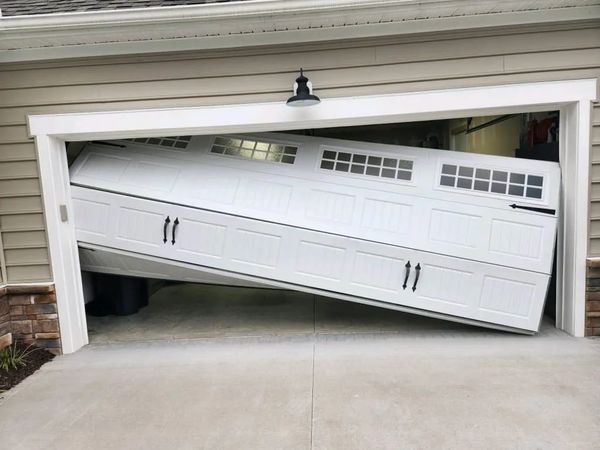
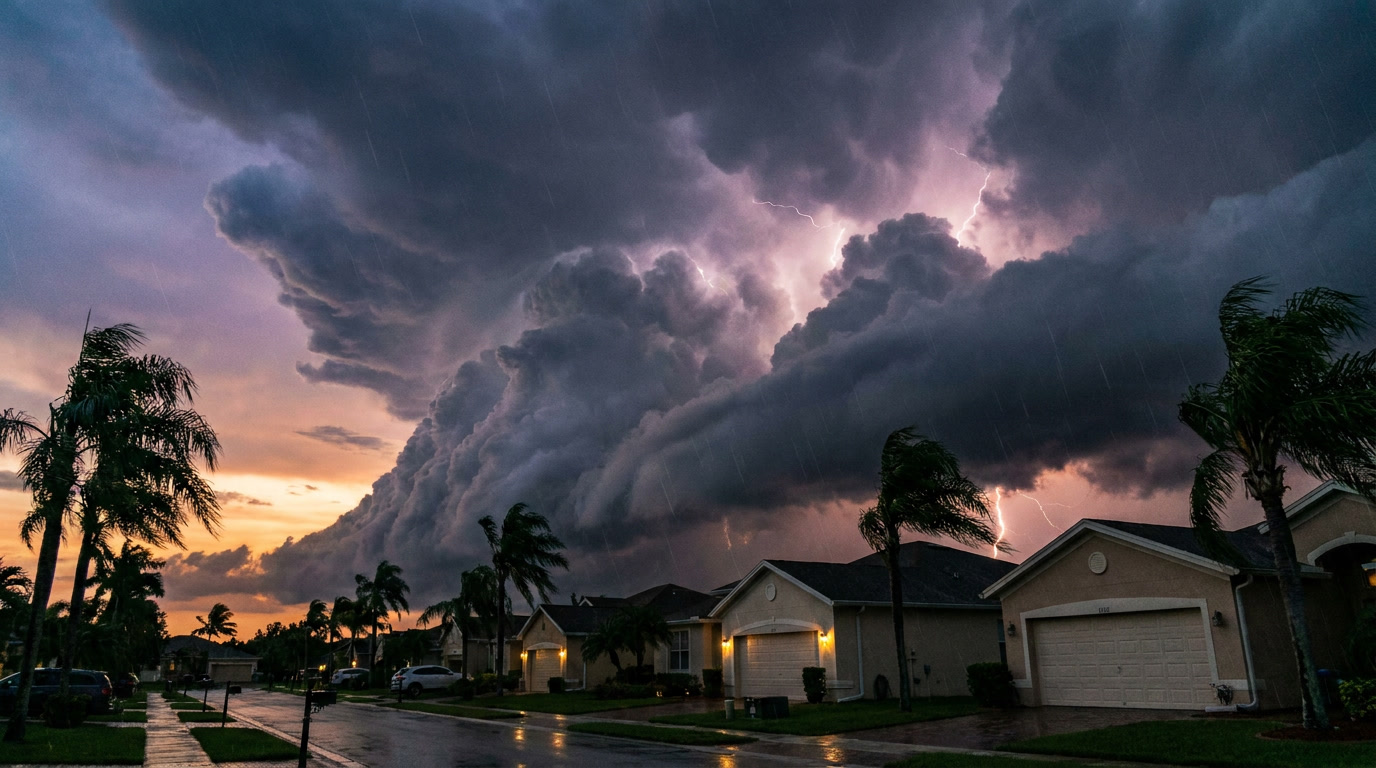
In South Florida, the garage door is often the first thing to fail in a hurricane - and when it does, the consequences go far beyond a bent panel. When a garage door fails under wind load, it creates a pressure differential that can blow out the back wall and lift the roof. FEMA estimates that more than 80% of hurricane-related structural damage in residential buildings enters through failed openings, and the garage door is the largest by far.
Hurricane season officially runs June 1 through November 30. Here's how to prepare before and during a storm.
Pre-Season Inspection (Do This in May)
Before hurricane season starts, inspect these five things on your garage door:
- Hardware condition. Look at the hinges, rollers, and bottom brackets. Surface rust is cosmetic; structural rust that's pitting through the bracket or hinge plate means replacement. Loose lag screws on the track mounting brackets should be tightened or replaced with longer screws into solid lumber.
- Spring health. A spring that's near the end of its cycle life will fail under the increased load of bracing up against wind pressure. Signs: door feels heavy to manual-lift, visible corrosion on the coil, gap in the spring. See our spring repair guide for what to watch for.
- Weather seal condition. The rubber bottom seal and the vinyl weatherstrip along the sides and top are your first line of defense against water intrusion. If they're cracked, shredded, or compressed flat, replace them before the season. This is a $50 - $150 DIY job.
- Panel integrity. Steel panels can develop fatigue cracks or delaminate at seams over time. Press firmly on each panel section - it should feel solid, not flex or oil-can under modest pressure. A door that flexes significantly under hand pressure will fail much earlier under wind load.
- Whether the door is hurricane-rated. Check for an NOA (Notice of Acceptance) sticker on the inside of the door, or look up the door manufacturer + model number on the Miami-Dade Product Control Search. If there's no NOA and you're in Broward or Miami-Dade, your door may not meet current code for your area.
Bracing Kits: What They Are and When They Help
A garage door bracing kit is a set of steel vertical struts that bolt to the door panels and to the floor, stiffening the door against wind load. They're useful for homes in windspeed zones where the door isn't certified but isn't yet due for replacement.
Important limitations: bracing kits are a temporary measure, not a substitute for a proper hurricane-rated door. They're also not code-compliant in HVHZ (High Velocity Hurricane Zone) areas of Miami-Dade and Broward when a new door is required. Use a bracing kit to buy time for a planned door upgrade - not as a permanent solution.
Proper installation matters: the floor anchor must go into a structural concrete slab, not just the surface or into a post-tension tension tendon location. Incorrect installation can be worse than no bracing at all.
When to Upgrade to a Hurricane-Rated Door
A hurricane-rated garage door is the only permanent solution for HVHZ homes. These doors are tested to withstand design wind pressures (not just speeds) and impact from windborne debris. Key indicators that an upgrade is the right call:
- Your door is over 15 years old and has no NOA
- You're in Miami-Dade (which is entirely HVHZ) or coastal Broward
- You're replacing the door for any reason - code requires the new door to meet current impact standards
- Your homeowners insurance premium has a wind mitigation discount available that requires an inspected hurricane-rated opening
Our hurricane-rated garage doors page covers Miami-Dade NOA approval, HVHZ requirements, available styles, and typical installation timelines. Lead time on hurricane-rated doors runs 3 - 6 weeks in most cases - don't wait until a storm is named to order.
48-Hour Storm Prep Checklist
When a storm is forecast within 48 hours:
- Don't use the door more than necessary. Every cycle adds stress to hardware that may already be at its limit.
- Disengage the opener and lower the door manually. Disconnect the opener trolley (red cord). A door that's disconnected from the opener is less likely to be forced open by pressure differential during the storm.
- Engage the manual locks. The center slide lock or side-mounted T-bar lock adds a mechanical resistance against the door being pushed in. Make sure it engages fully into the track bracket.
- Clear the driveway and garage interior near the door. Objects that can become projectiles should be stored well back from the door - inside the home if possible.
- Install bracing if you have a kit. Do this before the storm arrives, not during. Once wind speeds reach 35+ mph it's not safe to be outside near the door.
- Confirm your escape path. If the power goes out and the door is damaged during the storm, how do you exit? Know where your car key is, confirm the pedestrian door (if any) is accessible, and have a flashlight near the re-entry door.
After the Storm
Before you use the garage door after a storm, do a visual inspection first:
- Check the track for bent sections - a bent track can make the door come off on first use
- Check the bottom seal for water intrusion or debris jammed underneath
- If the power was out and you ran the opener on battery backup, check the battery charge level before relying on it
- If the door doesn't sit squarely in the opening or you can see light through the sides when it's closed, have it inspected before storm season ends
If the door was damaged during the storm, schedule a garage door repair inspection as soon as roads are passable. Don't force a damaged door - a door that came partially off track or took a debris impact needs professional inspection before it's used again.
-
The permanent solution is installing a hurricane-rated door with a Miami-Dade NOA or Florida Product Approval. For existing non-rated doors, vertical steel bracing kits add wind resistance but are not HVHZ code-compliant as a permanent fix. At minimum, engage manual locks, disengage the opener, and clear the area before a storm approaches.
-
In Miami-Dade County (entirely within the HVHZ zone), all garage doors installed under permit must carry Miami-Dade NOA approval. In Broward and Palm Beach, requirements vary by proximity to the coast and local building department interpretation. When replacing a door for any reason, the replacement must meet current code for your location.
-
Yes. Vertical door bracing kits are available for most standard residential garage doors and can meaningfully increase wind resistance. They require proper floor anchoring into structural concrete. However, they are not a substitute for a hurricane-rated door in HVHZ zones, and they must be installed before the storm arrives - not during.
-
Hurricane-rated doors typically carry a 3 - 6 week lead time from order to installation, plus permit time (usually 1 - 3 weeks in South Florida). Don't wait until a storm is named - order before or early in hurricane season (June). Supply tightens significantly once a named storm is in the Gulf.
Skip the YouTube rabbit hole - we'll have a tech at your door same day across Broward, Dade and Palm Beach.