Garage Door Installation Timeline in South Florida: A Practical Homeowner’s Guide
Installing a garage door in South Florida isn’t simply a matter of choosing a color, scheduling a truck, and watching a crew bolt everything into place. The process involves coastal weather, wind-load requirements, building codes, salt-air exposure, home access, electrical connections, and—very often—a tight timeline. That’s why understanding the Garage Door Installation Timeline in South Florida can save homeowners money, reduce surprises, and make the entire project feel much more manageable.
Whether you live in Broward County, Miami-Dade County, or another part of the region, the right installation begins well before the first panel arrives. A professional technician must evaluate the opening, confirm structural conditions, select a code-compliant door, coordinate materials, and test every safety component. In some cases, installation can be completed in a single day. In others, custom doors, permit requirements, storm-rated components, or structural repairs can extend the schedule.
This guide walks through the process in plain English. It explains what happens at each stage, what can cause delays, how hurricane-rated garage doors differ from standard models, and how to protect your investment after the work is complete. You’ll also find practical questions, tables, maintenance advice, and emergency guidance for homeowners who need help now rather than later.
For additional information about South Florida garage door services, homeowners can consult a local professional familiar with coastal construction and regional permitting requirements.
Planning the Garage Door Installation Timeline in South Florida
Question: How long does a typical garage door installation take in South Florida?
Answer: A straightforward replacement usually takes between one and three weeks from initial consultation to completion, although the physical installation itself may take only four to eight hours. Custom doors, hurricane-rated systems, permit reviews, unusual openings, structural repairs, and material shortages can lengthen the schedule.
The first step is planning. A technician evaluates the existing door, tracks, springs, rollers, cables, mounting surfaces, and opener. This inspection determines whether the project is a simple replacement or a more involved renovation. If the new door weighs more than the old one, the spring system and opener may also need to be upgraded.
South Florida homes require additional attention because wind exposure varies dramatically from one neighborhood to another. A property near the coast may face different design pressures than one farther inland. A knowledgeable installer considers the home’s location, opening size, roofline, garage construction, and local code requirements before recommending a product.
Homeowners should also decide whether they want insulation, windows, decorative hardware, battery backup, Wi-Fi connectivity, or a new opener. Making those choices early keeps the project moving and prevents last-minute substitutions.
Read more about garage door installation and related garage door maintenance considerations before approving an estimate.
Why South Florida Installations Follow a Different Schedule
South Florida’s climate has a direct impact on the installation calendar. Heat, humidity, intense sunlight, sudden thunderstorms, tropical weather, and salt-laden air all influence materials and scheduling. A garage door installed in this region must do more than open and close. It should tolerate repeated exposure to moisture, resist corrosion, and provide dependable protection during severe weather.
Storm preparation is another important factor. During hurricane season, demand for reinforced doors, replacement parts, and emergency inspections can rise quickly. If a major storm is approaching, suppliers may prioritize urgent repairs, while custom installations may be postponed until conditions stabilize. It’s wise to schedule planned work before the busiest part of the season rather than waiting until every contractor’s calendar is packed.
Local regulations also affect timing. A door may need to meet specific wind-resistance standards, particularly in high-velocity hurricane zones. The installer may need product approvals, engineering documentation, or permit paperwork before work begins. These steps aren’t red tape for its own sake; they help ensure that the door and the structure around it can perform as intended.
Residents researching hurricane-rated garage doors should ask whether the quoted product is approved for their property’s wind zone, not merely marketed as “storm resistant.”
The Initial Consultation and Property Assessment
The consultation is where a vague idea becomes a realistic project plan. A technician typically measures the width and height of the opening, headroom above the door, side-room clearance, backroom depth, and the condition of the jambs. These measurements determine which door sizes, track configurations, spring systems, and opener types will fit safely.
The assessment should also include a review of the existing framing. A garage door transfers substantial forces into the surrounding structure. If the header is damaged, the side posts are weak, or the mounting surfaces are deteriorated, installation may need to pause until those issues are corrected. Installing a beautiful new door on an unstable frame is false economy—it can lead to vibration, premature wear, or unsafe operation.
Homeowners should use this meeting to ask practical questions. Who handles permits? Is haul-away included? What warranty applies to the door, labor, springs, and opener? Will the crew test the automatic reverse system? Is weather sealing part of the installation?
A clear consultation also identifies lifestyle needs. A homeowner who uses the garage as a workshop may value insulation and quiet operation. A family with frequent deliveries may prefer smart garage door openers with activity alerts and remote access.
Selecting the Right Garage Door for the Climate
Choosing a garage door is partly an aesthetic decision, but it’s also a performance decision. Steel doors are popular because they’re durable and available in many designs. Aluminum doors can provide a modern appearance and may resist certain forms of corrosion, although construction quality remains crucial. Wood doors offer character and warmth but require more frequent upkeep in a hot, humid environment.
Insulation deserves special attention. An insulated door can reduce heat transfer between the garage and the home, moderate interior temperatures, and make the door feel more substantial during operation. Polyurethane and polystyrene are common insulation types, with different performance characteristics and price points.
Windows can brighten a garage, but they also affect privacy, heat gain, and wind-load calculations. Decorative hardware can transform a plain door into an attractive architectural feature, yet it should be installed securely and selected with corrosion resistance in mind.
The best choice balances budget, appearance, safety, climate, and expected service life. A professional can explain why one model may be appropriate for a coastal home while another is better suited to a protected suburban property.
Before deciding, compare options for garage door installation and ask about service plans that include garage door maintenance.
Understanding Hurricane-Rated Garage Doors
In storm-prone areas, the garage door is one of the largest openings in a home. If it fails during a hurricane, wind can enter the garage and increase internal pressure, potentially damaging the roof, walls, or other structural components. That’s why properly selected hurricane-rated garage doors are a serious safety consideration rather than a decorative upgrade.
A storm-rated system may include reinforced panels, stronger tracks, heavy-duty rollers, upgraded hinges, wind-load brackets, and specialized locking components. The complete assembly—not just the door panel—must be designed to work together. A reinforced door attached to weak framing may not perform as expected.
Ask the installer for documentation showing the product’s approval status and design pressure rating. Homeowners should also confirm whether the door requires manual storm braces or other preparation before a major weather event. Some systems are designed to remain operational during certain conditions, while others require specific steps to secure them.
Timing can be longer for these products because they may be custom-built or sourced from specialized manufacturers. Measurements must be accurate, and permit paperwork may require additional review. It’s best to begin the process well ahead of hurricane season.
The [National Hurricane Center](https://www.nhc.noaa.gov/) offers official storm information, while local professionals can explain how hurricane-rated garage doors fit into a broader home-preparation plan.
Ordering Materials and Confirming Availability
After the design is approved, the installer orders the door, tracks, springs, opener, weather seals, brackets, and other components. Standard-size doors may be available quickly, while custom finishes, specialty windows, unusual dimensions, and high-wind assemblies can require more time.
Supply availability can change from week to week. A reputable company should provide a realistic estimate rather than promising an installation date before confirming that all necessary materials are in stock. It’s frustrating to discover on installation day that the correct spring, bracket, or opener rail has not arrived.
Homeowners should request a written summary of the order. It should identify the door model, dimensions, color, insulation level, window design, wind rating, opener type, accessories, and warranty terms. This document acts as a useful reference if questions arise later.
It’s also worth confirming how long the materials will remain covered if installation is delayed. Some warranties begin on the installation date, while others may have different conditions. Good communication at this stage prevents misunderstandings and keeps the Garage Door Installation Timeline in South Florida grounded in actual availability rather than guesswork.
For assistance with product selection, homeowners can explore South Florida garage door services and request guidance on compatible garage door opener repair or replacement.
Permits, Code Compliance, and Inspections
Permit requirements vary by city and project scope. A like-for-like replacement may follow a simpler process than a new installation involving structural changes or a hurricane-rated assembly. The contractor should explain which permits are required and whether the company will submit the paperwork on the homeowner’s behalf.
Code compliance may involve wind resistance, anchoring, emergency release mechanisms, electrical work, fire separation, and safety sensors. Requirements can differ according to location, building type, and proximity to the coast. Never assume that a product labeled “heavy duty” automatically meets local standards.
Inspections, when required, may take place after installation. The inspector may verify that the door is correctly anchored, the opening is properly framed, the weather seal is installed, and the automatic opener reverses when it encounters an obstruction.
Permit delays are one of the most common reasons an installation date changes. That doesn’t necessarily mean the contractor is disorganized; municipal review times can fluctuate. Still, customers deserve updates and should receive copies of relevant approvals when the project is complete.
Ask your Broward County garage door company or Miami-Dade garage door services provider how local permitting may affect the projected schedule.
Preparing the Garage Before Installation Day
A little preparation makes installation day safer and faster. Clear vehicles, bicycles, storage bins, tools, and decorations from the garage opening and the area beneath the ceiling-mounted opener. Technicians need room to maneuver long panels and ladders without damaging personal belongings.
Remove fragile items from shelves near the tracks. If the garage contains a freezer, workbench, or stored chemicals, move them away from the work zone. Make sure pets and children cannot enter the area while tools and hardware are present.
Homeowners should also identify the electrical outlet used by the opener and mention any known problems, such as flickering lights, tripped breakers, or damaged wiring. If the existing outlet is not properly positioned, an electrician may be needed before the opener can be installed.
Keep the driveway accessible. The crew may need to unload panels, tracks, springs, and ladders close to the garage. If the property is in a gated community, arrange access in advance. These small details can prevent avoidable delays.
Before the team arrives, review the final scope of work and confirm whether the old door will be removed and hauled away. Preparation supports a smoother garage door installation and reduces the chance of extra labor charges.
What Happens During a Standard Installation
On installation day, the crew usually begins by protecting the work area and removing the existing door. Depending on its condition, the old tracks, springs, cables, rollers, hinges, and opener may also be removed. Springs can store significant energy, so homeowners should never attempt to dismantle them without proper training and equipment.
The installers then inspect the opening again. If the actual conditions differ from the original measurements, they may need to discuss adjustments before proceeding. Once the structure is confirmed, the new vertical and horizontal tracks are mounted and aligned.
Panels are installed from the bottom upward. Hinges connect the sections, rollers fit into the tracks, and the lift cables are attached. The spring system is then installed and balanced according to the door’s weight. Finally, the opener rail, motor unit, trolley, and safety sensors are mounted and connected.
A professional crew doesn’t simply make the door move. They check that it moves smoothly, remains balanced, seals against the floor, and responds correctly to the opener controls. The work area should be cleaned, old materials removed, and the homeowner shown how to operate the system.
For most standard replacements, this stage takes several hours. Complex projects may require a second visit.
The Role of Springs, Cables, and Counterbalance Systems
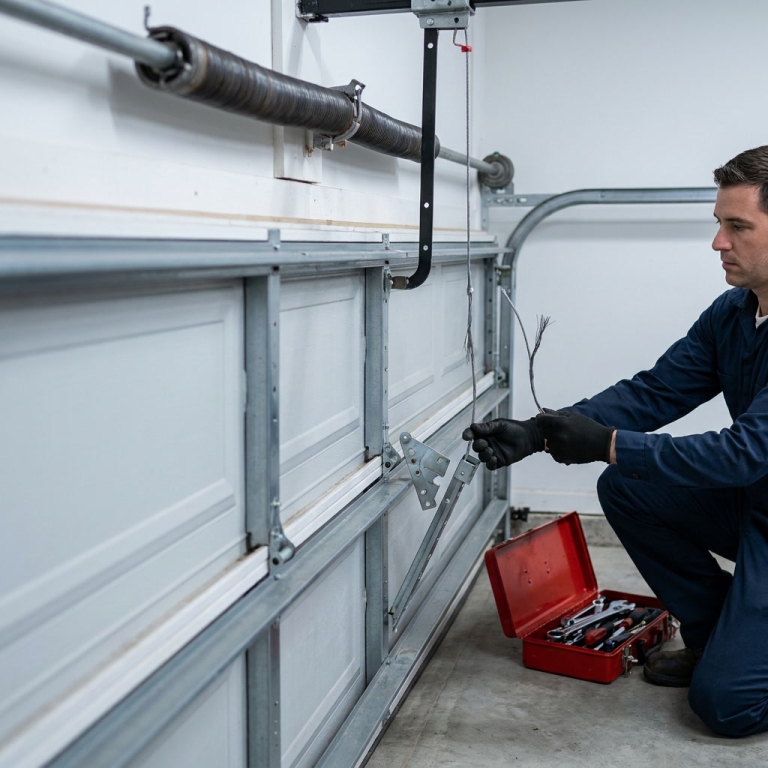
Garage door springs counterbalance the door’s weight, allowing a motor or person to lift it without excessive force. Torsion springs are mounted above the door, while extension springs are positioned along the horizontal tracks in some systems. Both types require correct sizing and installation.
Spring selection is based on door weight, height, track configuration, cycle rating, and other factors. A spring that is too weak may cause the opener to strain. A spring that is too strong can make the door difficult to control and may create dangerous operating conditions.
Cables, drums, brackets, and bearings also contribute to safe movement. If any component is misaligned, the door may bind, tilt, scrape, or make loud popping sounds. During installation, the crew must ensure that the cables wind correctly and that the drum system is properly secured.
It’s helpful to understand why broken spring repair should be handled by trained professionals. A broken spring isn’t merely an inconvenience; it can leave the door extremely heavy and place stress on other parts. Never pull a cable, unwind a spring, or force a damaged door upward.
How Broken Spring Repair Affects the Timeline
If a spring breaks before the planned installation, the schedule may need to change. The installer may be able to replace the spring and continue using the existing door until the new one arrives. Alternatively, if the door is unsafe or badly damaged, the company may recommend immediate replacement.
Emergency spring work can sometimes be completed the same day, especially when standard parts are available. Custom doors and specialized storm-rated systems may still require ordering time. A temporary repair may restore operation, but it should never be presented as a permanent solution if the underlying door is failing.
Homeowners should provide the company with photos or a clear description of the problem. Mention whether the door is stuck open, stuck closed, crooked, unusually heavy, or making loud noises. This information helps the technician bring appropriate parts and determine whether a vehicle can access the garage safely.
If a spring breaks, disconnecting the automatic opener may prevent additional damage, but only if it can be done safely. Don’t stand beneath a partially supported door or attempt to lift it alone.
For urgent assistance, emergency garage door repair may be available before the full installation. Reliable South Florida garage door services can explain the safest short-term option.
Installing and Testing the Garage Door Opener
The opener is the motorized system that raises and lowers the door. During installation, technicians mount the motor, attach the rail and trolley, connect the arm to the top section, and program the remotes. They also install photo-eye safety sensors near the floor on both sides of the opening.
Sensor alignment matters. If the beams don’t communicate correctly, the door may refuse to close or reverse unexpectedly. The opener must also be adjusted so it stops at the correct open and closed positions without crushing the weather seal or pulling excessively on the door.
Modern openers may include battery backup, LED lighting, motion detection, rolling-code security, and Wi-Fi connectivity. These features can improve convenience and safety, but they add setup steps. The technician should connect the opener to the homeowner’s network, demonstrate the app, and explain how access permissions work.
A door that is properly balanced should not force the opener to do all the lifting. If the opener sounds strained, shakes, or moves unevenly, the issue may involve the spring system, tracks, or door alignment rather than the motor itself.
Ask about garage door opener repair and the advantages of smart garage door openers before finalizing the equipment package.
Smart Garage Door Openers and Connected-Home Features
Smart garage door openers allow homeowners to monitor and control the garage through a phone, tablet, voice assistant, or connected-home platform. Depending on the model, users may receive alerts when the door opens, create temporary access codes, review activity history, and close the door remotely.
These features are especially useful for families, home-based businesses, rental properties, and homeowners who frequently receive deliveries. However, convenience should be balanced with cybersecurity and account management. Use strong passwords, enable two-factor authentication when available, and remove former residents or service providers from access lists.
Wi-Fi setup can add time to installation if the signal in the garage is weak. In some houses, a mesh network or additional access point may be necessary. The opener may also require a firmware update before all features work properly.
Homeowners should ask whether the smart system works during an internet outage. Most connected openers can still operate with a wall control or remote, but remote app access may be unavailable. Battery backup is another worthwhile feature, particularly in neighborhoods affected by storm-related power interruptions.
Proper setup and education are part of a complete installation. A technician should demonstrate the app, explain notifications, and show how to use the manual release safely.
Weather Sealing, Insulation, and Water Management
South Florida rain can arrive suddenly and with considerable force. A garage door should include a bottom seal that contacts the floor evenly, along with perimeter weatherstripping around the sides and top. These seals help limit rain intrusion, insects, dust, and conditioned-air loss.
Weather seals are not designed to make a garage completely waterproof. If the driveway slopes toward the opening, water may still collect during heavy storms. In that situation, drainage improvements or a threshold seal may be needed. The installer should explain what the door can reasonably protect against.
Insulation also influences comfort. An insulated door can reduce radiant heat and help stabilize the temperature inside the garage. This may matter if the space shares walls with living areas or is used as a gym, office, hobby room, or workshop.
During final testing, inspect the seal along the entire floor. A small gap on one side may indicate an uneven floor, a door that is out of balance, or track alignment that needs adjustment. Don’t simply accept a visible gap as normal without asking why it exists.
Thoughtful garage door maintenance helps preserve seals, while professional garage door installation ensures they are fitted correctly from the beginning.
The Final Safety Inspection
Before the project is considered complete, the installer should conduct a systematic safety inspection. The door should open and close smoothly, remain level, and stop at the correct points. The automatic reverse feature should be tested with an appropriate object or approved testing method.
The photo-eye sensors should be checked by interrupting the beam while the door is closing. The door should reverse rather than continue downward. Wall controls, remotes, keypads, emergency release mechanisms, and battery backup should also be tested.
Inspect the hardware visually. Bolts should be secure, tracks should be aligned, cables should sit correctly on their drums, and rollers should move without excessive rubbing. The opener should not be attached to unstable drywall or weak framing.
The homeowner should receive operating instructions, warranty information, maintenance recommendations, and emergency contact details. Ask the installer to demonstrate how to disconnect the opener manually and how to recognize signs of imbalance or spring failure.
A final walkthrough is more than a courtesy. It confirms that the system works as a complete assembly and gives the homeowner confidence before the crew leaves.
How Long a Garage Door Installation Usually Takes
The physical installation time depends on the door size, structure, opener, weather, and complexity of the project. The table below provides general planning ranges, not guarantees.
| Project Type | Typical On-Site Time | Possible Scheduling Considerations |
|---|---|---|
| Standard single-car replacement | 4–6 hours | Existing framing must be sound |
| Standard double-car replacement | 5–8 hours | Heavier panels and larger springs |
| Custom or insulated door | 6–10 hours | Special-order materials may take longer |
| Hurricane-rated installation | 1 day or more | Wind-load hardware and inspections may apply |
| Door plus structural repairs | 1–2 days | Framing or electrical work may require another trade |
The calendar timeline is different from on-site labor. Ordering, permits, inspections, and weather can add days or weeks. Homeowners should ask for both estimates: how long until the project can begin and how long the crew expects to work at the property.
Learn more about Broward County garage door company scheduling and Miami-Dade garage door services before setting a move-in or renovation deadline.
Common Causes of Installation Delays
Several factors can move an installation date. The most common is a measurement issue discovered after the old door is removed. A rough opening may be smaller, wider, or less level than expected. Hidden rot, cracked masonry, damaged headers, or deteriorated side posts can also require corrective work.
Weather is another factor. Rain, lightning, high winds, and extreme heat can create unsafe conditions for ladder work and material handling. A professional company should never rush through an installation simply to preserve a calendar date.
Permit reviews and inspections may also take longer than anticipated. During storm season, demand for repairs and replacement doors can rise sharply. Manufacturing delays, unavailable colors, backordered openers, or transportation problems may affect custom orders.
The best way to reduce delays is to choose products early, confirm measurements, clear the work area, and maintain communication with the installer. If the company changes the date, ask what caused the delay, whether the materials are secure, and what the revised schedule looks like.
Flexibility helps, but accountability matters too. A dependable contractor provides updates rather than leaving the homeowner guessing.
Emergency Garage Door Repair Before Installation
Sometimes a planned replacement becomes urgent. A door may collapse, a cable may come off, a spring may break, or an opener may fail while the door is stuck open. In these situations, security and safety come first.
Don’t attempt to force a jammed door closed with a vehicle, pry bar, or improvised brace. Don’t stand beneath a crooked door. Keep children and pets away, and call a qualified technician. If the door is open and the garage contains valuable equipment, ask whether a temporary securing method is available.
Homeowners searching online for help may encounter the following local service message: Need emergency garage door repair near me in Broward County, Florida? Same-day service, 13+ years experience, 450+ five-star reviews. Call (954) 830-9661.
Emergency work may restore temporary operation, replace a damaged spring, secure the opening, or determine that replacement is the safer choice. A technician should explain the immediate repair and the longer-term recommendation separately, so the homeowner understands what is essential now and what can wait.
For urgent situations, explore emergency garage door repair options and ask whether same-day service is available in your area.
Garage Door Maintenance After Installation
A new garage door still needs routine care. Maintenance protects the investment, helps identify small problems early, and supports quiet, balanced operation. Homeowners should visually inspect the door every month and arrange professional service according to the manufacturer’s recommendations.
Look for frayed cables, loose hinges, bent tracks, worn rollers, damaged seals, rust, and unusual movement. Listen for grinding, popping, squealing, or excessive vibration. A change in sound often appears before a component fails completely.
Lubricate appropriate hinges, rollers, bearings, and spring components with a garage-door-specific product, but avoid spraying lubricant on the belt or chain unless the manufacturer permits it. Do not adjust torsion springs, lift cables, or high-tension hardware yourself.
Test the opener’s reverse function and inspect the photo-eye sensors. Keep the sensor lenses clean and make sure they remain aligned. Replace remote batteries when needed, and check the emergency release periodically.
Regular garage door maintenance is especially valuable near the coast, where humidity and salt exposure can accelerate corrosion. A maintenance visit can also include broken spring repair if early wear is discovered.
Corrosion Prevention in Coastal Areas
Salt air can be hard on metal. Homes near the ocean or waterways may experience faster corrosion on springs, fasteners, tracks, hinges, brackets, and exterior hardware. Even inland properties can face high humidity and frequent rain, so corrosion prevention should not be limited to beachfront homes.
Choose components with suitable protective finishes and ask whether stainless or coated hardware is available for the application. Rinse exterior surfaces gently when appropriate, but avoid directing high-pressure water into bearings, opener motors, electrical connections, or spring assemblies.
Keep the garage ventilated when practical. Persistent moisture, stored wet equipment, and poor airflow can create a corrosive environment. If the garage floor frequently stays damp, investigate drainage and sealing issues.
Rust on a decorative handle may be mostly cosmetic, but rust on a spring, cable, bracket, or track can compromise operation. Have questionable components inspected rather than waiting for visible failure.
Proper installation, appropriate materials, and scheduled care help extend service life. Ask a local Broward County garage door company about corrosion-resistant options for your property.
Choosing a Qualified South Florida Installer
Credentials, experience, communication, and workmanship all matter when selecting an installer. Look for a company that provides a written estimate, explains product approvals, carries appropriate insurance, and has experience with local conditions. A professional should be willing to discuss permits, wind ratings, warranties, and maintenance without dodging the details.
Reviews can reveal useful patterns, but don’t rely on star ratings alone. Read comments about punctuality, cleanup, communication, repairs, and how the company handled problems. Ask for references or examples of similar projects if the installation is custom or structurally complex.
Be cautious with unusually low bids. The quote may exclude permit fees, disposal, weather seals, opener adjustments, structural repairs, or storm-rated hardware. A low price is not a bargain if it leaves the homeowner responsible for essential work.
A trustworthy technician also knows when to involve another professional. Electrical changes, framing repairs, masonry work, and major drainage corrections may require licensed specialists.
When comparing Miami-Dade garage door services, ask each company to explain the same scope of work so the estimates can be compared fairly.
Understanding Installation Warranties
Garage door warranties often have separate coverage for panels, hardware, springs, openers, finishes, and labor. Read the terms carefully. A manufacturer may cover a defective panel for several years but provide a shorter warranty on springs or surface finishes.
Ask whether the warranty is transferable, whether registration is required, and what maintenance is expected. Improper adjustment, unauthorized modifications, storm damage, corrosion, and normal wear may be excluded. A warranty doesn’t eliminate the need for inspection and care.
Labor coverage is equally important. If the door develops a problem shortly after installation, will the company return without a service charge? How are callbacks scheduled? Does the company provide emergency support after business hours?
Keep the invoice, model numbers, permit documents, inspection records, and maintenance notes in one place. If you sell the home, this documentation may reassure prospective buyers that the system was installed correctly.
Before signing, ask the installer to identify every warranty in writing. A clear agreement is one of the strongest safeguards against confusion later.
Budgeting for the Complete Project
The cost of a garage door installation depends on more than the door itself. Important variables include door size, material, insulation, windows, wind rating, opener type, structural repairs, permit fees, disposal, labor, and accessories.
A basic replacement may be relatively straightforward, while a custom hurricane-rated system with a new smart opener and framing corrections can represent a much larger investment. Homeowners should compare complete project prices rather than focusing only on the panel cost.
Request an itemized estimate that separates products and labor. It should state whether tax, permit charges, haul-away, weather seals, programming, and final testing are included. If the contractor discovers hidden damage, ask for a written change order before authorizing additional work.
Financing may be available, but homeowners should review interest rates, fees, and cancellation terms carefully. The goal is to choose a safe, durable system—not simply the lowest monthly payment.
Professional garage door installation can reduce long-term expense by preventing premature wear, while timely garage door opener repair may avoid a full replacement.
What Homeowners Should Ask Before Signing
A short conversation before approval can reveal whether a company is organized and transparent. Consider asking the following:
- Is the proposed door approved for the property’s wind zone?
- Who obtains the permit, if one is required?
- Are removal and disposal included?
- Will the technician inspect the framing before installation?
- What happens if the opening needs structural repairs?
- Which components are covered under warranty?
- Does the price include weatherstripping and safety testing?
- Can the opener support battery backup or Wi-Fi access?
- How long will the installation take if everything goes as planned?
- What maintenance schedule does the manufacturer recommend?
Clear answers are a good sign. Vague promises, pressure tactics, and reluctance to provide documentation deserve caution. A reputable installer understands that homeowners want to make an informed choice.
Whether you’re comparing South Florida garage door services or seeking a Broward County garage door company, use the same questions with every provider.
South Florida garage door services, emergency garage door repair, garage door installation, broken spring repair, hurricane-rated garage doors, garage door opener repair, garage door maintenance, smart garage door openers, Broward County garage door company, Miami-Dade garage door services
These services are connected, but they aren’t interchangeable. South Florida garage door services may include inspections, replacements, repairs, opener work, storm preparation, and routine maintenance. Emergency garage door repair focuses on immediate safety and access problems. Garage door installation involves new equipment and careful coordination. Broken spring repair addresses a high-tension component that should never be handled casually.
Hurricane-rated garage doors are selected for wind performance and may involve special approvals. Garage door opener repair can restore a malfunctioning motor, sensor, remote, or drive system. Garage door maintenance helps prevent avoidable failures. Smart garage door openers add connected-home convenience but require responsible account management.
Location matters, too. A Broward County garage door company may understand local permitting and weather conditions, while Miami-Dade garage door services may address requirements specific to that county and its high-wind zones. The right provider should tailor recommendations to the property rather than applying a one-size-fits-all package.
Homeowners can learn about available South Florida garage door services and compare emergency garage door repair options before a crisis occurs.
Frequently Asked Questions About the Installation Timeline
How far in advance should I schedule a garage door installation?
For a standard replacement, scheduling one to three weeks ahead is often reasonable. Custom doors, special finishes, hurricane-rated assemblies, and permit requirements may require more time. During hurricane season or after a major storm, demand can increase sharply. Begin early if the project has a firm deadline, such as a home closing, insurance inspection, renovation milestone, or planned move.
Can a garage door be installed in one day?
Yes. Many standard replacements can be completed in a single day when the door and hardware are available, the framing is sound, and no permit or electrical complications arise. A custom or wind-rated installation may take longer because of additional hardware, inspections, or structural work. Ask for both the expected arrival date and the estimated on-site labor time.
What should I do if my garage door breaks while I’m waiting for installation?
Keep people away from the opening and don’t force the door. If it is crooked, partially open, or supported by damaged cables, avoid lifting it manually. Contact a qualified provider for emergency garage door repair. A technician may replace a broken spring, secure the door, or recommend a temporary measure until the replacement system arrives.
Are hurricane-rated garage doors required in all South Florida homes?
Requirements depend on local building codes, the property’s location, the type of construction, and the scope of the project. Even when a particular upgrade isn’t mandatory, a properly approved wind-rated door may provide valuable protection. Ask the installer to explain the applicable wind-load requirements and provide documentation for the proposed assembly.
Should I replace the opener when I install a new door?
Not always, but the existing opener should be evaluated. If it is old, underpowered, noisy, incompatible with the new door, or missing modern safety features, replacement may be sensible. A new door must be properly balanced so the opener isn’t overloaded. Smart connectivity and battery backup are additional reasons homeowners sometimes choose a new opener.
How often should I schedule garage door maintenance?
Many homeowners benefit from a professional inspection once a year, with more frequent attention for heavily used doors or properties exposed to salt air. Visual checks can be performed monthly. Maintenance may include lubrication, fastener inspection, sensor testing, balance testing, weather-seal evaluation, and early detection of spring or cable wear.
Why is my new garage door noisy?
Some sound is normal, but excessive grinding, squealing, rattling, or popping can indicate track misalignment, worn rollers, loose hardware, improper balance, or opener adjustment problems. Don’t spray random products onto the system or tighten spring hardware yourself. Contact the installer while the work is under warranty and describe when the noise occurs.
Does the installation price include permits and old-door removal?
Not necessarily. Some estimates include both, while others list them as separate charges. Ask for an itemized proposal that clearly identifies permit handling, disposal, weather seals, opener programming, structural repairs, and inspection fees. Written clarity at the beginning prevents unpleasant surprises at the end.
A Practical Week-by-Week Timeline
For planning purposes, a typical project may look like this:
- Week one: consultation, measurements, design discussion, and estimate.
- Week one or two: product selection, contract approval, and material ordering.
- Week two or three: permit submission, supplier confirmation, and installation scheduling.
- Installation day: removal, structural check, new door installation, opener setup, and safety testing.
- After installation: inspection, final documentation, homeowner demonstration, and maintenance planning.
This sequence can move faster for in-stock products or slower for custom work. Storm conditions, permit reviews, structural repairs, and supply constraints may alter the calendar. The useful takeaway is that preparation and installation are separate phases. A one-day installation doesn’t mean the entire project was arranged overnight.
Homeowners who understand the sequence can make decisions earlier and recognize when a delay is reasonable. They can also avoid scheduling the project too close to a major event, when even a small complication could create a significant inconvenience.
Summary: Making the Timeline Work for You
The Garage Door Installation Timeline in South Florida depends on more than the crew’s time at the property. Measurements, product availability, wind ratings, permits, structural conditions, electrical requirements, weather, and final inspections all influence the schedule. A standard replacement may be completed in one day, but the full project can take one to several weeks from consultation to completion.
The smartest approach is to plan early, choose products appropriate for the local climate, verify hurricane-related requirements, and insist on an itemized estimate. Ask who handles permits, whether the opener is included, what warranties apply, and how the system will be tested. If a spring breaks or the door becomes unsafe before installation, use professional emergency service rather than attempting a risky temporary fix.
Once the new door is installed, monthly visual checks and annual professional service can help protect its performance. Keep tracks clear, watch for corrosion, test safety sensors, and respond promptly to unusual noises or movement.
With careful planning and a qualified local installer, the process doesn’t have to be a guessing game. The result should be a secure, balanced, weather-conscious garage door that operates quietly and reliably through South Florida’s heat, humidity, heavy rain, and storm season.
Skip the YouTube rabbit hole - we'll have a tech at your door same day across Broward, Dade and Palm Beach.