Hearing a strange sound from your garage door after a storm can be unsettling. A door that normally opens and closes quietly may begin squeaking, grinding, rattling, popping, or shuddering after heavy rain. In many cases, the water itself is not the only problem. Rain can expose existing wear, wash away lubricant, increase friction, swell certain materials, trigger rust, and reveal alignment or drainage issues around the garage.
Understanding the reason behind the noise is important because some sounds are minor maintenance warnings, while others indicate a safety concern involving the springs, cables, rollers, tracks, or garage door opener. Ignoring an unusual sound may allow a small problem to become a more expensive repair or leave the door unable to close securely.
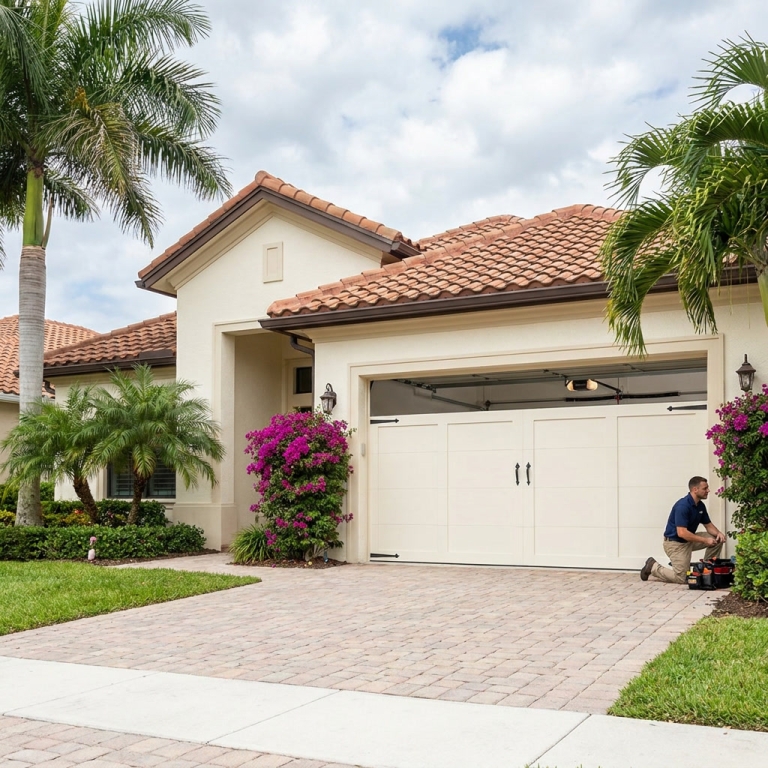
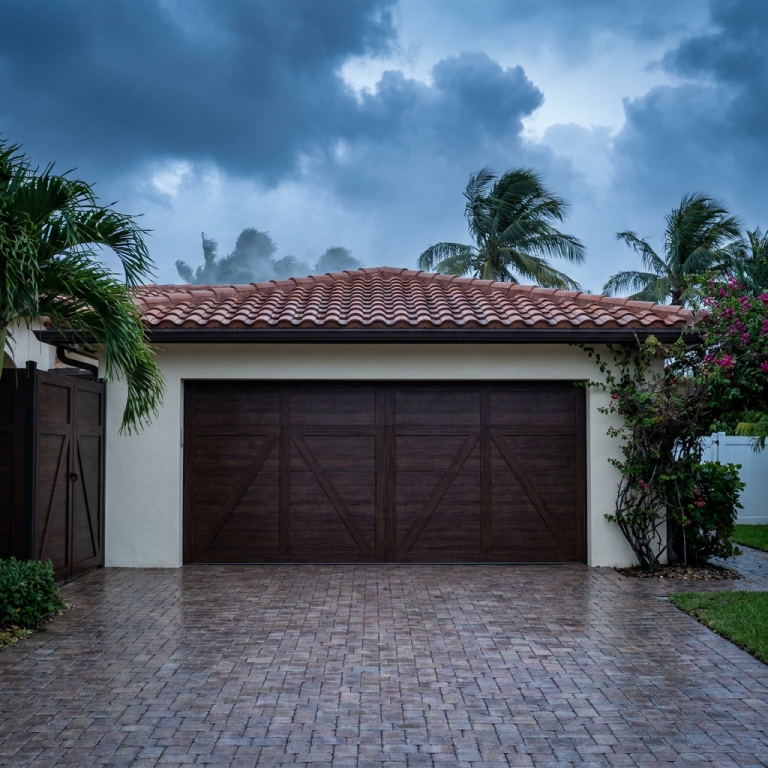
For homeowners in humid coastal areas, garage door noise after rain is especially common. South Florida receives intense rain, high humidity, salt air, and occasional tropical weather. These conditions can affect metal hardware, electrical components, weather seals, and wooden or composite door sections. A professional inspection can identify the source before the door becomes stuck or unsafe.
Garage Door Pros of South Florida is a Florida-licensed and insured garage door company serving homeowners throughout Broward, Miami-Dade, and Palm Beach counties. Its slogan, “Our work is professional, our service is personal,” reflects its focus on dependable workmanship, responsive service, and customer satisfaction. The company has been installing and servicing garage doors across South Florida since 2012. Homeowners can learn more through South Florida garage door services, including repairs, maintenance, replacements, and new installations.
Rain can affect a garage door in several different ways. Water may enter the rollers, hinges, and tracks, while wind-driven rain can force moisture into gaps around the panels. A sudden temperature change can cause metal parts to expand or contract. Water may also collect on the floor, allowing the bottom seal to drag or stick as the door moves. If the garage is poorly ventilated, high humidity can remain inside long after the storm ends.
The first step is to identify the type of noise. The sound often provides a useful clue about the affected component.
- Squealing or squeaking: This commonly points to dry rollers, hinges, bearings, or springs. It may also occur when dirt and moisture create friction between moving parts.
- Grinding: Grinding can indicate damaged rollers, worn bearings, a bent track, or a motor and gear problem inside the opener.
- Rattling: Rattling may result from loose hinges, nuts, bolts, brackets, tracks, or an opener rail that has become loose from the ceiling.
- Popping or snapping: A popping sound may come from a spring winding, a cable shifting, a panel flexing, or a roller moving over a damaged area of track. Springs require special caution.
- Scraping: Scraping usually suggests that the door, roller, or track is rubbing against another surface. A misaligned track or bent hardware may be responsible.
- Banging: A loud bang can occur when a spring breaks, a cable comes off, or a door section suddenly shifts. Stop operating the door until it has been inspected.
- Humming or clicking: This is more likely to involve the opener, electrical supply, sensors, or remote-control system than the door itself.
- Shuddering or vibrating: The door may be binding because of swollen materials, uneven tracks, worn rollers, or an unbalanced door.
One of the most frequent causes of garage door noise after rain is a lack of lubrication. Rainwater and repeated humidity can remove lubricant from rollers, hinges, bearings, torsion springs, and other moving parts. Even when the garage door looks clean, its rollers may be rubbing against the tracks with insufficient lubrication. The result is often a high-pitched squeak that becomes louder when the door is moving quickly.
Lubrication should be performed with a garage-door-specific silicone or lithium-based spray recommended for the component. Avoid using heavy grease on tracks. Grease can collect dust and grit, creating an abrasive paste that increases wear. The tracks should generally remain clean and free of thick lubricant because rollers need to travel along them rather than slide through a layer of grease.
Some homeowners spray every visible component, but that approach can create additional problems. Lubricant should not be sprayed onto the floor, the belt of a belt-drive opener, the opener’s electronic housing, or the photo-eye sensor lenses. If you are uncertain where to apply it, a trained technician can complete a garage door maintenance visit and check the condition of the other hardware at the same time.
Rollers are another common source of noise after wet weather. Steel rollers can rust when exposed to moisture, especially if their bearings are worn or unsealed. As rust develops, the rollers may produce grinding, rumbling, or squeaking sounds. Nylon rollers are usually quieter, but they can also become damaged, cracked, or worn. A roller that has broken apart may cause the door to wobble and place extra pressure on the track.
A visual inspection can reveal some roller problems. Look for rust, missing pieces, flat spots, excessive movement, or a roller that is no longer sitting correctly inside the track. Do not remove roller brackets yourself unless you are trained to do so. Some brackets are connected to sections under tension, and removing the wrong fastener can allow a panel to shift unexpectedly.
Hinges can also become noisy after rain. Hinges connect the garage door sections and allow them to bend as the door travels around the curved part of the track. If a hinge becomes loose, rusted, or bent, the panel may flex more than it should. This can create popping, squeaking, or rattling noises. A loose hinge may also cause the door to bind and make the opener work harder.
Check whether any hinge screws appear loose, but do not over-tighten screws into a damaged or deteriorated panel. A technician may need to replace the hinge, use a suitable fastener, or reinforce the attachment point. Correct repair is important because hinges help distribute the door’s weight and movement.
The tracks deserve close attention after a storm. Water can carry dirt, leaves, sand, and small debris into the track. In coastal regions, salt residue can accelerate corrosion. A track that is dirty, bent, or slightly out of alignment may cause a scraping or grinding sound as the rollers pass through it.
Tracks should be wiped clean and inspected for dents, separation, or loose mounting brackets. Do not strike a track with a hammer to straighten it. Even a small change in alignment can affect the full travel of the door. Track adjustment requires accurate positioning and should usually be handled by a garage door professional.
A door can also make noise when the tracks are not properly secured to the wall or ceiling. Storm vibration and repeated operation may loosen lag screws, brackets, or support hardware. The track may then shake as the door moves, creating a rattle or rumble. Loose hardware can become more noticeable after rain because the door may be heavier or less balanced.
The weather seal at the bottom of the door is another possible source. When the bottom seal becomes wet, it may stick to the floor, especially if the concrete is dirty, painted, uneven, or coated with standing water. As the opener tries to lift the door, the seal can release suddenly and produce a popping sound. A damaged seal may also flap, scrape, or drag as the door closes.
Inspect the bottom seal for cracks, flattened sections, gaps, and signs of hardening. The seal should remain flexible enough to contact the floor without creating excessive resistance. If water is entering under the door, replacing the seal may help, but it will not correct a sloped driveway, poor drainage, or a damaged floor. In some situations, exterior drainage improvements are needed to keep stormwater away from the garage opening.
Wooden garage doors can swell after rain. Moisture may enter through unpainted edges, damaged trim, cracked panels, or failed weatherproofing. As the wood expands, the door can rub against the frame or become heavier. This may create scraping, squeaking, or straining noises and may cause the opener to reverse or stop.
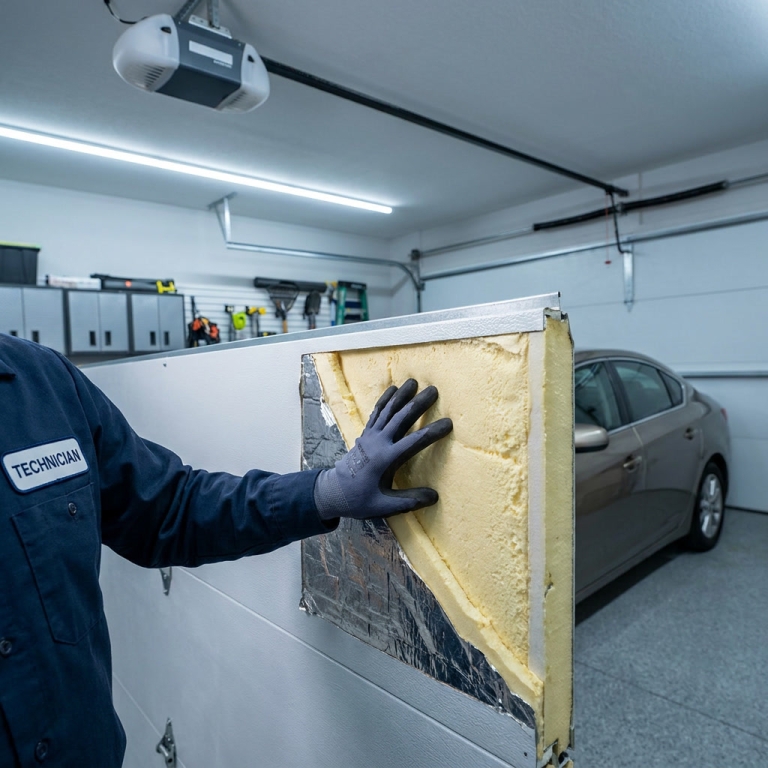
Composite and insulated doors can also experience movement, although the symptoms vary by material and construction. A door section that has absorbed moisture or shifted can place pressure on hinges and rollers. If the noise continues after the door dries, do not assume that the problem will correct itself. A technician should check the panels, tracks, hinges, balance, and opener force settings.
Humidity can produce rust even when rain does not directly enter the garage. South Florida garages often remain warm and humid, creating condensation on steel springs, brackets, cable drums, fasteners, tracks, and rollers. Salt air near the coast makes corrosion more aggressive. Once rust begins, it can weaken components and make movement rougher.
Surface rust does not always mean that a component must be replaced immediately, but it should not be ignored. Rust around a spring, cable, bearing, or mounting bracket deserves particular attention. Corroded parts may fail under load, and a garage door system can weigh hundreds of pounds.
The springs deserve special caution. Torsion or extension springs counterbalance the weight of the door so the opener does not have to lift it alone. A rusty, stretched, broken, or improperly adjusted spring can make the door noisy and difficult to move. Signs of spring trouble include a loud bang, a door that feels unusually heavy, a visible gap in a torsion spring, a cable that has come loose, or a door that rises only a few inches before stopping.
Do not attempt to adjust, remove, or replace a garage door spring without the appropriate training and tools. Springs store significant energy. A mistake can cause severe injury or damage to the door, vehicle, walls, or opener. Professional broken spring repair includes identifying the correct spring size, checking the balance of the door, inspecting cables and drums, and testing the complete system.
“Never attempt to repair or adjust the springs or cables yourself. These parts are under high tension and can cause serious injury or death.” — U.S. Consumer Product Safety Commission safety guidance regarding garage doors.
A broken spring is not always obvious. Some springs break quietly or develop cracks that create intermittent popping noises. The opener may continue to run, giving the impression that the system is working normally, while the motor is carrying far more weight than it should. Continued use can burn out the opener or damage the gear and sprocket.
If the door is heavy, uneven, or noisy after rain, test it only if it can be safely disconnected from the opener and moved without force. In general, homeowners should not perform this test if they are unfamiliar with garage door systems. A professional can complete a controlled balance and safety inspection.
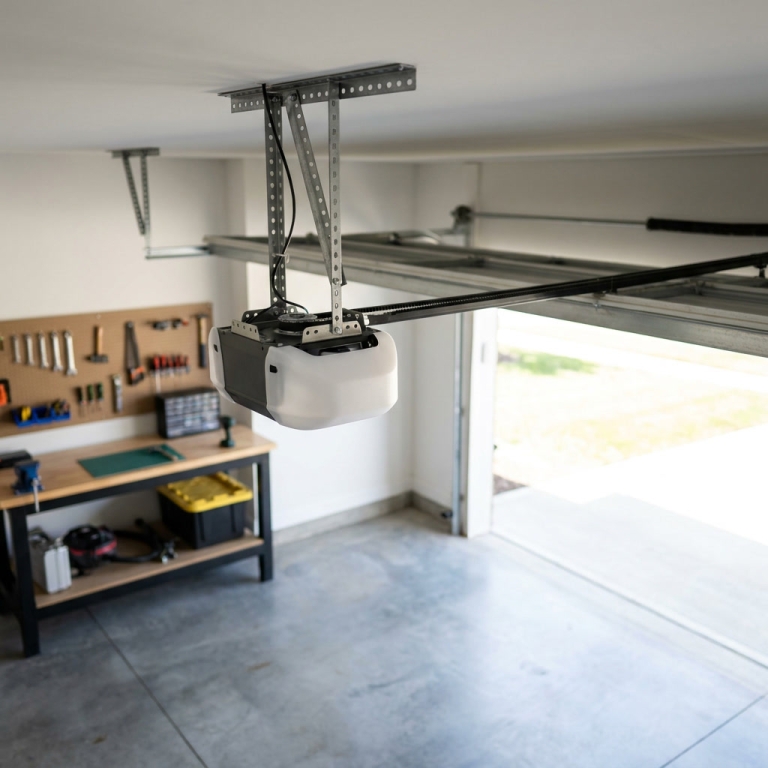
The opener itself may be responsible for garage door noise after rain. Water or humidity can affect the opener’s motor, drive mechanism, circuit board, light socket, or wiring. A ceiling-mounted opener may also transmit vibration through loose brackets or a poorly supported rail. Grinding may indicate worn gears, while humming without movement can point to a motor, capacitor, or control issue.
Chain-drive openers naturally create more mechanical noise than belt-drive models, but a sudden change in sound still deserves attention. A chain that is too loose may slap against the rail. A chain that is too tight can strain the motor and sprocket. Belt-drive systems are quieter but can still develop belt, pulley, or motor problems.
Garage door opener repair should include more than replacing a remote or adjusting travel limits. A qualified technician should check the drive system, mounting hardware, safety reversal function, photo-eye sensors, wiring, force settings, and door balance. If the opener is old or repeatedly affected by humidity, replacement with a modern sealed or better-protected unit may be more practical.
Photo-eye sensors can be affected by rain, condensation, dirt, or accidental movement. When the sensors are misaligned, the door may click, start closing, reverse, or refuse to close. The sensor itself may not create a loud mechanical noise, but repeated attempts by the opener can make the system appear noisy or erratic.
The two sensor lenses should face each other across the doorway and remain free of water spots, dust, spider webs, and mud. Wipe them gently with a soft, dry cloth. Do not bypass the sensors or tape them out of position. The auto-reverse and photo-eye systems are essential entrapment-protection features.
Residential garage door openers have been required to include entrapment-protection features, including automatic reversal systems, for decades. These features should be tested regularly and never disabled. — U.S. Consumer Product Safety Commission guidance.
A noisy door may also be unbalanced. Waterlogged wood, damaged hardware, a failing spring, or a panel problem can change the door’s weight distribution. When an unbalanced door operates, the opener may strain, the rails may vibrate, and the rollers may make more noise. A properly balanced door should move smoothly and remain in position when handled by a trained professional.
Do not compensate for an unbalanced door by increasing the opener’s force setting. Excessive force can mask the underlying issue and create a safety risk. The correct solution is to repair the door, spring, cables, rollers, panels, or other affected components.
Wind-driven rain can reveal problems that were already developing. For example, a door that is slightly off-track may operate quietly in dry conditions but bind when the rollers and track become wet. A loose cable may shift when the door becomes heavier. A damaged panel may flex under wind pressure and begin rattling. A storm does not always cause the original defect; it may simply make the defect easier to hear.
Before calling for service, homeowners can perform a limited visual inspection. Keep the door closed if it is unstable, crooked, or visibly damaged. Look from a safe distance for:
- Water or debris inside the tracks.
- Rust on rollers, springs, cables, brackets, or fasteners.
- A loose, bent, or separated track.
- Broken hinges or missing screws.
- A cable hanging loose from the drum or bottom bracket.
- A visible gap in a torsion spring.
- Panels that are warped, cracked, or rubbing against the frame.
- A bottom seal that is dragging or sticking to the floor.
- Loose opener brackets or a vibrating rail.
- Sensor lenses that are dirty, wet, or misaligned.
Do not force the door open or closed if it is crooked, jammed, unusually heavy, or making a loud banging sound. Do not stand beneath a raised door that is supported only by a damaged spring or cable. Keep children and vehicles away from the area until the system has been checked.
Some minor moisture-related noises may improve once the door dries. However, drying alone does not repair corrosion, worn bearings, bent tracks, loose hardware, failed springs, or a damaged opener. If the sound returns after every storm, the underlying issue should be addressed rather than treated as normal.
A professional garage door maintenance appointment can prevent many rain-related problems. A maintenance visit generally includes inspection, lubrication where appropriate, hardware tightening, roller and hinge assessment, track inspection, spring and cable evaluation, balance testing, opener testing, sensor alignment, and safety-reversal testing. The exact services vary according to the age and design of the door.
Regular maintenance is particularly helpful before hurricane season. Homeowners should not wait until a storm damages the door or leaves the vehicle trapped inside. A technician can identify corroded components, weakened fasteners, and poor sealing before severe weather arrives.
For coastal properties, the choice of replacement hardware matters. Galvanized hardware and stainless fasteners resist corrosion better than untreated steel. Corrosion-resistant rollers, brackets, cables, and springs can extend service life in humid and salt-air environments. These components may cost more initially but can reduce repeated repairs and improve reliability.
A garage door replacement may be appropriate when the door has extensive rust, repeated panel damage, poor insulation, severe storm damage, or outdated safety features. Modern doors are available in many styles, including classic raised-panel, contemporary panel, carriage-house, full-view glass, custom, and impact-resistant designs.
Hurricane-rated garage doors are especially important in areas subject to high winds. In designated High-Velocity Hurricane Zones, installations must meet applicable Florida building requirements. Impact-rated doors may include reinforced sections, stronger tracks, upgraded hardware, and wind-load documentation. The door must be installed as a complete tested system; adding a stronger panel to weak tracks does not create a properly rated assembly.
Garage Door Pros of South Florida installs new doors that meet High-Velocity Hurricane Zone requirements where applicable, with impact-rated options available for qualifying properties. The company uses galvanized hardware and stainless fasteners for coastal homes and installs corrosion-resistant components suited to South Florida’s humidity and salt air. Its crews can handle door removal, track and spring installation, hardware setup, safety adjustments, opener testing, cleanup, and permit handling where required.
New garage door installation should include more than placing a panel in an opening. The installer should verify the opening, select suitable tracks and springs, confirm wind-load requirements, install weather seals, adjust the balance, test the opener, and explain safe operation. Poor installation can cause constant noise, premature wear, air leakage, and unreliable storm performance.
Smart garage door openers are another upgrade that can improve convenience and security. Wi-Fi-enabled models can send alerts when the door opens, allow remote control through a mobile application, and integrate with certain smart-home systems. Some models include battery backup, automatic closing schedules, guest access, and activity history.
A smart opener will not eliminate mechanical noise caused by rollers, springs, or tracks. It also cannot correct an unbalanced door. However, it can provide useful notifications if the door remains open after a storm or if a family member needs access while the homeowner is away. Quiet belt-drive openers may be suitable for garages located below bedrooms or adjacent to living areas.
When considering an opener upgrade, verify compatibility with the door’s weight, height, construction, and balance. A technician should also confirm that the new system complies with safety requirements and that the Wi-Fi signal reaches the garage. A smart opener installed on a damaged door may fail prematurely because the motor is forced to compensate for mechanical problems.
Emergency service may be necessary when the door is stuck open, the spring has broken, the cables have come off, the door has fallen off-track, or a vehicle is trapped inside. Emergency garage door repair should focus first on securing the opening and preventing further damage. A technician may temporarily stabilize the system before completing a permanent repair, depending on the condition of the door.
Garage Door Pros provides same-day diagnosis and repair for homeowners in the region. Spring repairs are often completed within 60 minutes when the correct parts are available, although the time can vary based on accessibility, damage, and the need for additional components. Customers may receive upfront pricing, written estimates, phone quotes, and a diagnostic fee credited toward a booked repair.
A trustworthy company should explain the cause of the noise, identify urgent safety issues, and describe repair options without high-pressure sales tactics. Ask whether the company is licensed and insured, whether technicians are employees or subcontractors, what warranty applies, and whether replacement parts are suitable for the local climate.
Garage Door Pros of South Florida is bonded and carries $1 million in general liability insurance. The company uses consistent in-house crews rather than relying on unknown subcontractors. It offers a one-year labor warranty, manufacturer warranty support, and a 100% satisfaction guarantee. Spring replacements may qualify for a two-year parts-and-labor warranty, subject to the company’s current terms.
Homeowners should also be cautious about temporary fixes. Spraying household oil on a spring may quiet it briefly without addressing cracks or fatigue. Bending a track can make the alignment worse. Tightening a cable or spring without measuring the system can create dangerous tension. Replacing only one worn roller may leave the remaining rollers in poor condition and cause uneven movement.
If a technician recommends replacing multiple components, ask why each part is necessary. For example, a broken spring may have damaged the cables or caused the door to fall. A rusted roller may be part of a larger corrosion problem. A bent track may have resulted from an impact or an off-track door. Understanding the connection between the symptoms and the repair helps you make an informed decision.
The best way to reduce garage door noise after rain is to combine routine care with climate-appropriate equipment. Keep the area around the door clear of leaves and standing water. Inspect the bottom seal before storm season. Keep tracks clean and dry. Watch for rust and loose hardware. Test the opener’s safety features. Arrange professional maintenance when the door begins to sound different rather than waiting for a complete failure.
A basic homeowner care routine can include:
- Wipe visible moisture and debris from the lower door area after heavy rain.
- Check that the bottom seal contacts the floor evenly without excessive dragging.
- Look for rust, frayed cables, bent tracks, and loose hinges from a safe position.
- Keep photo-eye sensors clean and correctly aligned.
- Listen for changes in sound during opening and closing.
- Never operate a door that is crooked, jammed, or visibly unstable.
- Schedule professional garage door maintenance at least periodically, especially for older systems or coastal properties.
- Have the door inspected before hurricane season and after significant storm damage.
Weatherproofing can also reduce problems. Make sure the exterior trim is sealed, the side and top weatherstripping is intact, and water is not flowing toward the garage opening. Poorly sealed walls or roofs may allow water to enter above the door and reach the opener or ceiling hardware. If moisture is visible around electrical connections, shut off power safely if possible and call a qualified professional.
The garage’s ventilation and humidity level matter as well. Prolonged moisture encourages corrosion and can damage stored items. Improving airflow, repairing leaks, and using appropriate dehumidification may help reduce condensation. Never place electrical equipment in standing water, and do not operate a visibly wet opener until it has been evaluated.
South Florida homeowners may face additional storm-related risks. High winds can push water through small gaps, move debris into the tracks, and place unusual loads on the door. Salt spray can corrode components even when the property is not directly on the beach. After a tropical storm or hurricane, inspect the door from outside and inside without touching damaged springs or cables.
If the door has been struck by debris, do not continue operating it to “see whether it improves.” A bent panel can shift the weight distribution, while a damaged track can allow rollers to escape. Professional inspection is the safest way to determine whether the door can be repaired or should be replaced.
The cost of fixing a noisy garage door depends on the cause. Cleaning and minor lubrication may be inexpensive, while replacing rollers, springs, cables, tracks, panels, or an opener requires more labor and parts. A complete replacement costs more initially but may be the better long-term option when the existing system has extensive corrosion or repeated failures.
Request a written estimate that explains labor, parts, removal, installation, permits, testing, and warranty coverage. For a replacement, confirm whether the quoted price includes the tracks, springs, hardware, weather seals, opener adjustments, cleanup, and disposal of the old door. Ask whether the proposed door is rated for the property’s wind zone.
Garage Door Pros serves Fort Lauderdale, Pembroke Pines, Hollywood, Miramar, Plantation, Davie, Cooper City, Weston, Sunrise, Lauderhill, and communities throughout Broward County. It also serves locations across Miami-Dade and Palm Beach counties. The company provides repairs and installation for homeowners who need urgent service, routine maintenance, smart-home upgrades, or a complete replacement.
Whether the noise is a light squeak or a loud bang, it should be treated as information from the door. A quiet system is not necessarily problem-free, but a sudden sound after rain often indicates that moisture has exposed friction, corrosion, movement, or an existing weakness. Early attention can protect the opener, extend the life of the door, and reduce the risk of being locked out or unable to secure the garage.
If you hear garage door noise after rain, begin with a safe visual inspection and avoid forcing the door. Clean the sensor lenses, remove loose debris from the surrounding area, and observe whether the sound comes from the rollers, hinges, tracks, panels, or opener. Do not adjust springs, cables, or high-tension hardware yourself. When the sound is loud, recurring, or accompanied by difficult operation, schedule a professional diagnosis.
Garage Door Pros of South Florida can help identify the cause and recommend a practical repair or replacement. The company offers emergency garage door repair, broken spring repair, cable and roller replacement, off-track door repair, opener repair and replacement, sensor repair, tune-ups, maintenance, keyless entry systems, and complete garage door installation. Customers may also qualify for special offers such as a free smart garage door opener with a new door installation, two free remotes with a smart opener installation, or a free belt-drive upgrade with qualifying opener installations. Offers and eligibility may change, so confirm current details when requesting service.
Call (954) 830-9661 for a phone quote or same-day service. You can also email info@garagefl.com or visit www.garagefl.com. Hours are Monday through Sunday, 8:00 AM to midnight. With licensed and insured service, Florida-focused expertise, upfront communication, and the commitment that “Our work is professional, our service is personal,” Garage Door Pros of South Florida is ready to help homeowners keep their garages safe, functional, secure, and attractive after every storm.
Skip the YouTube rabbit hole - we'll have a tech at your door same day across Broward, Dade and Palm Beach.