Garage door opener brands can feel overwhelming - there are dozens of models across LiftMaster, Chamberlain, Genie, Ryobi, and others. But the honest answer from technicians who install them daily: the brand is less important than getting the right drive type and horsepower for your door. Here's how to cut through the noise.
The Three Drive Types: What They Mean in Practice
Before comparing brands, you need to understand the three main drive systems - because this decision affects noise, maintenance, and longevity more than brand name does.
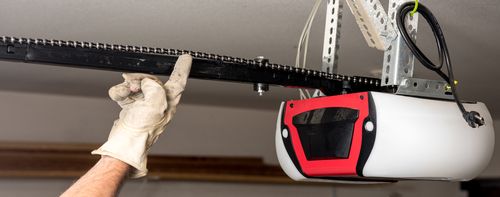
Chain drive. The most common and least expensive type. A metal chain pulls the trolley along the rail. Works reliably for decades with minimal maintenance. Downside: it's the noisiest type - the chain vibrates the rail and motor, and that vibration can transmit through the ceiling into living space. Best for: detached garages, or garages where no bedrooms are above or beside.
Belt drive. A rubber belt replaces the chain. Dramatically quieter - the difference is immediately noticeable. Slightly higher upfront cost ($50 - $150 more than an equivalent chain drive). Our most commonly installed type in South Florida because most garages are attached to the home. Best for: attached garages with bedrooms above or beside, or any homeowner who values quiet operation.
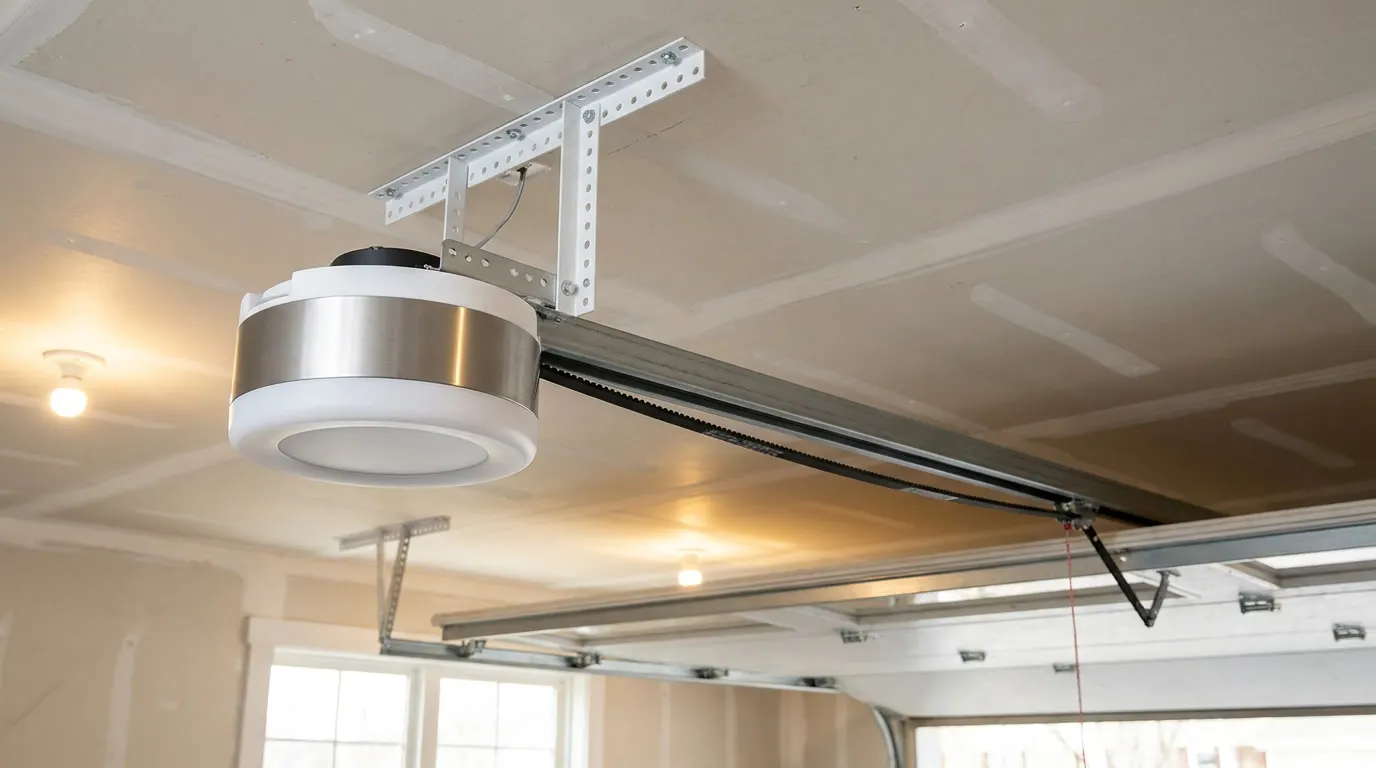
Direct/DC drive (jackshaft / wall-mount). The motor mounts beside the door on the wall rather than overhead on a rail. Produces almost no vibration. Ideal for garages with finished ceilings, high ceilings, or limited headroom. Chamberlain and LiftMaster offer wall-mount models in this category. Costs more ($650 - $950 installed) but frees up ceiling space and eliminates rail vibration entirely. Best for: RV garages, garages with epoxy-finished interiors, or limited headroom situations.
How Much Horsepower Do You Actually Need?
Most residential installations need either 1/2 HP or 3/4 HP. Here's when each applies:
- 1/2 HP: Adequate for single-car doors (up to ~175 lbs) and well-balanced double-car steel doors. This covers the majority of South Florida residential installations.
- 3/4 HP: Recommended for double-car doors over 16 ft wide, heavier doors (wood, insulated three-layer, hurricane-rated with extra struts), or anyone who wants a bit more headroom on motor load. If you're in doubt, step up to 3/4 HP - the cost difference is small and the motor runs cooler and lasts longer when it's not working at its limit.
- 1 HP+: Commercial applications and very heavy doors (carriage-house wood, oversized openings). Rarely needed for residential.
Important: an undersized opener on a heavy or out-of-balance door will fail faster. If your door is a heavy double-car or if the springs aren't perfectly balanced, the opener compensates by working harder - wearing out the drive gear prematurely. A tune-up visit to check balance before opener installation is always a good idea.
LiftMaster: The Pro-Install Standard
LiftMaster is a professional-grade brand sold primarily through dealers and installers (not Home Depot). It's made by the Chamberlain Group - the same parent company as Chamberlain. The key difference: LiftMaster models tend to have stronger motors and more durable components, are backed by professional-tier warranties, and include commercial-class models not available in the consumer channel.
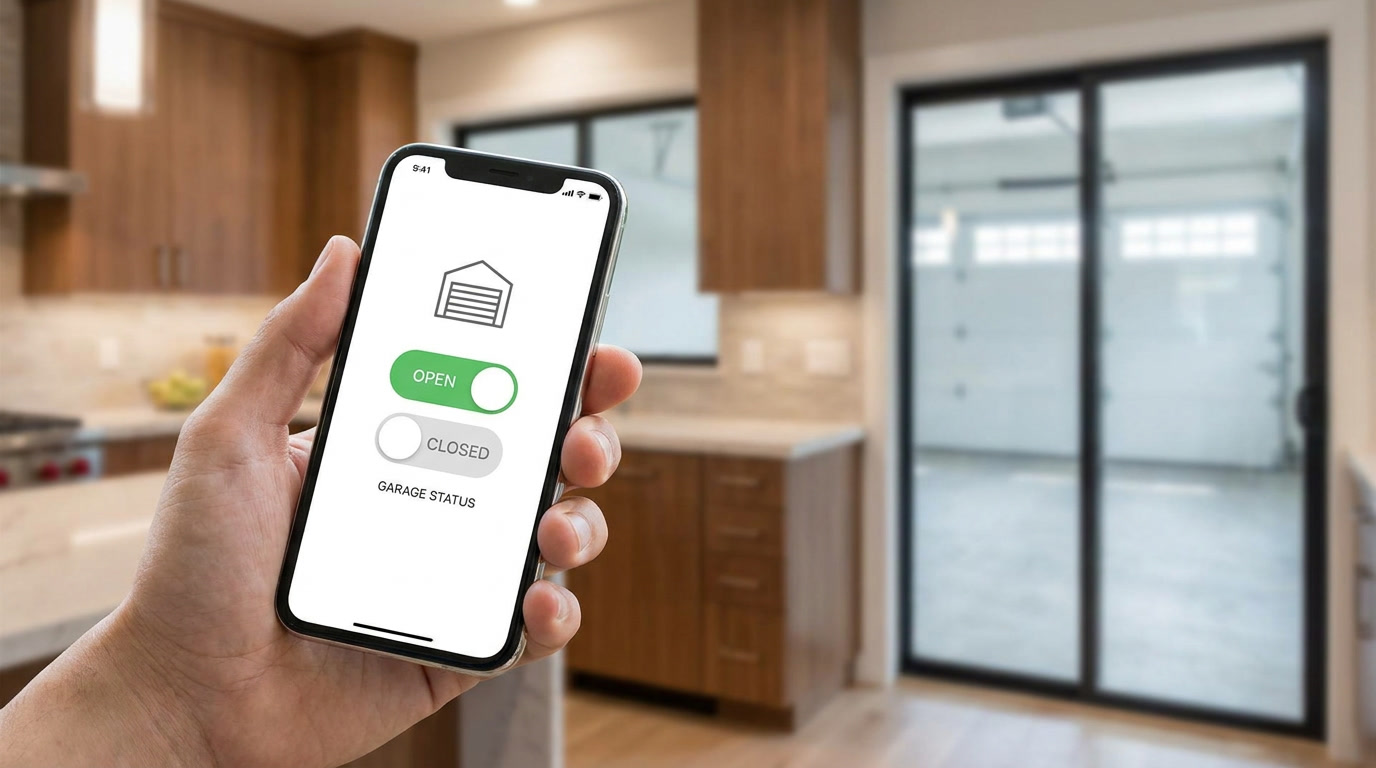
Signature features: myQ app integration (open/close monitoring and control from your phone), smart home compatibility (works with Google, Alexa, Apple Home), some models include a built-in camera and motion light, and Battery Backup is available on most models (critical in Florida where power outages during storms are common). The 84501 and 87504 are current popular residential models.
Chamberlain: The Consumer Channel Version
Chamberlain is the retail arm of the same Chamberlain Group that makes LiftMaster. You'll find Chamberlain openers at Home Depot, Costco, and similar retailers. The technology is very similar to LiftMaster - same myQ platform, same app, similar smart home integration. Component quality is slightly lower at equivalent price points due to the retail margin structure.
Best use case for Chamberlain: homeowners who want to self-install. LiftMaster is designed around professional installation with more installer-focused features; Chamberlain is more consumer-friendly out of the box. If you're having a pro install it anyway, we'd lean LiftMaster at equivalent price points.
Genie: The Strong Independent Alternative
Genie is not part of the Chamberlain Group - it's a genuinely separate manufacturer. This matters for parts availability: a Genie opener needs Genie-specific parts, whereas LiftMaster and Chamberlain share a large parts ecosystem. Genie has been making openers for 70+ years and their products are reliable. Where Genie stands out: their Aladdin Connect smart home platform is well-reviewed, their model lineup offers strong value at mid-price points, and their customer service reputation is generally good.
One area where Genie lags: smart home integration with Apple HomeKit is more limited compared to LiftMaster. If you're in an Apple household, LiftMaster's HomeKit compatibility may tip the decision.
Key Features Worth Paying For
- Battery backup. In South Florida, this should be non-negotiable. During a power outage after a hurricane or afternoon thunderstorm, you need to be able to open your garage. Models with battery backup maintain operation for 24 - 48 hours during an outage. Expect to pay $50 - $100 more for a model with built-in battery backup.
- LED bulbs (built-in). Most new openers now include LED lighting in the motor head. Much longer lifespan than incandescent and less likely to cause radio frequency interference with the remote (a real issue with older incandescent bulbs in some models).
- Auto-close timer. Automatically closes the door if you forget to - useful for any household. Most modern smart openers include this via the app.
- Camera. Some LiftMaster models include a built-in camera in the motor head. Good for checking if you left the door open without opening the full app - and for home security if the only exterior camera is at the front door.
What We Install Most Often in South Florida
For a standard attached double-car garage in Broward or Miami-Dade: a belt-drive opener at 3/4 HP with battery backup. LiftMaster is our most-installed brand due to parts availability and professional warranty support - but Genie and Chamberlain both perform well. For garages with limited headroom or finished interiors, the LiftMaster WLED (jackshaft/wall-mount) is our standard recommendation. More details on our opener repair and replacement page.
For smart home features and whether a Wi-Fi-connected opener is worth it for your situation, see our companion guide on smart garage door openers.
-
LiftMaster and Chamberlain are made by the same company (Chamberlain Group) and share core technology. LiftMaster is the professional-grade line sold through installers, with stronger motors and professional-tier warranties. Chamberlain is the retail version with a more consumer-friendly setup. For pro-installed openers, LiftMaster is generally the better value at similar price points.
-
Belt drive openers are significantly quieter - the rubber belt doesn't vibrate against the rail the way a metal chain does. The noise difference is immediately noticeable, especially in attached garages where living space is above or beside. Belt drives cost $50 - $150 more than equivalent chain drives but last just as long with minimal maintenance.
-
Yes - strongly recommended. South Florida power outages during storms and afternoon thunderstorms are common, and losing access to your garage during or after a storm is a real problem. Most modern openers offer battery backup as a built-in feature or add-on. Expect to pay $50 - $100 more for a model that includes it.
-
For most standard double-car steel doors (16x7 or 16x8), 1/2 HP is technically sufficient but 3/4 HP is the better choice. At 3/4 HP, the motor runs at a lower percentage of its capacity, which means it runs cooler and lasts longer. For heavier doors - wood, insulated three-layer, hurricane-rated with extra struts - 3/4 HP or higher is required.
-
Most residential openers last 10 - 15 years with normal use. In South Florida, heat accelerates capacitor degradation, and the high daily cycle rate (6 - 8 cycles/day in many households) means the motor and drive components reach their useful life faster than national averages. If your opener is 10+ years old and needs a repair, full replacement is often more cost-effective.
Skip the YouTube rabbit hole - we'll have a tech at your door same day across Broward, Dade and Palm Beach.