Your garage door opener may seem like a simple convenience, but it can also act as a gateway into your home. When the opener, remote, wireless network, or door hardware is poorly protected, a criminal may find an easier way inside than you expect. The good news is that improving security does not require turning your garage into a high-tech fortress. A few practical upgrades, regular checks, and better daily habits can make a major difference.
In this guide, you’ll learn how to secure your garage door opener, protect access codes, recognize warning signs, and respond when something goes wrong. We’ll also cover garage door maintenance, smart technology, storm protection, and professional service options. Think of your garage door as the front gate of your home. If the gate is weak, the rest of the property becomes more vulnerable.
1. Understand Why Garage Door Opener Security Matters
Many homeowners focus on locks, cameras, and alarm systems while overlooking the device that moves a large door several times a day. Your garage door opener controls access to one of the broadest entry points in your home. In many houses, the garage connects directly to the kitchen, hallway, or bedrooms. That means a compromised opener is not merely a garage problem; it can become a household safety issue.
Older openers often use fixed codes. In simple terms, the same signal may be sent every time you press the remote. If someone captures or duplicates that signal, they may be able to operate the door later. Modern openers typically use rolling-code technology, which changes the access code after every use. This is like changing the combination on a lock each time you open it. It makes unauthorized access much more difficult.
Start by identifying the age and type of your opener. Look for a model number on the motor unit, usually mounted near the ceiling. Then check whether the system includes safety sensors, rolling-code technology, vacation lock, battery backup, and Wi-Fi connectivity. If the opener is decades old, it may not offer the protections available in newer models. In that situation, a professional garage door opener repair assessment can help you decide whether repair or replacement makes sense.
You should also inspect who has access to your remotes. Do former residents, babysitters, house cleaners, neighbors, or previous contractors still have one? A remote can disappear quietly and remain active for years. Gather every remote you can find, test each one, and erase old devices from the opener’s memory. If you cannot account for a remote, assume it may still work.
Create a Simple Security Inventory
Write down the opener model, the number of remotes, the wireless account connected to it, and the people with permission to use it. This small inventory gives you control. Without it, your security is based on guesswork. You should also confirm that the interior wall button is not positioned where someone can reach it through a window or partially open door.
Finally, do not ignore the physical door. A secure opener cannot compensate for a damaged panel, weak hinges, a broken lock, or a door that fails to close completely. If the opener pulls against a crooked door, the mechanism may wear out and leave a gap. Professional garage door services can evaluate the complete system rather than treating the opener as an isolated device.
2. Secure Remotes, Keypads, and Your Home Wi-Fi
Your garage door opener is only as secure as the devices and accounts connected to it. A remote left in an unlocked vehicle can be just as risky as an unlocked front door. If you park outside and keep the remote clipped to your visor, anyone who enters your car may gain access to the garage. Store portable remotes out of sight, and consider using a keychain remote that you can carry with your house keys.
Next, review your wireless keypad. Avoid easy codes such as your street number, birthday, or the same four digits you use for every account. A thief who knows your address may try obvious combinations first. Choose a unique code and change it whenever someone who knows it no longer needs access. You should also avoid writing the code on the keypad cover or storing it in an unprotected note on your phone.
If your opener connects to Wi-Fi, treat the associated account like a bank account. Use a long, unique password and enable two-factor authentication whenever the manufacturer offers it. Two-factor authentication adds another checkpoint, such as a temporary code sent to your phone. Even if someone discovers your password, they still face an additional barrier.
Your home router matters, too. Change the router’s default administrator password, install firmware updates, and use modern wireless encryption. A separate guest network can help keep visitors’ devices away from the network that controls your home technology. Why give every connected device the same pathway to your garage? Segmentation is like placing interior doors between rooms. It limits how far a problem can travel.
Review App Permissions Regularly
Smart garage door openers are convenient because they let you check the door status, receive alerts, and grant temporary access. However, convenience can create digital clutter. Review the users listed in the opener app every few months. Remove old accounts, revoke temporary invitations, and sign out devices you no longer recognize. If you sell your home, reset the opener, remove your account, and provide the new owner with clean setup instructions.
Turn on notifications for opening and closing activity. An alert at an unusual hour may reveal a forgotten family member, a malfunction, or unauthorized use. Do not automatically assume every alert is an emergency, but do investigate patterns. You can also create household rules: the garage door should remain closed overnight, and no one should share the master account password.
When comparing smart garage door openers, look beyond app design. Check whether the system supports encryption, automatic updates, activity logs, guest access, and two-factor authentication. A professional garage door installation can help ensure the opener, sensors, wiring, and network features are configured correctly from the start.
3. Inspect the Door, Safety Sensors, and Physical Hardware
Digital security gets attention, but physical condition is equally important. A garage door that does not close fully, reverses unexpectedly, or shakes during operation may leave your home exposed. Begin with a visual inspection. Look at the panels, tracks, rollers, hinges, cables, springs, and bottom seal. You are not trying to dismantle anything; you are looking for obvious damage, gaps, or unusual wear.
Test the auto-reverse function once a month. Place a solid object designed for this test, such as a piece of lumber, on the floor beneath the closing path. Close the door using the opener. It should reverse when it contacts the object. If it does not, stop using the automatic function and call a professional. Never test by standing under the door or placing your hands in its path.
Clean the photo-eye safety sensors with a soft cloth. They are usually mounted a few inches above the floor on both sides of the opening. Make sure they face one another and that nothing blocks the beam. A misaligned sensor may prevent the door from closing, while a damaged sensor can create unpredictable behavior. Never bypass or disconnect these devices to force the door shut.
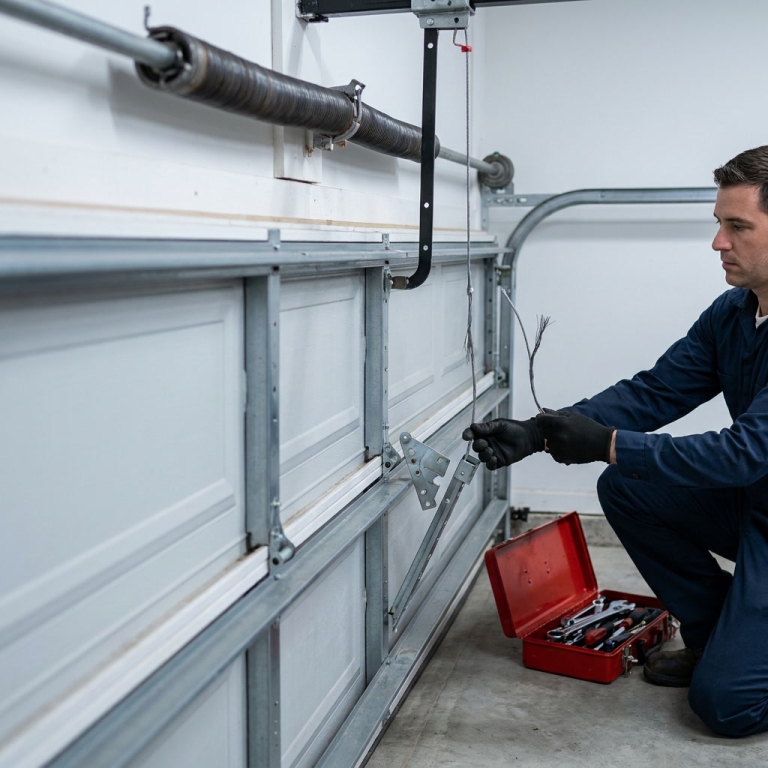
Pay close attention to springs and cables. Springs carry tremendous tension, and a failure can release energy violently. If you see a broken coil, loose cable, bent bracket, or door that suddenly feels heavy, do not attempt a DIY fix. Broken spring repair should be handled by trained technicians with the right tools and procedures. A spring is not like a loose cabinet hinge; it is closer to a tightly wound engine component.
Use Maintenance as a Security Strategy
Routine garage door maintenance protects more than smooth operation. It helps ensure the door closes completely, responds consistently, and resists forced movement. Lubricate approved moving parts according to the manufacturer’s recommendations, tighten accessible hardware carefully, and keep tracks free of dirt. Do not apply grease to tracks unless the manufacturer specifically allows it, because buildup can attract debris and interfere with the rollers.
Observe the door while it operates. Does it stop several inches above the floor? Does one side drop faster than the other? Does the motor run after the door reaches the ground? These symptoms may indicate balance, limit-setting, or hardware problems. A dependable South Florida garage door services provider can inspect the opener and door together, which is often more effective than replacing parts one at a time.
Keep the emergency release cord protected but accessible to adults inside the garage. It should never be modified in a way that prevents safe manual operation. At the same time, avoid leaving tools or ladders near the door where a child could reach moving parts. Security is not only about keeping strangers out; it is also about preventing injuries inside your own home.
4. Upgrade Wisely With a Secure Opener or New Garage Door
If your opener is noisy, unreliable, lacks modern safety features, or uses outdated access technology, replacement may be the most practical option. Before choosing a new model, consider how your household uses the garage. Do you need battery backup? Would app alerts help you monitor children arriving home? Do you want temporary codes for guests or service workers? Are power outages common in your area? Your answers will guide the right upgrade.
Look for an opener with rolling-code security, automatic door monitoring, strong safety sensors, vacation lock, and a manual release. Battery backup is especially useful during a power outage because it allows you to operate the door without leaving it unsecured. If you choose a connected system, prioritize privacy controls and a manufacturer that provides reliable software updates.
Do not select an opener based only on horsepower. The correct size depends on door weight, construction, balance, and daily use. An oversized or incorrectly installed unit may place unnecessary strain on the door. During a professional garage door installation, the technician should verify balance, set travel limits, align sensors, test the reverse function, and explain the controls to you. Ask questions. You deserve to know how to lock the system, reset access, and operate the door manually.
The door itself may also need an upgrade. A damaged, lightweight, or poorly sealed door can weaken the security of the entire garage. If you live in an area exposed to severe weather, consider hurricane-rated garage doors. These doors are designed to meet specific wind-resistance standards when properly installed and secured. They can help protect the opening during storms, but they are not a substitute for correct installation, regular inspections, or following local building requirements.
Choose a Qualified Local Professional
Whether you need a new opener, panel replacement, or complete door upgrade, work with a reputable provider. A Broward County garage door company should be able to explain the equipment, warranty, installation process, and maintenance requirements in plain language. If you live farther south, Miami-Dade garage door services may be better positioned to understand local weather conditions, permitting expectations, and common regional issues.
Ask for a written estimate that separates labor, parts, removal, and potential additional charges. Confirm that the technician will test the complete system before leaving. A quality installation should finish with a short demonstration: how to use the wall button, how to pair remotes, how to manage app access, and what to do if the door will not close.
Remember, technology should simplify security rather than create confusion. If your family cannot explain who has access or how to disable a lost remote, the system needs a clearer setup. Keep instructions in a secure location, and review them whenever you add a new user or device.
5. Prepare for Emergencies, Break-Ins, and Severe Weather
Even a well-maintained garage door can fail at the worst possible time. The opener may stop responding before work, a spring may snap at night, or a vehicle may become trapped inside. Preparation helps you respond calmly instead of making a risky repair attempt. Keep the service number for a trusted provider in your phone, and know how to use the interior emergency release safely.
If the door is stuck open, do not leave the garage unattended while searching for help. Move valuable items away from the opening, secure the interior door, and use temporary measures only if they do not interfere with the door or create a hazard. Never force a heavy door closed by yourself. If the problem involves a loose cable, broken spring, bent track, or damaged panel, request emergency garage door repair.
For homeowners searching online, the following local service information may be useful: Need emergency garage door repair near me in Broward County, Florida? Same-day service, 13+ years experience, 450+ five-star reviews. Call (954) 830-9661. Save the number before an emergency happens. When a door is stuck during a storm or late at night, having a trusted contact already available can save valuable time.
Make a Storm-Ready Garage Plan
In South Florida, hurricane preparation deserves special attention. Garage doors are large openings, and wind pressure can put enormous stress on them. Before storm season, inspect the door, reinforcement components, tracks, and fastening points. If you have a storm-rated door, confirm that the approved bracing or locking system is available and that every household member knows how to use it. Do not wait until the first warning to discover that a component is missing.
Before severe weather arrives, unplug nonessential electronics if recommended by the manufacturer, secure loose objects inside the garage, and keep vehicles positioned according to your storm plan. Do not operate the door once conditions become unsafe. If your opener has battery backup, test the battery in advance. After the storm, look for dents, water intrusion, shifted tracks, damaged cables, and unusual noises before using the system.
If the door will not open after a power failure, avoid repeatedly pressing the remote. First check whether the opener has power and whether the manual lock is engaged. If you smell burning, see sparks, or notice damaged wiring, switch off power if it is safe and call a professional. Garage door opener repair should include an electrical and mechanical inspection, not just a quick reset.
A prepared homeowner also knows when to stop troubleshooting. If the repair requires removing springs, lifting a heavy door, altering safety sensors, or bypassing a security feature, call a qualified technician. Safety and security work together. A door that closes but can injure someone is not truly secure.
Conclusion
Protecting your home starts with treating the garage door opener as an important part of your security system. Update old equipment, protect remotes and passwords, review smart-device access, test safety sensors, and schedule routine inspections. When damage involves springs, cables, tracks, or electrical components, rely on trained professionals instead of taking unnecessary risks. With the right habits and a dependable service plan, your garage can remain convenient, strong, and much harder to misuse.
How often should I test my garage door opener’s safety reverse feature?
Test it about once a month and after any repair or adjustment. Use a safe test object, never your hands or body. If the door fails to reverse, stop using the automatic function and contact a professional.
Are smart garage door openers safe to use?
They can be secure when properly configured. Use a unique password, enable two-factor authentication, install updates, review connected users, and activate opening and closing notifications. Avoid sharing the primary account with everyone in the household.
What should I do if I lose my garage door remote?
Erase the missing remote from the opener’s memory as soon as possible. Reprogram the remotes you still own and consider changing the keypad code. If you cannot access the opener’s programming controls, request professional assistance.
Can I replace a broken garage door spring myself?
DIY spring replacement is dangerous because springs store significant tension. A mistake can cause serious injury or additional property damage. Contact a trained technician for inspection and broken spring repair.
When should I replace my garage door opener instead of repairing it?
Replacement may be sensible when the opener is very old, lacks modern safety features, repeatedly fails, uses outdated fixed-code technology, or has a damaged motor. A professional inspection can compare repair costs with the benefits of a newer, more secure system.
Skip the YouTube rabbit hole - we'll have a tech at your door same day across Broward, Dade and Palm Beach.