Understanding Garage Door Tracks and Why Their Condition Matters
Your garage door may look simple from the outside, but it depends on several precisely coordinated components to open and close safely. The tracks are among the most important parts of that system. They guide the rollers along a fixed path, helping the door move smoothly from the closed position to the overhead position. When the tracks are bent, loose, misaligned, corroded, or obstructed, the entire door can become difficult to operate. In some cases, a small track problem can eventually damage the rollers, hinges, cables, springs, opener, or even the door panels.
Garage door track repair is often necessary when the door begins making unusual sounds, moving unevenly, sticking in one section, or refusing to open completely. Because the tracks support the door’s travel rather than carrying its full weight, homeowners sometimes underestimate their importance. However, even a minor alignment issue can create friction and place excessive pressure on other components. This may turn a relatively affordable repair into a much more expensive replacement if it is ignored.
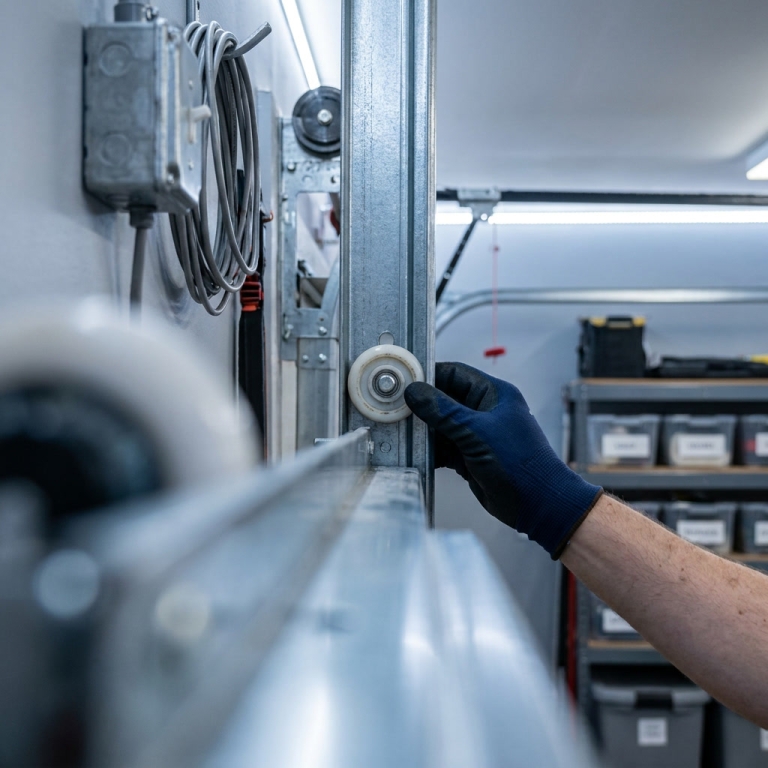
The tracks usually consist of vertical sections mounted beside the door and horizontal sections extending into the garage ceiling area. Curved transition pieces connect these sections. Rollers attached to the sides of the door travel inside the tracks as the door moves. A problem anywhere along this route can affect the door’s performance. For example, a bent vertical track may cause the door to scrape near the floor, while a damaged horizontal track may prevent the door from settling properly when fully open.
Common causes of track problems include:
- Accidental impact from a vehicle, bicycle, lawn tool, or storage item
- Loose mounting brackets or worn fasteners
- Rust and corrosion caused by moisture or coastal weather
- Normal wear involving rollers, hinges, and bearings
- Improper installation or incorrect track spacing
- Excessive force from a failing spring or garage door opener
- Debris, grease buildup, or objects blocking the roller path
South Florida homeowners may face additional concerns because humidity, rain, salt air, and temperature changes can accelerate corrosion. Even when a track appears intact, rust around the mounting points can weaken the structure. Over time, the track may shift, separate from the wall, or develop rough edges that interfere with the rollers. Regular visual inspections are therefore valuable, especially if the garage door is used several times per day.
Homeowners should also understand the difference between routine maintenance and actual track repair. Cleaning light dust from the track and checking for loose bolts may be reasonable maintenance tasks. Straightening a bent track, changing its position, replacing damaged brackets, or adjusting the system’s alignment requires greater care. Garage doors are heavy, and their springs and cables are under significant tension. A seemingly small adjustment can create a dangerous condition if the door is not properly supported.
When a garage door begins behaving differently, do not assume the opener is automatically the source of the problem. A noisy motor may be reacting to increased resistance caused by track friction. A door that reverses may be encountering an obstruction or alignment problem. A remote that appears ineffective may be blamed for a door that is mechanically binding. Before replacing electronics, pay attention to the physical movement of the door and look for the warning signs described below.
For homeowners seeking professional assistance, a qualified garage door repair service can inspect the tracks, rollers, brackets, cables, springs, and opener together. A complete evaluation is important because one damaged component can place stress on another. Professional technicians can identify the actual source of the problem, explain whether repair or replacement is appropriate, and restore safe operation without relying on guesswork.
Understanding the tracks is the first step toward recognizing trouble early. The goal is not to make homeowners perform complicated repairs themselves. Instead, it is to help them notice changes before the door becomes unsafe, traps a vehicle inside, or causes avoidable damage. In the following sections, we will examine the most important warning signs, what they may indicate, when immediate service is needed, and how regular maintenance can extend the life of the entire garage door system.
Warning Signs That Your Garage Door Tracks Need Repair
The earliest indication of a track problem is often a change in the way the door moves. A properly functioning garage door should travel smoothly and remain relatively balanced throughout its movement. It may produce some sound, particularly in an older system, but it should not jerk, hesitate, scrape, or visibly shift from side to side. If the door begins behaving differently, the change deserves attention even if the door still opens and closes.
Grinding, scraping, or rubbing sounds are among the most common warning signs. These noises may occur when a roller is pressing against a damaged section of track or when the track has become misaligned. A light clicking sound may indicate a worn roller, while harsh metal-on-metal scraping suggests that the roller is no longer traveling correctly. Loud sounds near one side of the door can point to a localized track issue. Do not assume that applying more lubricant will solve the problem. Lubricant may temporarily reduce noise while leaving the underlying bend, gap, or obstruction unchanged.
Jerky or uneven movement is another important signal. Watch the door as it opens and closes. If one side moves before the other, if the door pauses at a particular height, or if the bottom edge appears tilted, the tracks may not be aligned. Uneven movement can also involve broken springs, worn cables, or damaged rollers. Because these components interact, an inspection should consider the complete system rather than focusing only on the visible track.
A door that sticks in one position should not be forced. If the door stops at the same point every time, there may be a bent portion of track, a damaged roller, or an obstruction in the path. Forcing the opener to continue can overwork the motor and cause the door to come off the tracks. If the opener hums but the door does not move, disconnecting the opener and manually testing the door may reveal whether the problem is mechanical. However, homeowners should avoid manually lifting a heavy or unbalanced door and should request professional help if the door feels unusually heavy.
Visible gaps between the rollers and tracks are especially concerning. Rollers should remain seated within the tracks during normal operation. If a roller is partially outside the track, the door may be unstable and could fall or twist. A gap may result from a bent track, a loose bracket, a damaged roller, or a door that has been struck. Never operate the opener repeatedly when a roller is out of place. Continuing to run the system can bend additional track sections and damage the door’s support hardware.
Loose or vibrating tracks can often be identified by looking at the mounting brackets while the door moves. Tracks should remain securely attached to the wall and ceiling supports. If they shake, pull away from the wall, or show movement at the fasteners, the mounting hardware may have loosened. Vibrations can also enlarge mounting holes and make simple tightening ineffective. A technician may need to replace fasteners, reinforce the support structure, or reposition the track so the door remains properly aligned.
Visible bends, dents, or twists should never be ignored. A minor dent near the edge may interfere with a roller, while a significant bend can prevent the door from moving at all. Track metal is shaped to provide a consistent channel. Attempting to hammer a track flat can change its dimensions and create sharp edges or weak points. In many situations, replacing a damaged track is safer and more reliable than trying to straighten it.
Rust, flaking paint, and corrosion are also warning signs. Surface discoloration does not always require immediate replacement, but deep rust can reduce the track’s strength and make the roller path uneven. Corrosion around brackets is particularly important because those brackets keep the track in position. If rust has caused holes, cracking, or separation, cleaning and repainting will not restore structural integrity. The affected component may need replacement.
Other warning signs include a door that closes crookedly, a bottom seal that touches the floor unevenly, a roller that repeatedly jumps out, or a door that reverses unexpectedly. Each symptom may have more than one possible cause, but all indicate that the system deserves evaluation. Keeping a short record of when the problem occurs can help a technician diagnose it. Note whether the sound happens during opening or closing, whether it occurs at one height, and whether the door performs differently when operated manually.
If the garage door is making unusual sounds but still operating, schedule an inspection before the issue becomes an emergency. If the door is off its tracks, hanging unevenly, visibly damaged, or unable to close securely, stop using it. A closed but unstable door may create a security problem, while an open door can expose the home to weather, pests, and unauthorized access. Early attention is usually less disruptive and less expensive than waiting for a complete failure.
When a Track Problem Becomes a Safety Emergency
Not every track issue creates an immediate emergency, but some conditions require the door to be taken out of service immediately. Garage doors can weigh hundreds of pounds, and their movement is controlled by springs, cables, rollers, hinges, and brackets under substantial force. When a track fails, that force may be distributed unevenly. The door can tilt, collapse, fall from the opening, or place unexpected tension on another component. The safest response is to stop operating the door and keep people, children, and pets away from the area.
An off-track garage door is one of the clearest emergency situations. This occurs when one or more rollers leave the track channel. The door may appear to hang at an angle, leave a visible gap on one side, or become stuck partway open. Do not attempt to pull the door back into position by hand. Do not use the opener to force it closed, and do not remove the rollers unless you have the appropriate training and equipment. A roller may be trapped under tension, and releasing it incorrectly can cause the door to move suddenly.
A track that has pulled away from the wall or ceiling also requires prompt attention. The mounting brackets are designed to hold the track in a carefully measured position. When one or more brackets fail, the track may swing outward as the door passes. This can cause repeated roller derailment and may damage the wall, panels, or opener. Temporary solutions such as rope, wire, or household screws are not dependable substitutes for correctly rated hardware.
Seek professional service immediately if you notice:
- A door hanging crookedly or partially outside the tracks
- A loud bang followed by sudden difficulty opening or closing
- A broken spring, separated cable, or loose drum near the track area
- A roller that has jumped out and cannot be safely repositioned
- A bent track blocking the door from closing securely
- Brackets pulling away from the wall or ceiling
- A door that drops, slams, or moves without control
- Sharp metal edges, cracked supports, or severe corrosion
A loud bang may indicate a broken torsion or extension spring rather than a track failure, but the door can then become much heavier and more difficult to control. If a homeowner continues using the opener after a spring breaks, the motor may burn out and the tracks may experience excessive force. Similarly, a broken cable can allow one side of the door to fall out of alignment. Because tracks, cables, springs, and rollers work as a system, an emergency inspection should include all of them.
There is also a security concern. A garage door that cannot close evenly may leave a gap large enough for someone to enter or for pests to get inside. A door that appears closed but is not seated correctly may be vulnerable to being lifted. Do not rely on the opener’s light or motor sound as proof that the door is secure. Check the actual position of the panels and contact a professional if the door will not close firmly and evenly.
Weather can make track emergencies more complicated. Strong wind can push against a partially open door, while rain can enter through a misaligned opening and accelerate rust. In coastal areas, salt-laden air may worsen corrosion on exposed hardware. If the garage is attached to the home, a damaged door can also affect indoor comfort and allow moisture into adjacent spaces. Prompt repair reduces the risk of secondary damage.
Homeowners should avoid several common mistakes during an emergency. Do not stand beneath a stuck door. Do not place a ladder, vehicle, or heavy object under the door as a makeshift support unless directed by a trained professional. Do not disconnect springs or cables, and do not cut a cable that appears loose. Do not repeatedly press the remote in the hope that the opener will correct the problem. These actions can turn a mechanical issue into a serious injury hazard.
If the door is closed and the vehicle is outside, leave it closed until help arrives rather than trying to open it manually. If the door is open and the vehicle is inside, ask the technician how to secure the opening. Professional technicians generally bring the proper tools, replacement rollers, track sections, brackets, fasteners, and safety equipment needed to stabilize the system. They can also test the door after repair to verify that it stops, reverses, and balances correctly.
For urgent situations, residents can contact a local emergency garage door repair team instead of waiting for a routine appointment. Need emergency garage door repair near me in Broward County, Florida? Same-day service, 13+ years experience, 450+ five-star reviews. Call (954) 830-9661. Fast assistance is especially valuable when the garage is the primary entrance, a vehicle is trapped, or the door cannot protect the home from weather and unauthorized access.
The key principle is simple: if the door looks unstable or behaves unpredictably, treat the problem as a safety issue rather than a minor inconvenience. A professional assessment can determine whether the track can be repaired, whether a section should be replaced, and whether other components were damaged when the problem began.
What Professional Garage Door Track Repair Usually Involves
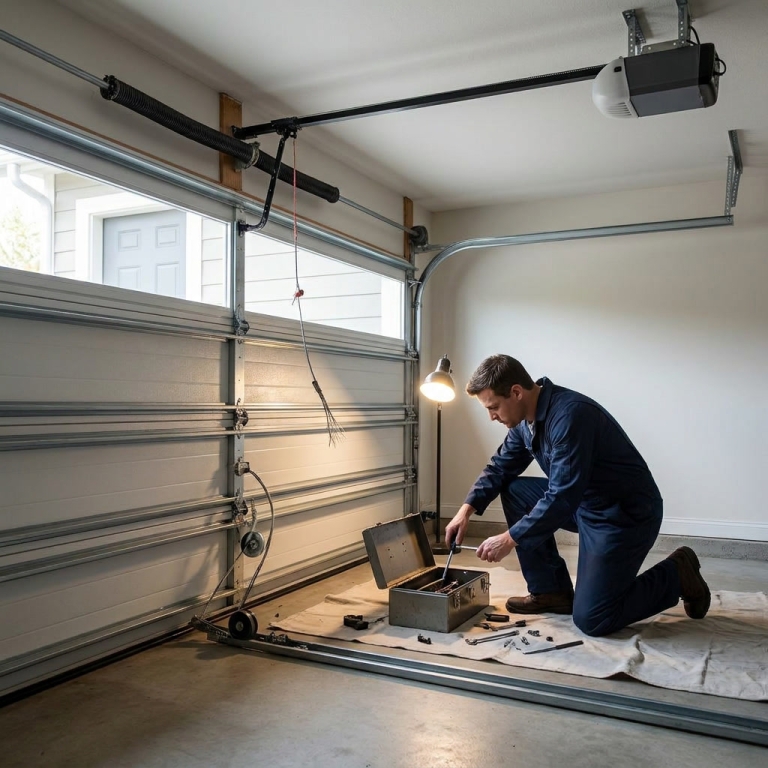
A professional track repair begins with diagnosis rather than immediate part replacement. The technician should operate the door carefully, observe its movement, and inspect the tracks from the floor to the overhead curves. They will typically check whether the vertical tracks are parallel, whether the horizontal tracks are level, and whether the distance between the tracks matches the door’s roller placement. They may also examine the brackets, fasteners, rollers, hinges, cables, drums, springs, and opener connection.
The first repair step may involve removing an obstruction or correcting a loose mounting point. Garage storage items, tools, boxes, and outdoor equipment can sometimes press against a track without the homeowner realizing it. Dust and debris may also collect in the channel. Once the path is clear, the technician can determine whether the track itself is still structurally sound. If the metal is not bent or cracked, carefully measured adjustments may restore the correct alignment.
Track alignment is more precise than simply making both sides appear straight. The tracks must provide a consistent path that matches the position of the rollers and the geometry of the door. If a vertical track is too close to the door, rollers may bind. If it is too far away, the door may wobble. Horizontal tracks must be positioned so that the door can travel overhead without excessive pressure on the rollers or opener. Incorrect alignment can create recurring problems even when the door temporarily seems to work.
Depending on the diagnosis, a repair may include:
- Re-tightening or replacing track mounting hardware
- Replacing damaged or missing brackets
- Removing debris from the roller path
- Adjusting the spacing and alignment of vertical tracks
- Replacing a bent, cracked, or severely corroded track section
- Replacing worn rollers that are causing resistance
- Repairing or replacing hinges that allow the door to shift
- Balancing the door after track work is completed
- Testing the opener’s travel and force settings
Replacing a track section may be the best option when the metal is kinked, twisted, split, or deeply corroded. A technician should use a compatible section designed for the door’s size, roller type, and configuration. Mixing mismatched track components can produce new alignment issues. The replacement must be supported at appropriate points and positioned so that the roller stems move freely without excessive side pressure.
Roller condition deserves special attention during track repair. A track may be correctly aligned, but worn rollers can still create grinding, vibration, and hesitation. Steel rollers with damaged bearings may be noisy, while plastic rollers can crack or wear flat. Replacing rollers can make a noticeable difference, but the correct size and stem length matter. A technician may recommend sealed-bearing rollers for homeowners who want quieter operation and longer service life.
After repairing the track, the technician should test the balance of the door. With the opener disconnected, a properly balanced door should move smoothly and remain at several positions without falling or rising rapidly. If it is unusually heavy, the springs may require adjustment or replacement. Spring work is not a do-it-yourself task because the components are under high tension. Track repair should not be considered complete if the door remains unbalanced.
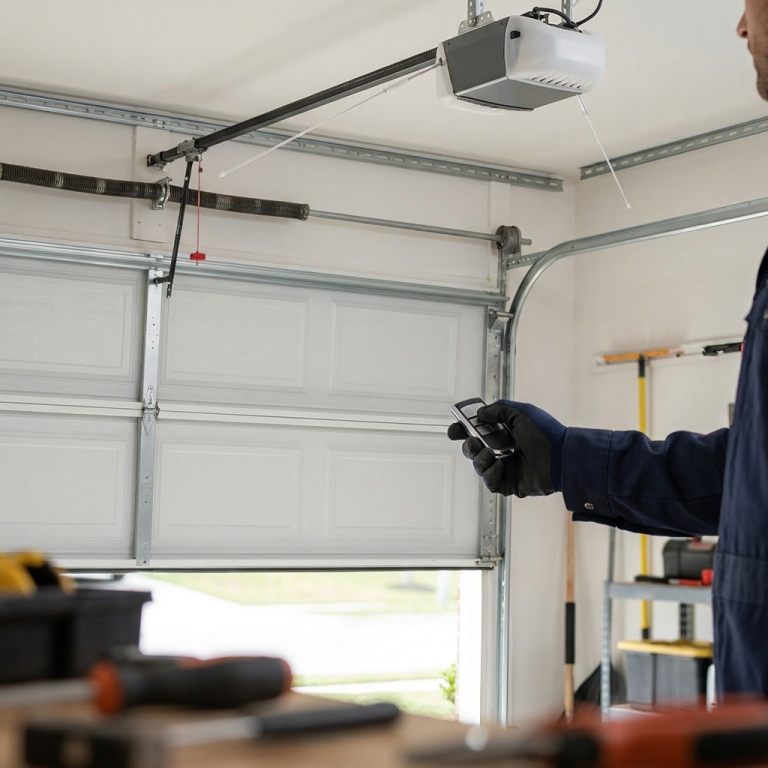
The opener must also be tested. A door that has experienced resistance may cause the opener to work harder than normal. The technician can check whether the opener reverses when it encounters an obstruction and whether the safety sensors are aligned. They may also confirm that the travel limits are correct. If the door closes too far or opens too high after track work, improper settings can create additional stress.
Homeowners should ask questions before approving a repair. Request an explanation of what failed, whether the track is repairable or needs replacement, and whether any related components were damaged. Ask whether the quoted price includes labor, hardware, adjustment, and testing. A reputable technician should be willing to explain the work in clear language and should not pressure the customer into replacing parts that remain safe and functional.
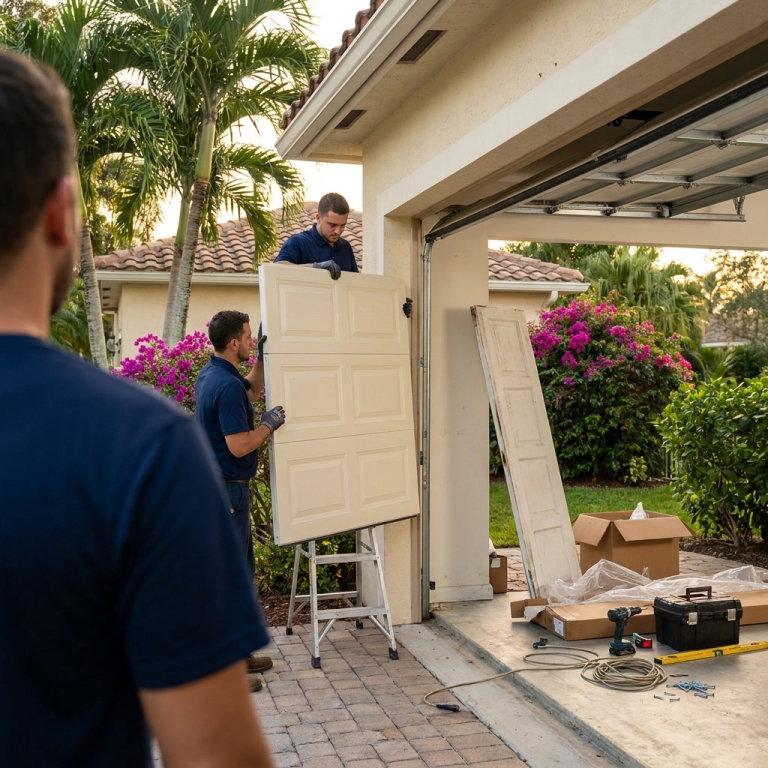
It is also useful to distinguish between a track repair and a full garage door replacement. A damaged track does not automatically mean the entire door must be replaced. If the panels, frame, springs, and opener are in good condition, repairing or replacing the affected track may be sufficient. Replacement may become practical when the door has widespread corrosion, repeated failures, severe structural damage, or obsolete components that are no longer available. The decision should be based on safety, reliability, age, and long-term value.
Once the repair is complete, homeowners should observe the door through several complete cycles. It should move evenly, remain centered, and make no harsh scraping sounds. The door should close against the floor without leaving a noticeable gap and should reverse when the safety system is tested according to the opener manufacturer’s instructions. If a new noise or uneven movement appears after service, report it promptly rather than waiting for the problem to worsen.
Professional repair is ultimately about restoring a coordinated system, not merely bending a piece of metal back into place. Correct alignment, secure support, healthy rollers, proper balance, and safe opener operation all contribute to reliable performance. A careful repair can extend the life of the door and reduce the likelihood of a sudden failure.
Prevention, Maintenance, and Choosing Reliable Local Service
Preventive maintenance can reduce the frequency of garage door track problems, although it cannot prevent every accident or component failure. Begin with a visual inspection every few months. Look at both vertical tracks, the curved transitions, and the horizontal sections above the door. Search for dents, rust, loose bolts, gaps, bent brackets, and objects that may interfere with the rollers. Perform the inspection with the door closed and avoid touching cables, springs, or other high-tension parts.
Keep the garage area organized so bicycles, ladders, sports equipment, and storage containers cannot strike the tracks. Vehicles should be parked with enough clearance for the door and its hardware. Children should not play with the tracks, rollers, opener, or emergency release cord. Teach household members that a garage door is a moving mechanical system, not a surface for hanging items or storing objects that may shift into its path.
Cleaning can help, but it should be done appropriately. Remove dust and loose debris from the inside of the tracks with a dry cloth or soft brush. Avoid packing the track with heavy grease. Most garage door tracks are not meant to be filled with lubricant because excess grease attracts dirt and may interfere with roller movement. The rollers, hinges, and bearings may require a suitable garage door lubricant, but product instructions should be followed carefully. When in doubt, ask a technician which components should be lubricated and which should remain dry.
A practical maintenance routine includes:
- Inspecting tracks and mounting brackets several times each year
- Listening for new grinding, popping, scraping, or rattling sounds
- Checking whether the door opens and closes evenly
- Keeping the roller path clear of tools and stored items
- Testing the door’s balance only if it can be done safely
- Testing the opener’s auto-reverse and photo-eye safety features
- Scheduling professional service when rust or structural damage appears
- Addressing small changes before the door becomes stuck or off-track
Balance and safety testing are important, but homeowners should not force the door if it feels unusually heavy or unstable. To test an opener’s reverse function, follow the manufacturer’s instructions rather than improvising with a heavy object. A garage door that fails to reverse can create a serious injury risk. Photo-eye sensors should face each other and remain free of dust or obstructions, but sensor problems do not explain every track symptom. Mechanical resistance still needs to be investigated when movement is uneven.
Florida’s climate makes periodic inspections especially useful. Humidity can encourage rust, while storms and wind may expose the door to sudden force. Homes near the coast can experience accelerated corrosion from salt in the air. Look closely at the lower portions of vertical tracks, fasteners near the concrete floor, and exposed brackets. If corrosion is spreading or the metal is flaking, professional evaluation is preferable to simply covering the surface with paint.
When choosing a local repair provider, consider experience, responsiveness, communication, and reputation. A reliable company should explain the diagnosis, provide a clear estimate, and identify safety concerns before beginning work. Look for technicians who service the entire system rather than focusing on one part without inspection. Reviews can offer useful insight into punctuality, workmanship, and how the company handles emergency calls. Insurance, appropriate licensing where applicable, and a written warranty may also be important considerations.
Local service has practical advantages. A nearby technician can respond more quickly when the door is off-track, the vehicle is trapped, or the garage cannot be secured. Local professionals are also familiar with regional weather conditions and common equipment configurations. For residents looking for garage door service in Broward County, a company with same-day availability can make a substantial difference during an unexpected failure.
Cost is another factor, but the lowest estimate is not always the best value. A temporary adjustment that leaves a bent track, worn rollers, or loose brackets in place may lead to another service call. Ask whether the estimate covers inspection, labor, materials, alignment, and final testing. If replacement is recommended, ask why repair is not appropriate and whether the part includes a warranty. Transparent answers help homeowners make an informed decision.
For planned service, scheduling repairs at the first sign of trouble is usually more convenient than waiting for a complete breakdown. Early intervention may involve tightening a bracket, replacing a roller, or correcting alignment. Delayed service can result in damaged panels, a burned-out opener, broken cables, or a door that falls off the tracks. The longer the system operates under excessive friction, the greater the chance that multiple components will require replacement.
Garage door tracks do not need constant attention, but they do require respect. Never use the door as a storage support, never force it through resistance, and never attempt high-tension repairs without training. If an emergency occurs, secure the area and contact a qualified professional. A trustworthy local garage door company can inspect the system, explain the safest solution, and help restore dependable operation.
Garage door track repair is most successful when warning signs are recognized early. Grinding noises, jerky travel, visible bends, loose brackets, rust, roller gaps, and an off-track door all deserve attention. Some issues can be corrected through careful adjustment, while others require replacement of track sections, rollers, or support hardware. The essential lesson is to avoid forcing a door that is unstable or binding. Protecting people and property should always come before convenience.
If your garage door has begun scraping, sticking, shifting, or making unfamiliar sounds, arrange an inspection before the damage spreads. Need emergency garage door repair near me in Broward County, Florida? Same-day service, 13+ years experience, 450+ five-star reviews. Call (954) 830-9661. Prompt professional help can identify the cause, complete the right repair, and return your garage door to smooth, secure, and reliable operation.
Skip the YouTube rabbit hole - we'll have a tech at your door same day across Broward, Dade and Palm Beach.