The short answer first
For most South Florida homes, insulated steel is the right answer — it's the cheapest material that survives salt air, hurricanes, and 95% humidity without rotting, warping, or rusting through. Wood and aluminum each win on specific use cases.
Steel
Steel doors come in 24-gauge or 25-gauge thicknesses with a baked-on factory finish. Two-layer doors have a polyurethane foam core sandwiched between the outer skin and an inner steel sheet — R-values typically run 12 to 18.
Best for: standard residential installs, hurricane zones, families who want low maintenance.
Watch out for: coastal exposure within a mile of the beach can produce surface rust on cheap doors within 5-7 years. Pay the extra for a salt-rated finish if you're near the water.
Wood
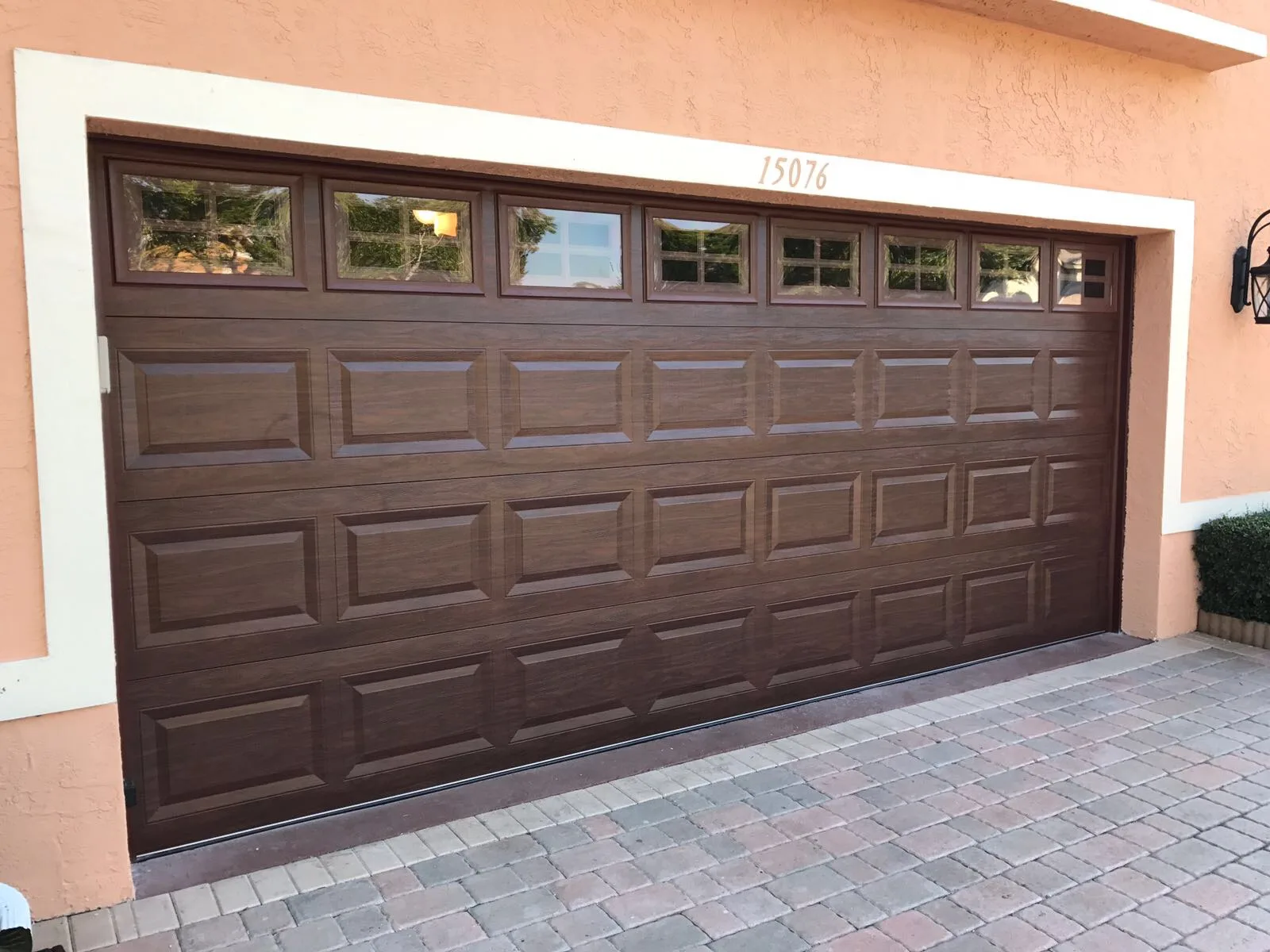
Real wood doors — cedar, mahogany, hemlock — have a presence no composite can match. They're also the highest-maintenance choice in Florida. Expect to re-stain or re-paint every 2-3 years, and watch for rot at the bottom panel where moisture wicks up.
Best for: custom architectural homes where curb appeal is paramount and the door is sheltered by an overhang.
Watch out for: price (3-4x steel), termites in unpainted spots, and the fact that most wood doors are not HVHZ-rated without expensive reinforcement.
Aluminum
Aluminum frame doors with glass panels create that modern, full-view look popular on contemporary builds. They never rust and they're very light, which extends opener life.
Best for: contemporary architecture, garage spaces used as workshops or gyms that benefit from natural light.
Watch out for: aluminum panels dent more easily than steel, glass panels triple the door's price, and the same glass that lets light in also lets neighbors see your contents.
Composite (worth mentioning)
Composite or fiberglass doors mimic the look of wood but are stable in humidity and require no painting. R-values are similar to insulated steel. The catch is that high-quality composites cost as much as wood, while cheap composites fade and crack in direct Florida sun.
How to pick
Walk through this checklist:
- Within one mile of saltwater? → salt-rated steel or composite.
- HVHZ required? → steel, composite, or a few custom wood options.
- Door faces direct south/west sun? → avoid dark colors on any material.
- Budget under $2,500 installed? → insulated steel is the only real option.
- Budget $4,000+ and curb appeal matters most? → composite or wood.
- Modern home, want glass? → aluminum full-view.
FAQs
How long should a garage door last in Florida?
Insulated steel: 25-30 years. Wood: 15-20 with diligent maintenance. Aluminum: 25+ but the rollers and hinges may need attention sooner. The opener is a separate lifecycle, usually 12-15 years.
Does material affect my insurance premium?
Indirectly — what matters is the wind rating and the permit. An HVHZ-rated door of any material gets you the mitigation discount.
Are insulated doors worth it in Florida?
If your garage shares a wall with a conditioned room, yes. The R-value pays back in lower AC bills within a few years. If the garage is fully detached, the insulation matters less.
Skip the YouTube rabbit hole - we'll have a tech at your door same day across Broward, Dade and Palm Beach.