
Choosing the right garage door size may seem as simple as measuring an opening and ordering a replacement. In reality, the process involves more than width and height. You also need to think about your vehicle, storage plans, framing, opener clearance, insulation, and the long-term value of your home. A door that looks perfect on paper can become frustrating if it leaves too little room for mirrors, shelving, or future upgrades.
This guide will walk you through the process in a clear, practical way. Whether you are building a new garage, replacing an old door, or converting a single-car garage into a wider entrance, you will learn what to measure, which sizes are most common, and when professional help makes sense.
1. Start by Understanding Standard Garage Door Sizes
The first step is to understand the standard dimensions available. Most residential garage doors are manufactured in predictable sizes, which makes replacement easier and often more affordable. Single garage doors commonly measure about 8 to 10 feet wide and 7 to 8 feet high. Double garage doors usually range from 16 to 18 feet wide, although 12- and 14-foot options are also available for certain layouts.
These measurements describe the actual door panel, not necessarily the complete space around it. Think of the door as a curtain and the garage opening as the stage. The curtain must fit the stage, but the stage also needs room for tracks, springs, brackets, and movement. That is why measuring only the visible opening can lead to an expensive mistake.
If you drive a compact sedan, a standard 8-foot-wide door may be adequate. However, larger SUVs, pickup trucks, and vans can make a 9- or 10-foot door much more comfortable. Do you really want to fold in your mirrors every time you enter? A slightly wider entrance may improve daily convenience and reduce the risk of scraping a vehicle.
For two-car garages, a single 16-foot door is common. Still, two separate 8-foot doors may offer practical advantages. Individual doors can provide better flexibility, reduce heat loss when only one vehicle is entering, and create a balanced exterior appearance. On the other hand, one wide door gives you a larger uninterrupted opening, which may be helpful for boats, trailers, or oversized vehicles.
Before shopping, review information about garage door options and compare them with your garage design. You can also explore professional garage door installation services to understand how the selected size affects installation requirements. If your existing door is damaged or difficult to operate, learning about garage door repair may help you decide whether replacement is truly necessary.
Standard sizes are a helpful starting point, not a final answer. Your lifestyle, vehicle dimensions, and available structural space should guide the final decision. Measure carefully before you fall in love with a particular door style.
2. Measure the Garage Opening Correctly
Accurate measurements are the foundation of a successful garage door project. You will need a sturdy tape measure, a pencil, paper, and ideally another person to help. Measure the opening in several places because walls and framing are not always perfectly straight. Even a small difference can affect how the door fits and operates.
Begin by measuring the width of the finished opening from the left side to the right side. Take measurements at the top, middle, and bottom. Record the smallest number. Next, measure the height from the finished floor to the top of the opening at both sides and in the center. Again, use the smallest measurement. This approach gives you a safer working figure and helps account for uneven construction.
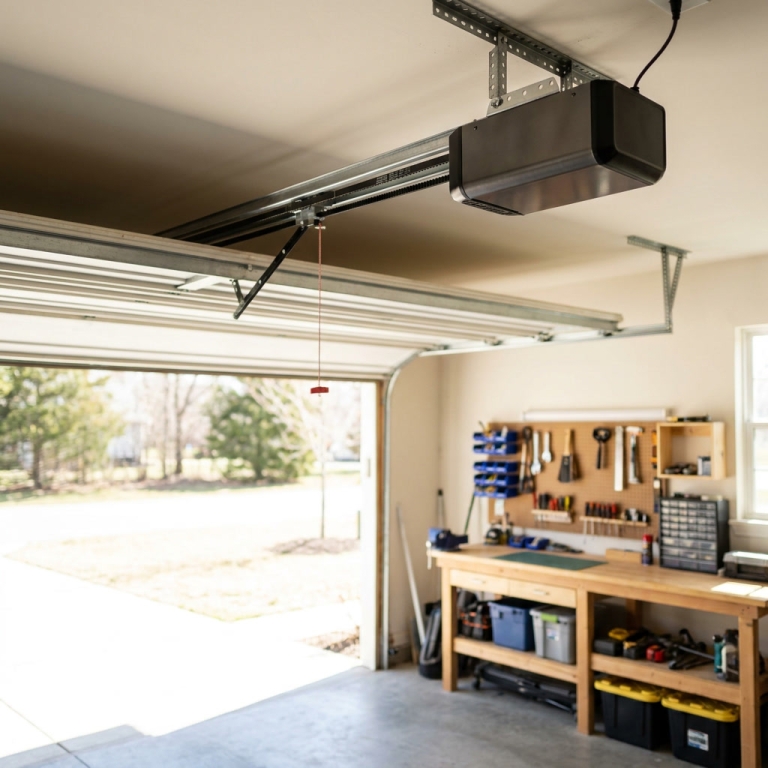
Now measure the areas around the opening. The space between the edge of the opening and the nearest side wall is called the side room. Measure both sides separately. Then measure the distance from the top of the opening to the ceiling or nearest obstruction. This is the headroom. Finally, measure the distance from the garage door opening to the back wall. This is the backroom.
Why do these extra measurements matter? Garage door tracks run along the sides and curve above the opening. Torsion springs, openers, lights, storage racks, and beams may compete for ceiling space. A door can fit the opening perfectly and still fail to work because there is not enough headroom for the track system.
Write every number down in inches, and do not rely on memory. Note obstacles such as ductwork, pipes, ceiling fans, hanging shelves, windows, and wall-mounted cabinets. If the floor slopes, record that as well. A sloped floor may leave a visible gap beneath one corner of the door, especially with a rigid sectional design.
For additional guidance, review garage door installation requirements before ordering. If you notice bent tracks, broken cables, or worn rollers during the inspection, visit the garage door repair page for context. You can also check local garage door service information if your measurements seem unusual or inconsistent.
Do not remove springs or cables simply to get a better measurement. These components store significant energy and can cause serious injury. A careful measurement is useful; an unsafe experiment is not.
3. Match the Door Size to Your Vehicle and Future Plans
The best garage door size should serve more than your current vehicle. Cars change, families grow, and garages often become workshops, storage areas, gyms, or hobby spaces. Choosing the smallest possible door may save money today but create limitations tomorrow.
Start by measuring your vehicle. Include mirrors, roof racks, running boards, bike racks, and trailer attachments. Measure the vehicle’s total width and add comfortable clearance on both sides. You do not want a door that technically fits but forces you to drive through like you are threading a needle. At minimum, leave enough room to enter without anxiety, especially if children, pets, or passengers may be nearby.
Height matters just as much as width. Pickup trucks with lift kits, SUVs with roof boxes, work vans, and recreational vehicles may need a taller opening. A standard 7-foot door can be restrictive for a vehicle that is only a few inches taller. A 8-foot or 9-foot-high door may be more suitable, but increasing height can require structural changes and additional track clearance.
Consider how you use the space when the vehicles are parked. Will you install shelves along the side walls? Do you need room to open car doors comfortably? Will you store a lawn mower, motorcycle, kayak, or large tool chest? A wider door may reduce available wall space, while two smaller doors may provide more flexibility. On the other hand, a single wide opening can make it easier to move bulky items in and out.
Climate and weather also influence the decision. In areas exposed to heavy rain, strong wind, or intense sunlight, a properly fitted and insulated door can improve comfort and protection. A door that is too small may encourage repeated contact with the panels, while a door that is too large for the structure may require expensive reinforcement.
Explore available garage door designs with your vehicle and storage plans in mind. If your current system struggles with a heavier or larger door, review garage door opener repair and service information before making changes. You may also benefit from installation advice for larger doors, since weight and balance affect the entire operating system.
Imagine your ideal garage five years from now. That mental picture can prevent a short-term decision from becoming a long-term inconvenience.
4. Decide Between a Single Wide Door and Two Smaller Doors
For a two-car garage, one of the most important decisions is whether to install a single wide door or two separate doors. Both choices can work well, but they create different experiences. The right option depends on your vehicles, exterior design, maintenance preferences, and available structure.
A single 16-foot garage door creates a broad, open entrance. This layout works well when you regularly park large vehicles, transport equipment, or move wide items through the garage. There is no center post to navigate around, and the uninterrupted opening can make the interior feel more spacious. One door also means one opener system and one main maintenance schedule.
However, a wide door is heavier and can place greater demands on springs, tracks, rollers, and the opener. If the door develops a problem, the entire opening may become unusable. A strong wind can also affect a large surface area, particularly if the door lacks suitable reinforcement. The garage structure may need additional support to handle the wider opening.
Two separate doors offer a different set of advantages. You can open only the door you need, which may help reduce heat transfer and improve convenience. If one door requires repair, the other may remain available. Separate doors can also provide a classic appearance and preserve more structural support between the bays.
The trade-off is that the center divider takes up some space. You may find it more difficult to park a wide truck or move a large trailer through one opening. Two doors also require two openers, two sets of tracks, and more components to maintain. The initial and long-term costs may therefore be higher.
When comparing styles, consider the architecture of your home. A modern exterior may look natural with one broad glass or flush-panel door, while a traditional home may benefit from two carriage-style doors. You can explore garage door styles and configurations before choosing. For help with an existing door that is noisy or unbalanced, see garage door repair services. If you are changing from one door to two, review garage door installation considerations as well.
There is no universal winner. Ask yourself a simple question: do you value maximum width, or do you value flexibility? Your answer will usually point you toward the better configuration.
5. Check Structural, Opener, and Clearance Requirements
Once you know the ideal door size, check whether your garage can support it. This stage is often overlooked because people focus on the panel itself. Yet the surrounding structure and operating hardware determine whether the door will function smoothly and safely.
Inspect the framing around the opening. The header above the door must be strong enough to support the structure and any required hardware. Side jambs should be solid, level, and free from significant rot or damage. If the opening is being widened, do not assume that removing a section of wall is straightforward. The wall may carry roof or upper-floor loads, and changes may require proper reinforcement.
Next, examine ceiling clearance. Standard lift tracks need sufficient space above the opening before they curve toward the back wall. Low-headroom and vertical-lift systems are available for challenging garages, but they should be selected based on the structure and door type rather than guessed from a catalog.
The opener must also match the door. A larger or heavier door may require a stronger motor, a different rail length, or a commercial-style solution. An opener that is too weak may strain, reverse unexpectedly, or wear out early. More power is not always better, either. Correct spring balance and proper installation matter just as much as motor strength.
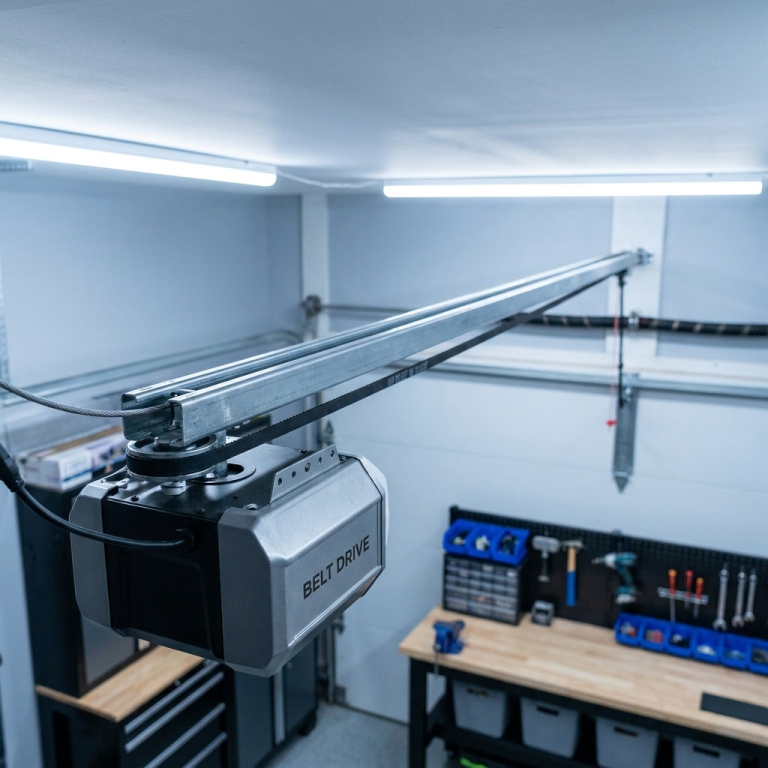
Look for obstructions such as recessed lights, beams, air-conditioning equipment, storage platforms, and hanging bicycles. Even a few inches can determine whether a conventional track system works. If the garage is attached to the home, consider noise and vibration. A belt-drive opener may provide quieter operation than a chain-drive model, particularly near bedrooms or living areas.
For a professional evaluation, review garage door installation services and ask for a complete clearance assessment. If the opener makes grinding sounds or the door reverses, explore garage door opener repair information. You can also find emergency garage door repair assistance if the door is stuck, damaged, or unsafe to operate.
Safety reminder: Never adjust torsion springs, lift cables, or counterbalance hardware without the proper training and tools. These parts act like tightly wound mechanical muscles. If one releases unexpectedly, the result can be severe injury.
6. Order the Door and Plan for Professional Installation
After measuring the opening, considering your vehicles, and checking the structure, you can select the door. At this point, think about material, insulation, windows, wind resistance, color, and security features. Size remains important, but these details determine how the door performs once it is installed.
Steel doors are popular because they offer strength, relatively low maintenance, and a wide range of finishes. Aluminum and glass doors can create a modern appearance but may require different care and offer less privacy. Wood doors bring warmth and character, although they usually need more maintenance to protect against moisture and deterioration.
Insulation is worth considering even if your garage is not fully conditioned. An insulated door can reduce temperature swings, dampen outside noise, and make the room more comfortable when you are working inside. In a hot, humid climate, it may also help protect stored belongings from extreme conditions.
Windows can improve daylight and curb appeal, but place them thoughtfully. If privacy is a concern, consider frosted or decorative glass. If severe weather is common in your area, ask whether the selected door includes the appropriate reinforcement and wind-load rating.
Before placing an order, confirm the rough opening, finished opening, side room, headroom, and backroom in writing. Ask whether the quoted size refers to the door panel or the complete installed system. Clarify removal of the old door, disposal, opener installation, trim work, permits, warranties, and follow-up adjustments. Clear questions now are much easier than correcting assumptions later.
A trained installer can identify problems that measurements alone may not reveal. Professional installation also helps ensure that the door is level, balanced, sealed, and connected correctly to its safety sensors. Browse garage door installation options and learn about door materials and features before making your final choice. If your current door fails before the new one arrives, use emergency repair support rather than forcing it open.
Need emergency garage door repair near me in Broward County, Florida? Same-day service, 13+ years experience, 450+ five-star reviews. Call (954) 830-9661.
Conclusion
Choosing the right garage door size starts with more than picking a standard number. Measure the opening carefully, account for side and ceiling clearance, evaluate your vehicles, and think about how your garage may evolve. Then compare one wide door with two smaller doors, confirm structural support, and match the opener to the system. When you approach the project step by step, the decision becomes far less confusing. A well-sized door should feel effortless: easy to enter, comfortable to use, secure at night, and capable of serving your home for years.
What is the most common single-car garage door size?
The most common single-car sizes are approximately 8 or 9 feet wide by 7 feet high. Some homeowners choose a 10-foot-wide door for easier access with larger vehicles, SUVs, or trucks. Always measure your opening and vehicle before assuming a standard size will fit.
What is the most common double-car garage door size?
A 16-foot-wide by 7-foot-high door is one of the most common double-car configurations. Taller vehicles may require an 8-foot-high door, while some garages use two separate 8-foot doors instead of one 16-foot door.
Can I install a larger garage door in an existing opening?
Possibly, but widening or raising an opening may require structural modifications, new framing, different tracks, and a stronger opener. Because the garage wall may support part of the home, have a qualified professional inspect the area before any construction begins.
How much clearance does a garage door need?
Clearance depends on the door type and track system. A standard sectional door commonly needs usable side room, headroom above the opening, and backroom along the ceiling. Obstructions such as beams, pipes, lights, and storage racks can change the requirements.
Should I choose one wide door or two smaller garage doors?
Choose one wide door if you need a broad opening for large vehicles or equipment. Choose two smaller doors if you value separate access, added structural support, and the ability to open only one side. Your vehicle sizes, budget, home design, and maintenance preferences should guide the decision.
Skip the YouTube rabbit hole - we'll have a tech at your door same day across Broward, Dade and Palm Beach.