Short answer: A garage door panel can be repaired if the dent is minor and the panel material is intact — heat-and-pull or push-from-behind techniques can flatten small dents in steel panels for under $50 in DIY tools. But if the panel is cracked, rusted through, has a hole, or the impact bent the internal reinforcement strut, it needs full panel replacement. Single-panel replacement runs $150-$400 per panel in South Florida, depending on door style and color matching.
Repair vs replace — the 60-second decision tree
Repair the panel if:
- The dent is less than 2 inches deep and not creased
- The panel is steel (aluminum and fiberglass dent permanently — can only be replaced)
- No cracks, holes, or rust-through
- The internal reinforcement strut isn't bent
- The damage is purely cosmetic
Replace the panel if:
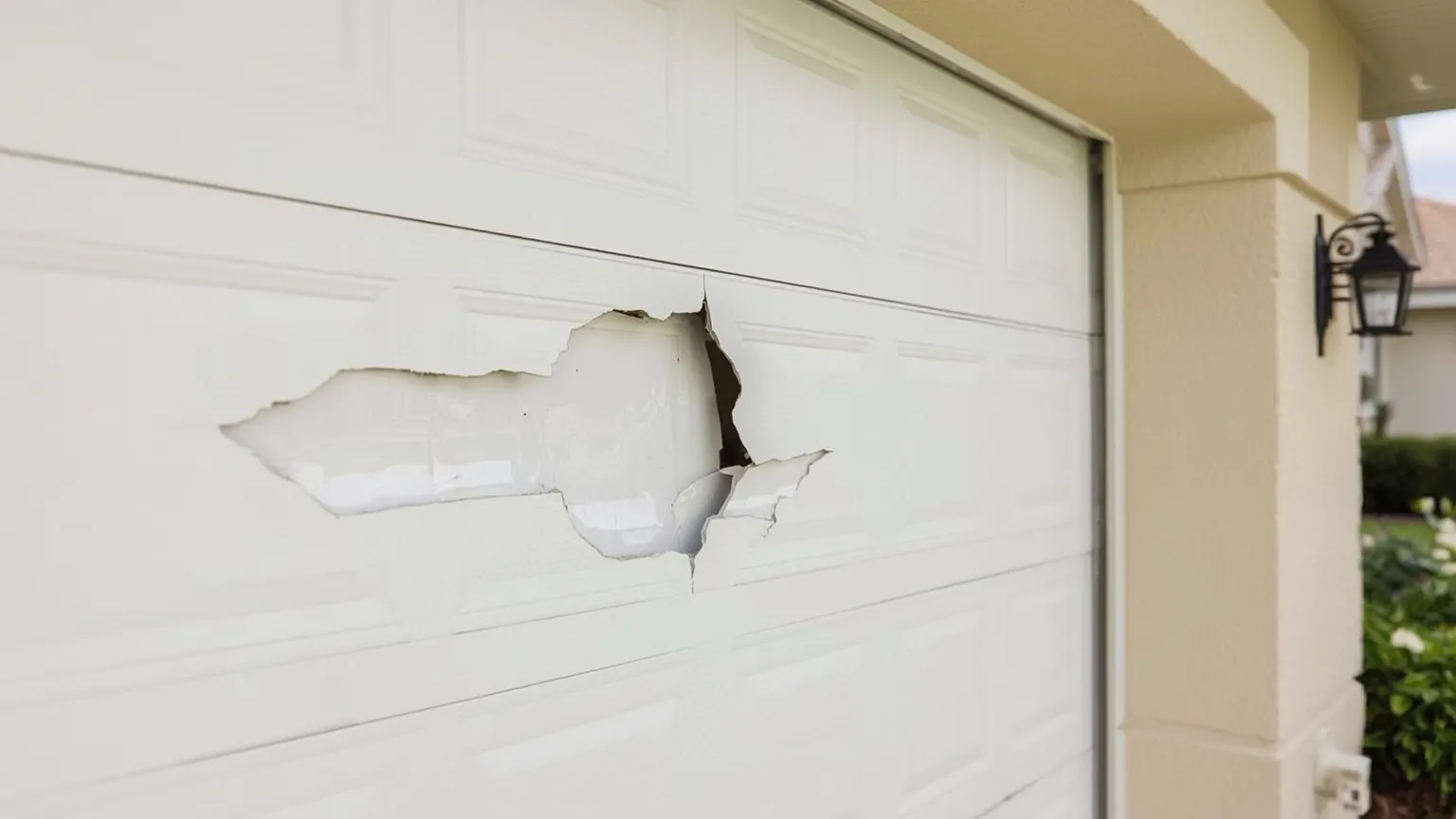
- The panel is cracked, has a hole, or is rusted through
- The dent is creased (heat-and-pull won't restore the crease)
- The panel is aluminum, fiberglass, or wood (no DIY repair option)
- The internal reinforcement bar is bent or detached
- You want a like-new appearance (most dent repairs leave a visible mark)
DIY dent removal — the heat-and-pull method
For minor dents in steel panels (under 2 inches, no crease, no rust), the heat-and-pull method works:
- Clean the dent area with a degreaser. Dust the paint, dry it.
- Heat the dent with a hair dryer or heat gun on low for 60-90 seconds. The metal expands and becomes more pliable.
- Spray cooling agent (compressed air can held upside-down) on the heated dent. The rapid contraction often pops minor dents back out on its own.
- If that doesn't fully work, gently push the dent out from behind the panel (open the door so you can reach the back). Use a wooden block + small hammer for shallow dents, or a suction-cup dent puller from an auto-body kit for deeper ones.
- Touch up paint with the manufacturer's color-match paint pen if needed.
Total DIY cost: $20-$50 in tools (heat gun + dent puller + paint pen). Time: 30-60 minutes.
When DIY won't work — and what the pros do
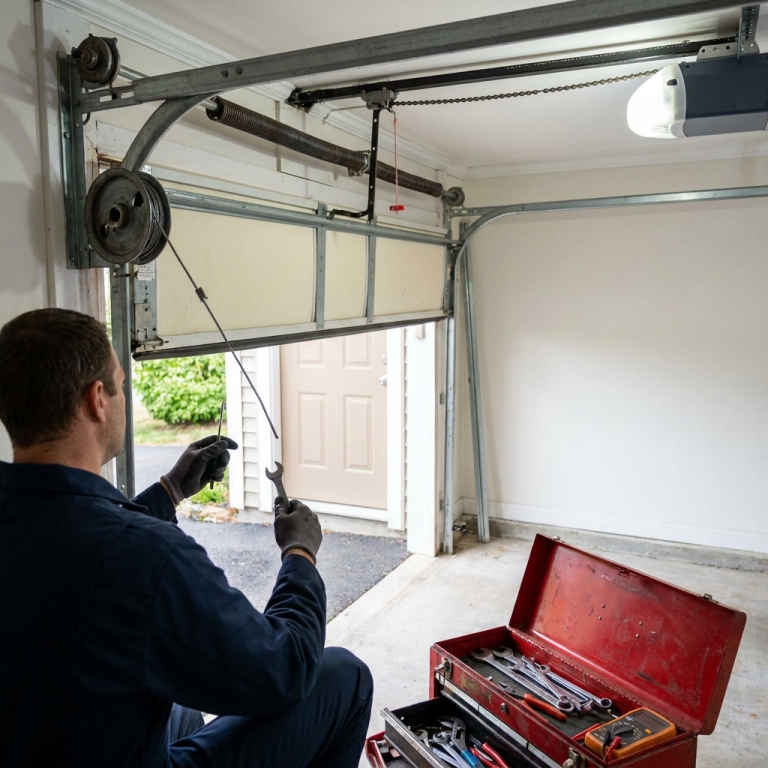
If the dent is creased, the panel is cracked, or the door is aluminum/fiberglass, you need a panel replacement. The professional process:
- Identify the panel. Brand, model, year, color, panel position (top, middle, bottom). We photograph the door, including the manufacturer's sticker (usually inside the top section).
- Order the panel. Stock panels (white, almond) usually arrive in 3-5 business days. Custom colors run 2-4 weeks. Most South Florida techs keep a small inventory of common Clopay/Amarr/CHI/Wayne Dalton panels on the truck for same-day swaps.
- Disconnect the opener and lock out the door.
- Remove the damaged panel. Disconnect the hinges and rollers from the panel above and below. Slide the panel out laterally through the side jamb opening.
- Install the replacement. Slide in, reattach hinges (top + bottom), reattach rollers, check track engagement.
- Re-balance the door and test the opener safety reverse.
What single-panel replacement costs in 2026
| Door type | Single-panel replacement cost |
|---|---|
| Standard steel, stock color (white, almond) | $150-$250 |
| Steel, custom color | $250-$400 |
| Aluminum or full-view glass | $300-$600 |
| Wood or wood-look composite | $350-$700 |
| Carriage-style with decorative hardware | $300-$550 |
Pricing includes the panel, hinges/hardware where needed, labor, and balance test. Same-day stock-color replacement is the norm; custom-color or specialty panels take 2-4 weeks.
When to replace the whole door instead of one panel
Three scenarios where full door replacement makes more sense than panel repair/replacement:
- More than one panel is damaged. If two or three panels need replacement, you're already at 60-80% of a full door cost. Get a new HVHZ-rated door instead.
- The door is over 15 years old. Panels for discontinued models are hard to source. Old systems also have aging springs, openers, and tracks — better to upgrade the whole system.
- The door isn't HVHZ-rated (in Broward / Miami-Dade). If your home is in the HVHZ and your existing door isn't rated, any major repair triggers a code-compliance question. Better to upgrade now and capture the insurance wind-mitigation discount (10-25% on premiums).
FAQs about garage door panel repair
Can a dented steel panel really be DIY-repaired?
For minor non-creased dents in steel panels, yes — the heat-and-pull method works about 70% of the time and costs under $50. For aluminum/fiberglass/wood panels, deep dents, or creased dents, replacement is the only option.
How long does panel replacement take?
45-75 minutes per panel for stock-color same-day swaps. Custom-color or wood-grain panels add 2-4 weeks of lead time but the actual install is the same duration.
Will the new panel match my existing door's color?
If your door is under 10 years old and a current model, yes — manufacturers offer matching panels in factory colors. If the door has faded from sun exposure (common in South Florida), we may recommend partial repaint or full panel-set replacement so the new panel doesn't stand out as brighter than the rest.
Does insurance cover garage door panel damage?
If the damage is impact-related (car backed into door, storm debris), homeowners insurance typically covers replacement minus deductible. We provide an itemized estimate suitable for insurance claims. Cosmetic wear-and-tear damage isn't covered.
Can I replace one panel myself?
Technically yes, but it requires disconnecting the opener, locking out the door, disengaging hinges/rollers in sequence, and re-balancing the door afterward. Without the right tools and experience, you risk knocking the door off track or damaging adjacent panels. The professional cost ($150-$400) is usually worth avoiding that risk.
Skip the YouTube rabbit hole - we'll have a tech at your door same day across Broward, Dade and Palm Beach.