Most garage door maintenance guides are written for northern climates. They worry about lubricating springs so they don't snap in the cold, and about freeze-damaged weather seals. South Florida garages have almost none of those problems - but they have different ones that those guides miss: salt air corrosion from the Atlantic, garage interiors that reach 130°F in summer, and a hurricane season that demands specific preparation.
This guide is organized around the Florida calendar. Run through the relevant season's checklist when it comes around, and you'll catch problems before they fail.
Spring (April - May) - Pre-Hurricane Season Inspection
The most important maintenance window in Florida. Hurricane season starts June 1, so April - May is when you need to assess the door's structural condition and address anything that could compromise performance in a storm.
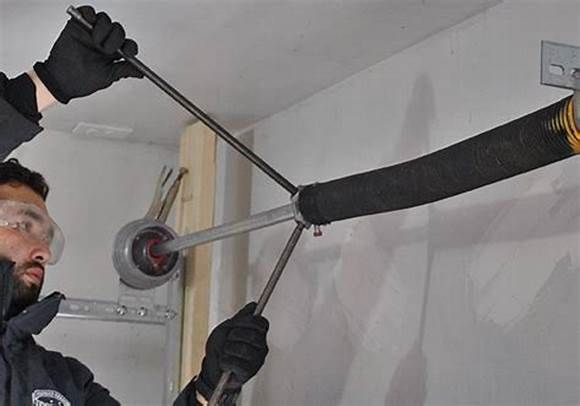
- Check the spring system. With the door closed and the opener disconnected, lift the door by hand to waist height. Let go - a balanced door stays in place; one that drops or shoots upward needs spring adjustment or replacement. Also look at the spring coils: a gap in the coil means a break, and heavy surface rust on the coil means the spring is degrading faster than its cycle rating predicts.
- Test panel rigidity. Push firmly on the center of each panel section. Panels that flex or oil-can under hand pressure won't hold up well under wind pressure. If a door flexes easily, horizontal strut reinforcements may be needed - or the panel may be cracked.
- Check cable condition. Look at both lift cables - they run from the bottom bracket, up through cable drums on each side. Frayed, kinked, or rust-spotted cables should be replaced before season. A cable failure under storm load can drop the door suddenly.
- Verify the hurricane rating. Find the NOA (Notice of Acceptance) sticker on the inside of the door, or search the manufacturer and model on the Miami-Dade Product Control website. If there's no NOA and you're in Miami-Dade or coastal Broward, talk to an installer about your options before a named storm makes lead times impossible.
- Engage the manual locks. Test the center slide lock or T-bar lock - make sure it moves freely and engages fully into the track bracket. If it's rusted or stiff, lubricate or replace it before the season starts.
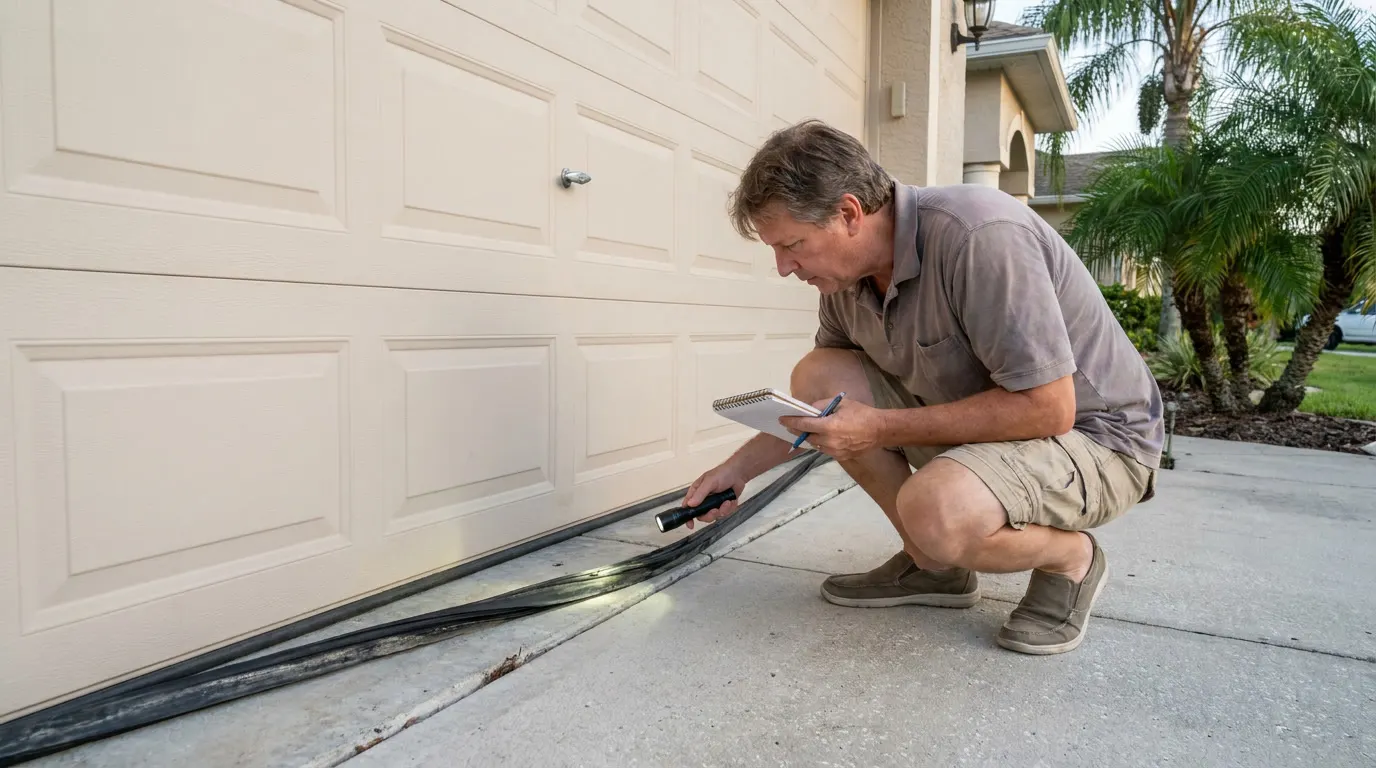
- Bottom seal and weatherstrip. The rubber bottom seal and vinyl trim on all four edges are your first defense against water intrusion. Replace any that are cracked, compressed flat, or missing segments. This is a $50 - $150 DIY job or add-on to any service call.
For the full hurricane preparation checklist including bracing kits and the 48-hour pre-storm sequence, see our dedicated hurricane season prep guide.
Summer (June - August) - Lubrication and Heat Watch
South Florida summer is the hardest season on garage door components. Temperatures inside a closed garage regularly hit 120 - 130°F. This accelerates lubricant evaporation (especially WD-40-type products), dries out rubber seals, and stresses plastic components in the opener. Summer is also peak storm season.
- Lubricate all moving parts. Apply a silicone-based lubricant or white lithium grease to: the full length of the torsion spring coils, all hinge pivot points, all roller shafts (not the roller itself or the track surface), and the drive chain or belt on the opener. Don't use WD-40 - it evaporates quickly in the heat and leaves a residue that attracts debris. Do this every 6 months in Florida (vs annually in cooler climates).
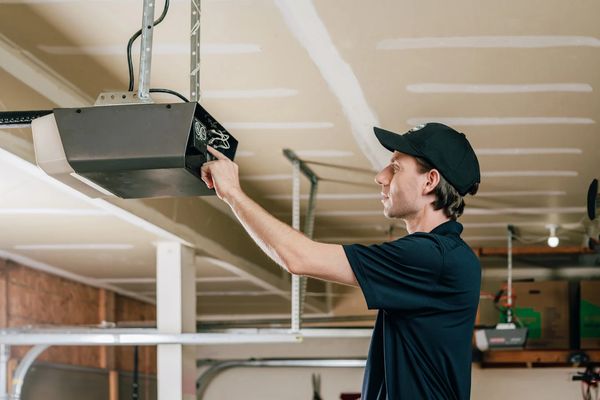
- Check opener performance in heat. Opener motors and drive boards run hotter in summer. If your opener is 8+ years old and starts hesitating or reversing mid-cycle during the hottest months, the motor or capacitor may be heat-stressed. A diagnostic visit before it fails completely is worth scheduling.
- Test the auto-reverse safety feature. Place a 2x4 flat on the floor under the door. The door should reverse when it contacts the board. If it doesn't, the close-force setting is too high - a safety issue that can injure a person or pet. Adjust per the opener manual.
- Check photo-eye alignment. In Florida's heat, the plastic mounting brackets for photo-eye sensors can warp slightly, knocking sensors out of alignment. If the door fails to close or the sensor LED is blinking, try gently bending the bracket back. Both sensor LEDs should be solid, not blinking.
Fall (September - November) - Post-Storm Assessment
Hurricane season ends November 30. Fall is when you assess any damage from storm season and address deferred maintenance before winter.
- Post-storm structural check. After any tropical system that produced significant winds, look for: bent track sections (the door pausing or binding at one point in travel), gaps around the door when closed (light visible through the frame), and weather seal damage from debris or water intrusion.
- Tighten all hardware. Every bolt, lag screw, and fastener on the door works against vibration with every cycle. After a season's worth of cycles, loose hardware is common. Tighten the track bracket mounting bolts, hinge carriage bolts, and the opener ceiling mount bolts. Don't overtighten - snug is enough.
- Inspect the bottom bracket. The bottom corner brackets take enormous stress during panel movement and during any storm. Check for cracks, deformation, or loose bolts. A cracked bottom bracket should be replaced promptly - it's the structural anchor for the lift cable.
- Annual opener test. Test the manual disconnect (red cord), the auto-reverse force in both directions, and the remote range. If the remote only operates reliably within 10 feet, the antenna may be damaged or the battery in the remote is weak.
Winter (December - March) - Light Maintenance and Parts Watch
Florida winters are mild enough that freeze-related maintenance is essentially irrelevant. But winter is a good window for:
- Salt air cleanup. Coastal homes (within 2 - 3 miles of the ocean) should do a light rinse of the door's exterior surface and hardware with fresh water in winter. Salt buildup on exposed metal hardware accelerates rusting. A mild soap wash of the door panels removes salt residue that slowly etches paint.
- Paint and surface inspection. Check for chipped, peeling, or faded paint on steel panels. South Florida UV accelerates paint oxidation faster than most warranty ratings predict. Touch up bare metal spots promptly - rust on a garage door panel in South Florida spreads quickly in the summer humidity.
- Plan any upgrades. If a pre-season spring inspection identified a spring near the end of its life, a non-hurricane-rated door in an HVHZ zone, or an opener over 10 years old, winter is when to get quotes and schedule work. Lead times on hurricane-rated doors are longest in May - July; ordering in December - February gets you the shortest wait.
When to Schedule Professional Maintenance
The items in this checklist are observable and most are DIY-friendly. The one thing we recommend having a professional do annually: a full tune-up service that includes balance check, spring tension verification, hardware torque check, opener force calibration, and safety sensor alignment. A tech can identify components near the end of their useful life before they fail - and in Florida, most failures happen at the worst possible time (in the middle of a named storm, on a holiday weekend, or when you need to leave for work).
-
Every 6 months in South Florida - more frequently than the standard "once a year" recommendation for northern climates. Florida's heat accelerates lubricant evaporation, and the salt air in coastal areas accelerates corrosion if springs and hinges are left dry. Use silicone spray or white lithium grease, not WD-40 (which evaporates quickly and leaves debris-attracting residue).
-
Run the spring balance test (disconnect opener, lift door to waist height, let go - it should stay), check cable condition, verify your door's NOA rating, test manual locks, and replace any cracked or compressed weather seals. Do this in April - May before the June 1 season start. For the complete storm-prep sequence, see our hurricane prep guide.
-
Lubrication: spring makes a squealing or scraping sound but the door is still balanced and the coils look uniform. Replace: you see visible rust pitting the coil surface, there's a gap in the coil (broken spring), the door feels heavy to manual-lift (lost tension), or the squealing returns within 2 - 3 cycles after lubrication.
-
Two common causes: (1) photo-eye sensors knocked out of alignment by heat-warped mounting brackets - check that both LEDs are solid, and gently straighten the bracket if one is blinking; (2) close-force settings drifting due to heat-related capacitor degradation in older openers. A tech can recalibrate force settings and check capacitor health.
Skip the YouTube rabbit hole - we'll have a tech at your door same day across Broward, Dade and Palm Beach.