A garage door that won't stay closed is more than an inconvenience - it's a serious security risk and can compromise safety in your home. The causes vary from mechanical issues like worn springs or misaligned tracks to opener problems or sensor malfunctions. In this guide, GarageFL provides a detailed, step-by-step approach to troubleshoot, repair, and prevent garage doors from failing to stay closed.
Step 1: Inspect the garage door balance
Most garage doors rely on torsion or extension springs to balance the weight of the door. If the door is unbalanced, it may pop open or fail to close fully. To check the balance:
- Disconnect the garage door opener by pulling the emergency release cord.
- Manually lift the door to the halfway point and release it carefully.
- If the door moves up or down on its own, the springs are likely worn or improperly tensioned.
Worn springs should be replaced by a professional, as attempting DIY spring repair can be dangerous.
Step 2: Check the garage door tracks
Misaligned or damaged tracks can prevent the door from closing completely. Inspect the tracks for:
- Dents, bends, or obstructions along the tracks.
- Loose mounting brackets or fasteners.
- Accumulated debris, dirt, or rust.
Clean the tracks thoroughly and realign them using a level if necessary. Tighten brackets and remove any obstacles to ensure smooth operation.
Step 3: Examine rollers and hinges
Worn or damaged rollers and hinges can hinder the door's movement and prevent it from staying closed. Inspect for:
- Cracked or bent rollers.
- Dry, rusted, or noisy rollers.
- Loose or damaged hinges connecting the panels.
Replace worn rollers with high-quality nylon or steel rollers and lubricate moving parts with a garage door-safe lubricant. Properly aligned hinges also contribute to consistent door operation.
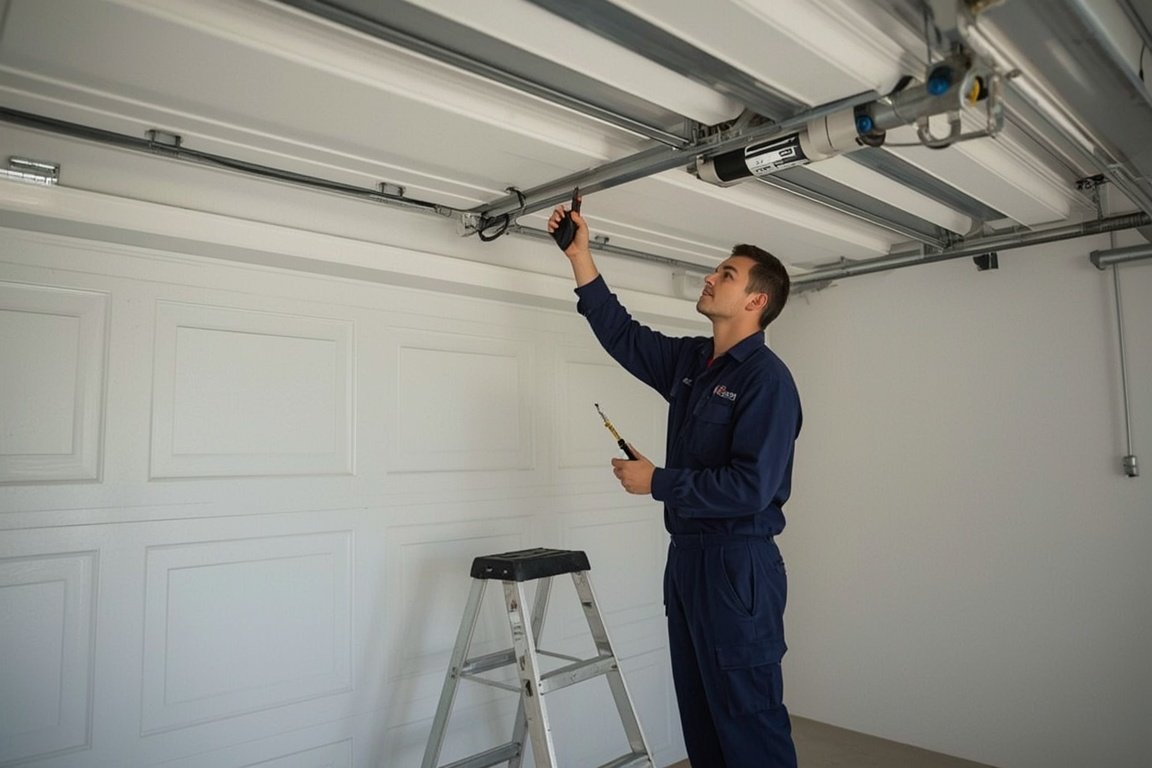
Step 4: Inspect the garage door opener
The opener's force and limit settings control how far the door closes and how much pressure it applies. If settings are incorrect, the door may reverse or fail to stay closed. Check the following:
- Force settings: Adjust the downward force so the door closes fully without reversing unnecessarily.
- Limit settings: Ensure the close limit is set to allow the door to reach the ground completely.
- Test the door after adjustments and fine-tune if needed.
Consult the opener's manual for specific instructions. Modern openers often include digital displays for precise adjustment.
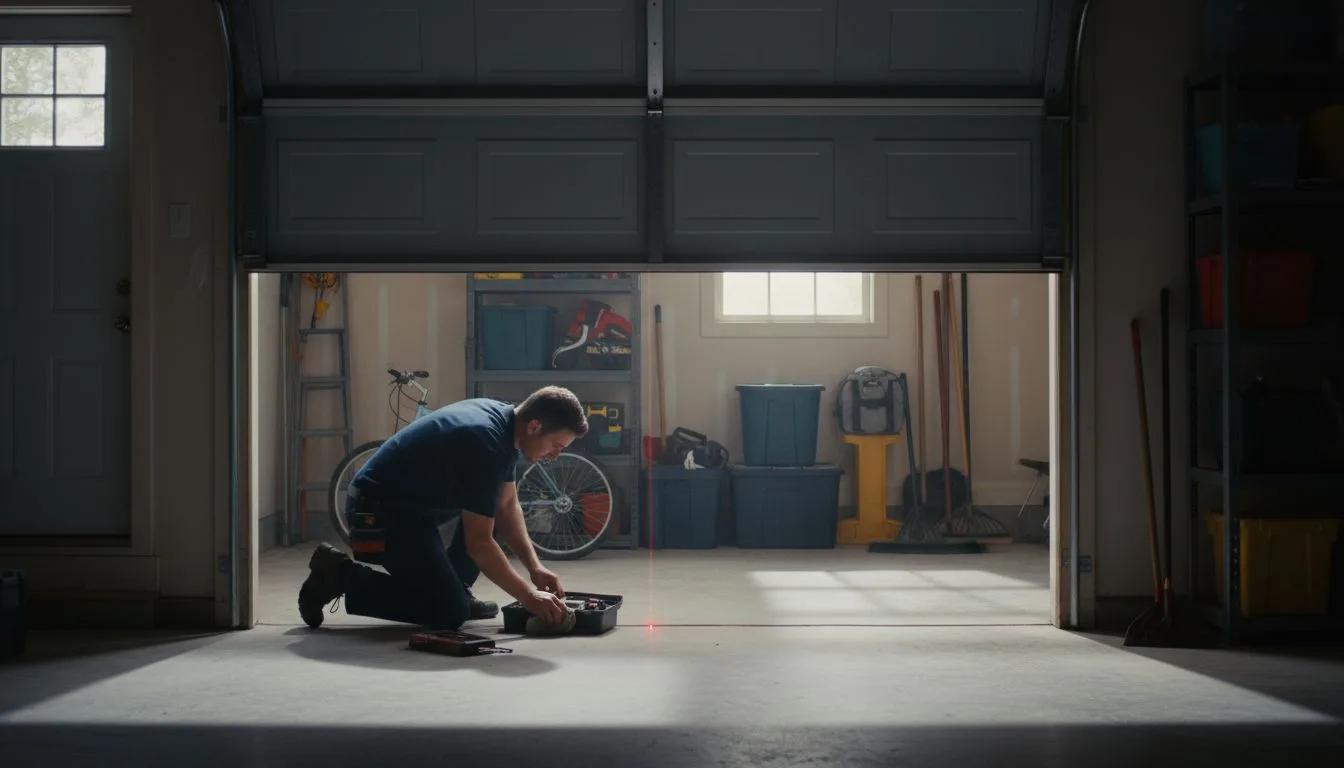
Step 5: Examine safety sensors
Garage door safety sensors detect obstructions and prevent the door from closing if an object is in the way. Misaligned sensors can falsely detect an obstruction, causing the door to reopen immediately. To check the sensors:
- Ensure both sensors are powered and the LED lights are on.
- Clean the lenses with a soft cloth to remove dust or debris.
- Align the sensors so the beams face each other directly.
Properly functioning sensors prevent false reversals and allow the door to stay closed securely.
Step 6: Inspect weatherstripping and bottom seal
Damaged or misaligned weatherstripping can create resistance, preventing the door from fully closing. Inspect the bottom seal:
- Look for cracks, tears, or warping in the rubber seal.
- Ensure the seal sits evenly along the floor when the door is closed.
- Replace the bottom seal if it's worn or deformed.
Proper weatherstripping ensures the door rests securely on the floor and prevents drafts or water intrusion.
Step 7: Check for panel warping
Garage door panels exposed to heat, humidity, or moisture can warp, preventing the door from staying closed. Inspect for:
- Panels bowing or misaligned with the rest of the door.
- Gaps between panels or uneven contact with the floor.
Minor warping may be corrected by adjusting tracks or hinges, but severe panel damage often requires replacement.
Step 8: Lubricate moving parts
Friction from dry rollers, hinges, and tracks can cause the door to struggle to close fully. Apply a garage door-specific lubricant to:
- Rollers and bearings.
- Hinges and pivot points.
- Tracks (if manufacturer-approved).
Lubrication reduces resistance, prevents wear, and ensures the door closes smoothly and stays closed.
Step 9: Inspect the floor and threshold
An uneven garage floor or threshold can prevent the door from sealing completely. Check for:
- Cracks, dips, or raised sections along the door's path.
- Debris or small objects that block the bottom seal.
Clear debris and consider installing a threshold ramp if necessary to create an even contact surface for the door.
Step 10: Call a professional for persistent issues
If the door continues to fail to stay closed after troubleshooting, it may indicate deeper mechanical or structural problems. GarageFL offers professional garage door repair services including:
- Spring replacement and adjustment.
- Track realignment and panel repair.
- Opener diagnostics and calibration.
Professional service ensures safe, reliable, and long-lasting operation of your garage door system.
Final thoughts
A garage door that won't stay closed can compromise security, energy efficiency, and safety. Common causes include worn springs, misaligned tracks, faulty openers, misaligned sensors, damaged weatherstripping, or warped panels. By carefully inspecting and addressing these issues, lubricating moving parts, and performing regular maintenance, most doors can be restored to safe, secure operation. For persistent or complex problems, professional assistance from GarageFL ensures proper repair and peace of mind. Taking a proactive approach keeps your garage door functioning reliably and protects your home year-round.
Skip the YouTube rabbit hole - we'll have a tech at your door same day across Broward, Dade and Palm Beach.