A new garage door can transform a home’s curb appeal, security, insulation, and everyday convenience. But even a high-quality door can perform poorly when it’s installed carelessly. A panel may sit unevenly, an opener may strain, weather seals may leave gaps, or a safety system may fail when it matters most. In other words, the product is only half the equation. The installation determines whether that product works smoothly for years—or becomes a recurring source of noise, repairs, and frustration.
This guide examines the most common Garage Door Installation Mistakes homeowners and inexperienced installers make. You’ll learn how to plan the project, verify measurements, select compatible hardware, balance the door, install the opener correctly, and test every safety feature. We’ll also cover climate considerations that matter in South Florida, where humidity, salt air, intense sunlight, and sudden storms can affect materials and hardware.
Whether you’re replacing a worn-out door or building a garage from scratch, the smartest approach is straightforward: prepare carefully, follow the manufacturer’s instructions, and call a trained professional when a task involves high-tension springs or structural modifications. A small shortcut today can become a big repair bill tomorrow.
Garage Door Installation Mistakes
What’s the most important way to prevent Garage Door Installation Mistakes? Start with a complete installation plan rather than treating the job as a simple assembly project. A garage door system includes panels, tracks, rollers, hinges, brackets, cables, springs, drums, an opener, sensors, seals, and mounting points. Every part must work in alignment with the others.
Before purchasing anything, inspect the opening, ceiling height, side room, backroom, framing, electrical supply, and drainage around the garage. A door that appears compatible in a catalog may not fit the actual conditions inside your home. You’ll also need to decide whether the project involves a standard sectional door, a wind-rated system, an insulated model, or a custom configuration.
Begin by reviewing reliable information about garage door installation and comparing it with the manufacturer’s manual. If the existing system is failing, professional garage door repair may reveal whether replacement is truly necessary. For opener-related concerns, consult opener repair guidance before selecting a new motor.
Skipping a Detailed Site Inspection
One of the earliest Garage Door Installation Mistakes is ordering a door before inspecting the site. A proper inspection should assess the condition of the header, vertical jambs, ceiling, floor, electrical outlet, and existing support structure. If the framing is twisted, rotten, cracked, or out of square, a new door won’t correct the underlying problem.
Look closely at the header above the opening. It carries important mounting hardware and must be strong enough to support the spring system and opener bracket. The side jambs should be relatively plumb, while the floor should provide a reasonably level landing surface for the door’s bottom seal. Even a few irregularities can cause binding or uneven pressure.
In humid regions, wood framing may swell or deteriorate faster than expected. South Florida homes may also face corrosion from moisture and coastal air. Schedule a garage door inspection before installation if you notice soft wood, rust, movement, or water intrusion. You can also explore replacement options and review appropriate professional services before committing to materials.
Measuring the Opening Incorrectly
Can an incorrect measurement ruin an otherwise excellent installation? Absolutely. Garage doors require more than a width and height measurement. You must measure the finished opening, headroom, side room, and backroom. Record each measurement at least twice, and compare the results. If the numbers differ, investigate why instead of choosing the smaller or larger figure by guesswork.
Measure the width between the finished jambs at the top, middle, and bottom. Then measure the height on both sides and in the center. Check the headroom from the top of the opening to the lowest obstruction, such as a beam, duct, light fixture, or ceiling-mounted storage. Backroom—the distance from the opening to the rear wall—matters because tracks and the opener require usable space.
Manufacturers publish specific clearance requirements, so use their documentation rather than relying on assumptions. A professional measurement service can prevent ordering errors, while installation planning helps confirm hardware compatibility. If an old door is being removed, arrange safe removal so hidden dimensions and framing conditions can be evaluated.
Choosing the Wrong Door Size
A door that’s slightly too large may not sit properly in the opening, while one that’s too small can leave gaps that invite rain, pests, dust, and hot air. Yet homeowners sometimes select a standard size because it’s cheaper or immediately available. That decision can create more work when installers need to modify framing, add fillers, or alter the track layout.
Size also affects the door’s weight and operating requirements. A wider or taller door typically needs stronger springs, properly rated tracks, and an opener capable of handling the load. Adding decorative hardware or thicker insulation can change the final weight as well. The door should never be matched to the opener by appearance alone.
Ask for a written specification that lists the door dimensions, construction, track radius, spring type, and opener model. Helpful resources about garage door sizes can clarify standard configurations. For unusual openings, discuss custom garage doors and verify whether specialized installation is required.
Ignoring Local Wind and Building Requirements
In hurricane-prone areas, wind resistance isn’t a decorative extra. A garage door is one of the largest moving surfaces on a home, and a weak or improperly secured door can allow dangerous wind pressure into the garage. That pressure may damage the roof, walls, or other parts of the structure.
South Florida properties may require wind-rated doors, reinforced hardware, approved bracing, or specific installation methods. Requirements can vary by municipality, location, construction type, and exposure. Never assume that a door labeled “heavy duty” automatically meets local requirements. Ask for documentation and confirm that the complete assembly—not merely the panels—has the appropriate rating.
Review reputable information from wind-rated garage door specialists and verify applicable requirements with your local building department. You may also need permit guidance before work begins. If storm damage has already occurred, arrange storm-related repair rather than forcing a compromised system to operate.
Using Incompatible Hardware
Garage door components aren’t universal in the way many people expect. Tracks, rollers, hinges, drums, springs, brackets, and cables are selected according to door weight, height, thickness, construction, and lift configuration. Mixing parts from different systems can cause excessive friction, poor balance, or premature failure.
A common example is installing a heavier insulated door on the old springs from a lightweight door. The opener may lift the door temporarily, but the spring system will be under the wrong load. Another example is using a roller whose stem length doesn’t match the hinge. It may appear to fit while placing the roller at an incorrect angle inside the track.
Use a complete hardware package whenever possible, and verify specifications with the manufacturer. Professional garage door parts assistance can help identify compatible components. You can also request system adjustment and maintenance advice after installation so mismatched or loose hardware is caught early.
Installing Tracks Out of Alignment
Tracks guide the rollers and determine how the door travels. If they’re not level, parallel, and correctly spaced, the door may scrape, wobble, bind, or jump off the track. Misalignment is among the most noticeable Garage Door Installation Mistakes because the system often becomes noisy immediately.
Vertical tracks should be positioned consistently on both sides of the opening. Horizontal tracks must transition smoothly without creating an abrupt angle. The track supports should be firmly attached to sound framing, not merely to thin drywall or loose trim. Installers should also verify that the tracks are neither pinched inward nor pushed too far outward.
Don’t try to solve track problems by bending the steel aggressively. That can create sharp stress points and alter the intended geometry. Instead, review track repair information and arrange professional alignment when the door rubs or stalls. A final safety inspection should confirm smooth travel from the floor to the fully open position.
Failing to Level the Door
A sectional door should meet the floor evenly when closed. If one side reaches the ground first, the door is likely out of level, the tracks may be positioned differently, or the floor may slope. While garage floors aren’t always perfectly flat, a significant gap on one side can allow water, insects, and conditioned air to enter.
Leveling is more than making the panels look straight. An uneven door places unequal force on the cables, rollers, hinges, and springs. Over time, that imbalance can cause one side to wear faster than the other. The opener may also interpret the added resistance as an obstruction and reverse unexpectedly.
Use a reliable level and inspect the bottom seal across the full width. If the slab is uneven, a specialized bottom seal solution may help, but it won’t correct severe structural problems. Consider door adjustment and professional service before making changes to tracks or spring tension.
Misplacing Hinges and Rollers
Hinges connect the door sections and allow them to bend as the panels move through the track. Rollers fit into the track and carry the panels during travel. A hinge placed in the wrong position can alter the spacing between sections, while an incorrectly installed roller can create friction or cause the door to twist.
Not every hinge is identical. End hinges may have adjustable roller carriers, while center hinges serve a different purpose. The manufacturer’s layout should be followed exactly, including the number of hinges and the location of each fastener. Over-tightening can distort the hinge; under-tightening can allow movement.
If the door squeaks or catches after installation, don’t immediately spray random lubricant on every component. Start with a roller inspection and arrange hinge service if parts are bent. A broader noise diagnosis can identify whether the problem is mechanical, structural, or related to the opener.
Choosing the Wrong Spring System
Springs counterbalance the weight of the garage door. They’re not simply accessories, and they should never be selected by appearance. The spring size depends on the door’s actual weight, height, lift type, track configuration, and cycle rating. Using the wrong spring can make the door too heavy to lift manually or dangerously light and difficult to control.
Torsion springs are mounted above the door, while extension springs stretch along the horizontal tracks. Each style has specific hardware, safety requirements, and installation procedures. A system designed for one configuration may not be safely adapted to another without the right components.
Because springs store significant energy, this is one of the tasks best left to trained professionals. Learn about spring repair and spring replacement rather than attempting improvised repairs. If the door has become difficult to lift, schedule a prompt service call instead of continuing to operate it.
Attempting Spring Installation Without Training
Is spring installation a suitable do-it-yourself task? Usually not. A wound torsion spring can release stored energy with tremendous force if a tool slips, a cone breaks, or the wrong winding direction is used. Extension springs can also snap or launch hardware when they’re improperly secured.
Professional technicians use the correct winding bars, clamps, ladders, measurements, and procedures. They also know how to secure the shaft, identify the spring’s wind direction, set cable tension, and test the balance safely. A video tutorial may explain the general concept, but it can’t inspect the exact conditions in your garage or account for unusual hardware.
For practical safety information, consult spring service professionals and avoid working near a damaged spring. If the system has failed suddenly, use broken spring assistance rather than forcing the door upward. You can also schedule a complete safety check after installation.
Setting Cable Tension Incorrectly
Lift cables transfer spring force to the bottom brackets and help the door rise evenly. If one cable is loose, crossed, frayed, or wound incorrectly around the drum, the door can tilt. In severe cases, the cable may leave the drum and allow the door to jam or fall.
Cables should be installed with the correct length and routing. They must sit properly in the grooves of the drums, with equal tension when the door is closed. A cable shouldn’t be shortened with an improvised knot or clamped in a way that damages its strands. Even a small mismatch can become obvious as the door moves through its cycle.
If a cable has come off, don’t pull it back into place while the spring is under tension. Review cable repair options and request professional replacement if the strands are worn. A full balance test can determine whether the cable issue is a symptom of incorrect spring tension.
Mounting the Opener on Weak Framing
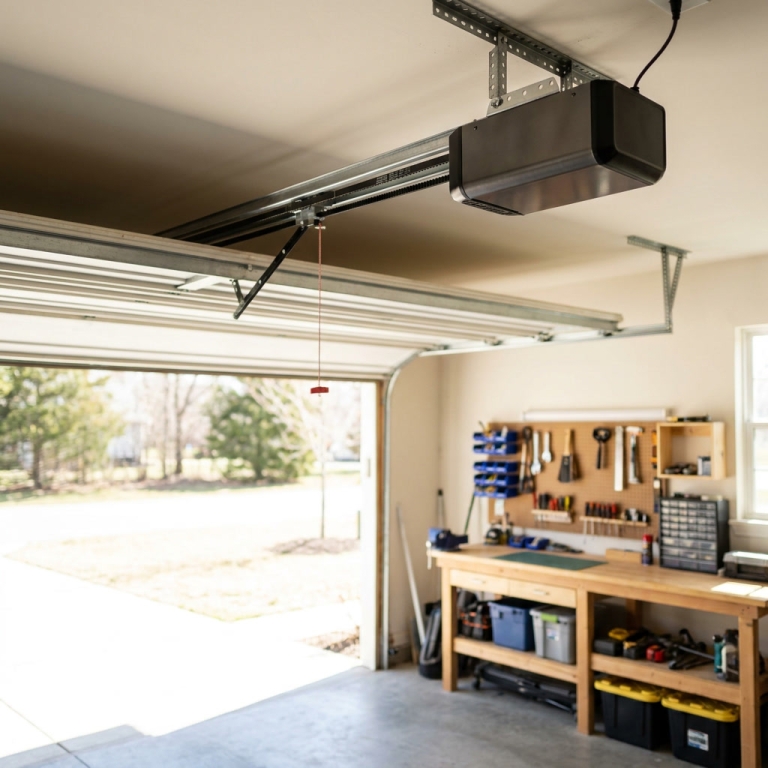
The opener’s header bracket and motor support must be attached to solid framing. Drywall, decorative trim, or thin paneling cannot reliably carry the vibration and pulling force created by an opener. When the mounting point shifts, the rail may sag, the door may travel unevenly, and the motor may become noisier.
Use the opener manufacturer’s specified mounting locations. If the existing framing doesn’t provide an appropriate surface, install properly secured blocking or structural support. Avoid attaching the bracket too low or too far from the centerline, since that can create an awkward pulling angle.
Homeowners can explore opener installation services and compare smart opener options. If vibration or movement appears after installation, schedule opener inspection instead of adding random screws. Proper support protects both the opener and the door.
Choosing an Opener That’s Too Weak
Horsepower ratings can be confusing because they don’t tell the entire story. Door construction, balance, cycle frequency, track condition, and operating environment all influence the opener’s workload. A well-balanced door should be relatively easy to lift manually, while a poorly balanced door can overload even a powerful motor.
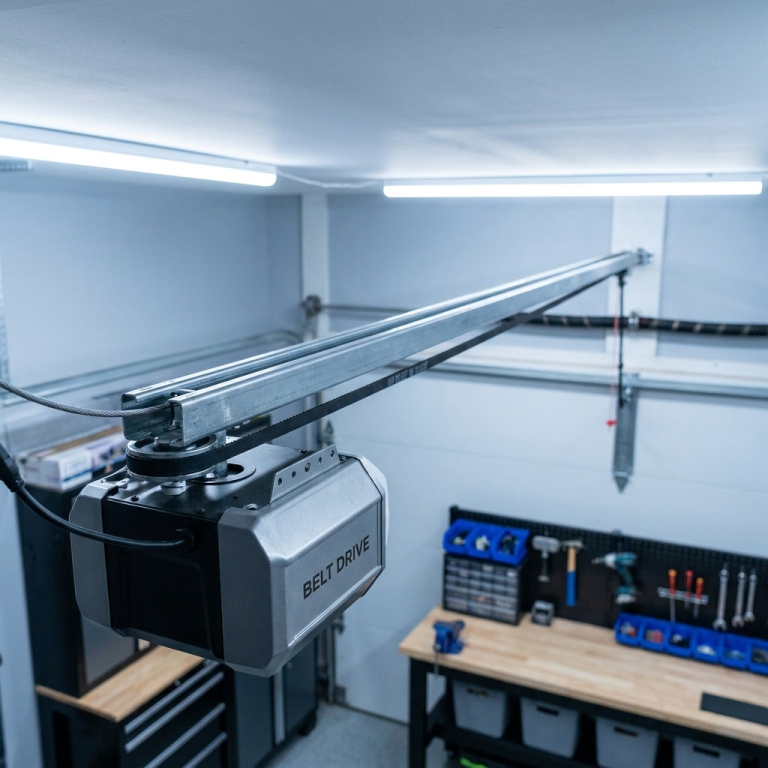
Chain-drive, belt-drive, and screw-drive openers each have different characteristics. Belt-drive systems tend to be quieter, while chain-drive units may offer durability and value. Smart connectivity can add convenience, but it doesn’t compensate for incorrect mechanical installation.
Use the manufacturer’s compatibility chart and discuss opener replacement with a qualified technician. If the garage is beneath a bedroom or office, consider quiet opener technology. For recurring overload warnings, arrange opener service before the motor burns out.
Installing the Safety Sensors Incorrectly
Photoelectric safety sensors are essential. They transmit an invisible beam across the lower portion of the doorway and should cause the opener to reverse when that beam is interrupted. If the sensors are too high, too low, angled, dirty, or loosely mounted, the system may behave unpredictably—or fail to reverse correctly.
Install both sensors at the height specified by the opener manufacturer. Their indicator lights should show proper alignment, and the brackets should remain stable when the door vibrates. Keep the sensor path clear of storage boxes, tools, bicycles, and decorations. Sunlight can occasionally interfere with sensor reception, so positioning and shielding may matter.
After installation, perform the manufacturer’s reversal tests. Review sensor troubleshooting and request opener diagnostics if the lights blink or the door reverses randomly. A complete safety inspection should include both photoelectric sensors and force-reversal testing.
Skipping the Auto-Reverse Test
Testing the opener isn’t a ceremonial final step; it’s a safety requirement. Place a suitable test object in the doorway according to the manufacturer’s instructions, then close the door using the opener. The door should reverse promptly when it encounters the object. If it continues downward, stop using the system until it’s adjusted or repaired.
Also test the manual release. The door should disconnect from the opener and move manually under controlled conditions. Never conduct this test if the door is visibly damaged, off track, or unsupported. A failed reversal test may indicate incorrect force settings, sensor problems, excessive friction, or an improperly balanced door.
Learn more through reversal testing guidance and consider routine maintenance twice a year. If the opener behaves dangerously, use emergency repair service rather than repeatedly testing it with your hands or feet.
Neglecting Weather Seals and Bottom Gaskets
Weather seals perform several jobs: they limit drafts, reduce water intrusion, block insects, and help keep garage temperatures more stable. A new door with poorly installed seals can still leave visible gaps. The bottom gasket should sit against the floor without being crushed excessively, while the side and top seals should contact the door evenly.
In warm, humid climates, gaps can invite moisture and encourage corrosion. Sun exposure may harden or shrink rubber components over time. A seal that is too tight, however, can create friction and interfere with smooth movement. The goal is consistent contact, not excessive pressure.
Explore weather-seal options and arrange water intrusion evaluation if the garage becomes damp. You may also benefit from insulated door guidance when energy efficiency and interior comfort are priorities.
Forgetting Insulation and Climate Control
Garage door insulation isn’t only about winter heating. In hot climates, insulation can reduce heat transfer from the sun-baked exterior into the garage and adjacent rooms. It may also make the door feel more substantial and reduce some outside noise.
Insulation adds weight, so the spring system and opener must be selected for the finished door—not the bare panel specification. Adding aftermarket insulation after installation without recalculating balance is a classic mistake. The door may become difficult to lift, and the opener may strain with every cycle.
Compare insulated garage doors and review energy-efficiency recommendations. If the door is already difficult to operate, schedule balance testing before adding material. Proper insulation should support comfort without compromising mechanical performance.
Overlooking Corrosion Protection
Metal hardware exposed to humidity, salt air, rain, and poor ventilation can corrode faster than expected. Springs, cables, hinges, rollers, brackets, and fasteners are particularly vulnerable. A new installation should use suitable corrosion-resistant components when the local environment warrants them.
Corrosion protection also depends on maintenance. Keep drainage paths clear, repair roof or wall leaks, and avoid washing salty residue into the hardware. Don’t coat every component with an incompatible chemical. Some lubricants attract dust, while others can damage plastic or rubber parts.
For coastal properties, request corrosion-resistant recommendations and schedule preventive maintenance. If rust has already weakened a component, use parts replacement rather than sanding and reusing a structurally compromised piece.
Using the Wrong Fasteners
Fasteners are easy to overlook because they’re small, but their role is anything but minor. Garage door panels and brackets experience repeated movement and vibration. Screws must be the correct length, diameter, thread type, and material for the component and the framing into which they’re installed.
Using drywall screws for structural hardware is a familiar shortcut—and a poor one. They may snap under stress or fail to provide adequate holding power. Overly long fasteners can interfere with moving parts or penetrate electrical wiring. Under-tightening allows components to shift, while over-tightening can crush thin metal and distort brackets.
Follow the manufacturer’s hardware schedule and request hardware guidance when replacing missing pieces. Professional bracket service can identify unsafe mounting. A final installation inspection should include every visible fastener and support point.
Ignoring Clearance Around the Door
Garage interiors often change after a door is installed. Shelving, hanging bicycles, lighting, storage racks, ducts, and ceiling fans can interfere with tracks or the opener. A system may operate correctly on installation day and become hazardous after someone adds storage without checking clearance.
Keep the door’s travel path completely open. Don’t place objects under horizontal tracks, and avoid hanging items from the tracks themselves. The emergency release cord should remain accessible, while the opener and its electrical connection should not be blocked by storage.
Plan storage with clearance recommendations in mind. If a new obstruction has appeared, book track adjustment or discuss opener relocation. A tidy garage isn’t merely attractive; it helps prevent impact damage and accidental interference.
Failing to Balance the Door
A properly balanced garage door should remain reasonably stable when disconnected from the opener and moved manually by a trained person. It shouldn’t slam down, shoot upward, or feel impossibly heavy. Balance depends on spring tension, cable routing, track alignment, and the actual weight of the door.
An imbalanced door forces the opener to compensate for a mechanical problem. That may shorten motor life, wear out gears, loosen brackets, and trigger nuisance reversals. It can also make the door dangerous to operate manually, especially if someone assumes the opener is supporting more weight than it really is.
Don’t adjust spring tension casually. Instead, arrange a professional balance test and review spring service options. If the door feels unusually heavy, stop using it and request garage door service before another component fails.
Installing the Wrong Track Radius
Track radius determines how the door transitions from vertical travel to horizontal travel. A common radius may work in a standard garage, but low-headroom or high-lift configurations require different hardware. Installing the wrong radius can reduce clearance, place stress on the rollers, and prevent the top section from sitting correctly when open.
Track geometry must match the door height, headroom, lift type, and opener arrangement. This isn’t a part that should be selected merely because it looks similar to the old track. Small differences can create large operating problems.
Review track system information and request low-headroom installation assistance when space is limited. If the door makes a sharp popping sound during transition, schedule track evaluation before the rollers or hinges are damaged.
Neglecting the Top Section
The top section often receives extra force from the opener arm. If the opener bracket is attached directly to a thin panel without the required reinforcement, the panel can bend, crack, or pull away from its hardware. This is especially important for lightweight doors, windows, and insulated models with particular reinforcement requirements.
The operator bracket should be mounted where the manufacturer specifies, usually with a suitable reinforcement strut or support plate. The opener arm should move through an appropriate angle and shouldn’t pull the top section sideways. If the arm is too long, too short, or poorly positioned, the door may flex during operation.
Learn about panel reinforcement and request opener bracket service when the top panel bows. A broader opener adjustment can correct travel and force settings after the structural issue is resolved.
Skipping a Written Installation Warranty
A warranty can clarify what happens if a panel cracks, a spring fails early, or the opener develops a fault. However, warranties differ widely. Some cover materials but not labor; others exclude corrosion, improper maintenance, unauthorized modifications, or normal wear.
Before work begins, request written details about the manufacturer’s warranty and the installer’s workmanship guarantee. Confirm who handles claims and whether replacement parts must come from a particular supplier. Keep receipts, product labels, manuals, and installation records in one place.
Review warranty service information and ask about maintenance plans. If a defect appears, document it with photographs and contact the service provider promptly. A clear paper trail can save considerable time when responsibility is uncertain.
Choosing the Lowest Bid Without Comparing Scope
The cheapest quote isn’t necessarily the best value. One contractor may include removal, disposal, new tracks, upgraded rollers, permits, weather seals, opener programming, and final testing. Another may quote only the door and basic labor, leaving important items as add-on charges.
Compare proposals line by line. The written estimate should identify the door model, dimensions, insulation rating, spring type, track configuration, opener specifications, accessories, labor, taxes, disposal, and warranty. Ask whether the installer is licensed or insured where applicable and whether the crew has experience with local wind requirements.
Use installation consultation services and review replacement planning resources before comparing prices. If budget pressure is significant, ask about available financing options rather than removing safety components from the scope.
Ignoring Professional Licensing and Experience
Garage door work combines mechanical, structural, electrical, and safety considerations. Experience matters, particularly when a project involves wind-rated hardware, unusual headroom, custom framing, or a high-cycle spring system. A confident sales pitch is no substitute for documented knowledge and careful workmanship.
Ask how long the company has served the area, whether technicians are trained on the selected product, and how they handle permits and disposal. References and verified customer reviews can provide useful context, though they should be considered alongside written specifications and safety practices.
For homeowners searching online, reputable local garage door professionals can explain the installation process. You can also request a detailed estimate and arrange an in-person consultation. Don’t hesitate to ask questions; a trustworthy installer won’t treat reasonable concerns as an inconvenience.
South Florida Installation Considerations
Florida garages face conditions that deserve special attention. Heat, humidity, heavy rain, wind events, insects, and coastal salt can affect the door and its hardware. A successful installation should account for the property’s exposure and the owner’s maintenance habits, not just the opening’s dimensions.
Wind-rated construction may be essential in some locations. Corrosion-resistant hardware can be beneficial near the coast. Insulation may improve comfort, while durable weather seals help resist wind-driven rain. Drainage and threshold conditions should also be inspected so water doesn’t collect beneath the door.
For regional advice, explore Florida garage door solutions and wind-rated systems. If an approaching storm has exposed a weakness, use emergency garage door repair rather than waiting for a minor issue to become a security problem.
When Emergency Repair Is the Safer Choice
Some problems should not wait for a convenient appointment. A door that has fallen off its track, a broken spring, a hanging cable, a damaged panel, or an opener that won’t release can create an immediate hazard. Keep children and vehicles away from the area, disconnect the opener only if it’s safe to do so, and avoid manually lifting a heavy or unstable door.
Need emergency garage door repair near me in Broward County, Florida? Same-day service, 13+ years experience, 450+ five-star reviews. Call (954) 830-9661.
Before calling, describe what happened, whether the door is open or closed, whether any cable or spring is visibly damaged, and whether property or vehicle access is blocked. Professional emergency service can stabilize the system, while spring repair and off-track repair address common urgent failures.
Post-Installation Inspection Checklist
Once installation is complete, don’t simply accept the keys and assume everything is perfect. Walk through a structured inspection with the installer. Operate the door several times and listen for scraping, popping, grinding, or sudden changes in speed. The panels should move smoothly, and the door should close evenly against the floor.
- Confirm that the door is level and the sections are properly aligned.
- Check that tracks and brackets are firmly secured.
- Verify that cables sit correctly on the drums.
- Test manual release operation.
- Test photoelectric sensors and auto-reverse functions.
- Confirm that remotes, wall controls, and keypad access work.
- Inspect weather seals for continuous contact.
- Review lubrication and maintenance instructions.
Use a final safety inspection and retain the owner’s manual. If anything feels wrong after the crew leaves, contact the installer promptly instead of trying to correct spring or cable issues yourself.
Maintenance After Installation
Even excellent installation doesn’t eliminate maintenance. Dirt, humidity, vibration, and ordinary wear gradually affect rollers, hinges, seals, cables, and fasteners. A brief visual inspection every month can reveal fraying, rust, loose hardware, or unusual gaps before those conditions become failures.
Keep the track clean but don’t treat it as a grease channel. Use only the lubricant recommended for the rollers, hinges, and springs. Test the opener’s safety reversal periodically and replace remote batteries as needed. Keep the bottom of the door free from objects that could interfere with closure.
Schedule preventive maintenance and consider a yearly tune-up. If you hear a new sound or notice a change in balance, request diagnostic service early. Small adjustments are generally easier and less expensive than repairs after a major breakdown.
Frequently Asked Questions About Garage Door Installation Mistakes
What are the most common Garage Door Installation Mistakes?
The most common mistakes include measuring the opening incorrectly, selecting incompatible hardware, installing tracks out of alignment, using the wrong springs, mounting the opener to weak framing, misaligning safety sensors, skipping balance tests, and neglecting local wind requirements. These errors often appear minor at first but can cause noise, premature wear, unsafe operation, or repeated service calls. A complete installation inspection and adherence to the manufacturer’s instructions can prevent most of them.
Can I install a garage door myself?
Some homeowners can safely handle limited tasks, such as painting trim, installing decorative hardware, or replacing batteries. Complete installation is more complex because it involves heavy panels, high-tension springs, cables, tracks, structural supports, and electrical controls. Spring and cable work is especially hazardous without training and specialized tools. If you lack experience, hiring a qualified installer is usually safer and may protect the product warranty.
How do I know whether my garage door is properly balanced?
A trained person can disconnect the opener using the emergency release and evaluate whether the door moves smoothly and remains reasonably stable at different positions. It shouldn’t slam down, rise rapidly, or feel excessively heavy. Don’t perform this test if the door is damaged, off track, or supported by a failed cable. A professional balance test can determine whether spring tension and cable routing are correct.
Why does my newly installed garage door make noise?
Noise may come from misaligned tracks, dry hinges, worn or incorrect rollers, loose fasteners, poor opener mounting, excessive spring tension, or a door that is out of balance. Some sound is normal, but grinding, scraping, popping, or sudden vibration deserves attention. Don’t apply lubricant indiscriminately or bend the tracks yourself. Arrange noise diagnosis so the underlying cause can be corrected.
Are wind-rated garage doors necessary in Florida?
Requirements depend on local building rules, property location, wind exposure, and the structure’s specifications. In many areas, a standard non-rated door may not satisfy applicable requirements. A wind-rated system includes more than reinforced panels; the tracks, brackets, fasteners, and installation method must also be appropriate. Confirm requirements with the local authority and choose a qualified installer familiar with Florida conditions.
How often should a new garage door be serviced?
Inspect the system visually each month and test safety features according to the opener manufacturer’s recommendations. Many homeowners benefit from professional maintenance once a year, especially in humid or coastal environments. Service may be needed sooner if the door is used frequently, exposed to salt air, or develops noise, hesitation, uneven movement, rust, or visible cable wear.
When should I call for emergency garage door repair?
Call promptly if the door is off track, a spring has broken, a cable is loose or frayed, a panel is hanging, the door has fallen, or the opener cannot safely control the system. Keep people and vehicles clear of the opening. Don’t attempt to lift a heavy door or adjust a spring under tension. Professional emergency service can secure the area and determine whether repair or replacement is appropriate.
Final Takeaway: Build the Installation Around Safety
The best way to avoid Garage Door Installation Mistakes is to treat the project as a complete mechanical system rather than a collection of parts. Accurate measurements, sound framing, compatible hardware, correctly selected springs, aligned tracks, secure opener support, functional sensors, and thorough testing all matter. Leaving out one step can undermine the performance of everything else.
Choose a door suited to the climate and local requirements, compare complete written estimates, and insist on clear warranty information. Most importantly, don’t gamble with high-tension components simply to save time. A professional installation protects your property, reduces noise and wear, improves daily convenience, and gives you confidence that the door will respond properly when you need it most.
For ongoing help, explore garage door installation services, review maintenance recommendations, and contact Garage FL when a repair or inspection is needed. A careful start is the surest route to a safer, quieter, and longer-lasting garage door.
Skip the YouTube rabbit hole - we'll have a tech at your door same day across Broward, Dade and Palm Beach.